```html
TESTPLAY Raised Relief Maps: Unmatched Precision and Quality
TESTPLAY Raised Relief Maps: Precision in Every Raised Relief Map
The world around us is inherently three-dimensional. From majestic mountain ranges that scrape the sky to intricate river valleys carving through landscapes, the Earth's surface is a tapestry of varied topography. While traditional flat maps have served humanity for centuries, they often struggle to convey this vital third dimension in a truly intuitive way.
This is where raised relief maps come into their own. By physically replicating the elevation changes of a region, they offer a unique, tangible way to understand geography, geology, and the relationship between landforms. However, the value and utility of a raised relief map are directly proportional to its quality and precision.
Low-quality relief maps can be misleading, inaccurate, and ultimately, unreliable tools. They might distort scale, misrepresent elevations, or lack critical detail, undermining their purpose whether for education, planning, or simple appreciation. Recognizing this critical need for accuracy and durability, TESTPLAY has dedicated itself to crafting raised relief maps that exemplify the highest standards of precision and quality.
In this comprehensive post, we will delve into what makes TESTPLAY raised relief maps stand apart. We will explore the meticulous processes, cutting-edge technology, and unwavering commitment that go into creating maps that are not just educational aids or decorative items, but authoritative geographical representations you can trust and interact with. If you seek the most accurate and durable raised relief maps available, understanding TESTPLAY's approach to quality is essential.
What Exactly are Raised Relief Maps?
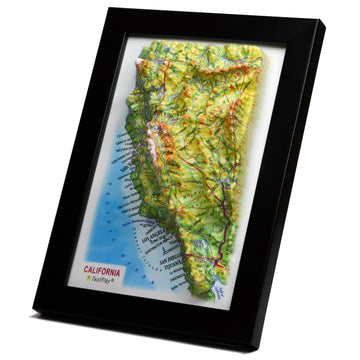
Before diving into the specifics of TESTPLAY's quality, let us briefly define what a raised relief map is. Simply put, it is a map that uses a three-dimensional surface to depict elevation and terrain.
Unlike contour lines on a flat map, which abstractly represent changes in height, a raised relief map allows you to see and feel the hills, mountains, valleys, and plateaus as physical forms. This tactile element provides an immediate and intuitive understanding of topography that flat maps cannot replicate.
They are created by forming a flexible material, typically plastic, over a mold that represents the exaggerated or true-to-scale elevation data of a specific area. Once the form is set, the standard map information – such as political boundaries, bodies of water, roads, cities, and place names – is printed onto the raised surface, aligning perfectly with the underlying topography.
This fusion of precise physical form and detailed cartographic information makes raised relief maps incredibly powerful tools for learning, planning, and visualizing complex geographical data. They bridge the gap between abstract representation and tangible reality.
Why Quality is Paramount in Raised Relief Mapping
The effectiveness of a raised relief map hinges entirely on its quality. Poor quality manifests in several detrimental ways, severely limiting the map's usefulness and longevity.
Firstly, and perhaps most critically, inaccurate relief maps are unreliable. If the elevations are incorrectly scaled or the topography is distorted, any analysis or planning based on that map will be flawed.
For instance, a hiker planning a route through mountainous terrain needs to trust that the slopes and passes depicted are accurate representations of the challenges they will face. An educator using a map to teach students about watersheds needs the ridges and valleys to be correctly portrayed to explain drainage patterns effectively.
Beyond accuracy, durability is a major factor. Raised relief maps are often handled frequently, especially in educational settings or during planning sessions. Maps made with flimsy materials or weak construction will quickly show wear and tear, potentially cracking, fading, or delaminating.
A high-quality map, conversely, can withstand years of use, retaining its visual appeal and structural integrity. This is particularly important for institutions like schools, libraries, and government agencies that require long-term investments in their resources.
Furthermore, the aesthetic quality and level of detail impact the map's engagement factor. A map with vibrant, precisely registered printing, clear labeling, and accurately rendered terrain is not only more reliable but also more compelling and easier to interpret. Quality ensures that the map is a pleasure to use and a source of genuine insight, rather than frustration.
TESTPLAY's Commitment to Unmatched Precision and Quality
At TESTPLAY, the creation of a raised relief map is not merely a manufacturing process; it is a blend of rigorous data analysis, advanced technology, skilled craftsmanship, and an unwavering commitment to geographical accuracy. Every map produced is a testament to this dedication to precision and quality.
This commitment begins long before the plastic is formed or the ink touches the surface. It starts with the foundational element of any map: the data. Without accurate source data, even the most sophisticated manufacturing process cannot produce a reliable map.
TESTPLAY understands that the integrity of the final product is directly linked to the precision of the information used to create it. This understanding drives their meticulous approach to data acquisition and validation, setting the stage for everything that follows in the production process.
The Foundation: Data Acquisition and Accuracy
The starting point for every TESTPLAY raised relief map is the highest quality geographic data available. This includes high-resolution digital elevation models (DEMs), which provide the precise height information for the terrain.
TESTPLAY sources data from reputable governmental and scientific institutions known for their accuracy and reliability. This might include data derived from satellite missions, aerial surveys, or ground-based topographical surveys.
The accuracy of the elevation data is paramount, as it directly dictates the shape of the raised relief. Errors in this initial data will be physically manifest in the final map, leading to distorted landforms. Therefore, TESTPLAY invests heavily in acquiring the most granular and trustworthy data sets possible for the regions they map.
Beyond elevation, detailed cartographic data is needed for features like rivers, lakes, coastlines, political boundaries, roads, cities, and points of interest. This data is also sourced from authoritative sources, ensuring it is current and accurate.
Before any manufacturing or design work begins, the acquired data undergoes rigorous validation and processing. This involves checking for consistency, resolving discrepancies, and integrating different data layers seamlessly. This meticulous data preparation phase is a critical step that guarantees the foundational accuracy of every TESTPLAY map, ensuring the final product is a true and reliable representation of the geography.
The Art and Science of Manufacturing
Translating accurate data into a precise, durable, and visually appealing three-dimensional map requires specialized manufacturing techniques. TESTPLAY employs a combination of advanced technology and skilled execution in their production process.
This process involves creating a highly accurate mold based on the processed digital elevation data, forming the map material over this mold, and then precisely printing the map information onto the textured surface. Each step is executed with painstaking attention to detail to ensure the final map accurately reflects the source data and meets TESTPLAY's high-quality standards.
Precision Vacuum Forming
The creation of the three-dimensional shape is typically achieved through a process called vacuum forming. A sheet of thermoplastic material, chosen for its durability and ability to hold detail, is heated until pliable.
This heated sheet is then draped over a precisely manufactured mold that represents the negative of the desired terrain. A vacuum is applied, drawing the soft plastic down tightly onto the mold's surface, capturing every detail of the topography.
The accuracy of this process is critical. The mold itself must be created with extreme precision based on the elevation data, and the vacuum forming process must faithfully transfer this detail to the plastic sheet without distortion or loss of resolution. TESTPLAY utilizes state-of-the-art machinery and finely crafted molds to ensure the formed relief is a precise physical manifestation of the digital elevation data.
The plastic is then allowed to cool and harden, retaining its three-dimensional shape. This formed plastic shell is the physical foundation of the raised relief map, capturing the nuances of the landscape from subtle slopes to dramatic cliffs.
High-Fidelity Printing
Once the plastic sheet has been vacuum-formed into the desired relief, the two-dimensional map data – coastlines, rivers, roads, boundaries, place names, contour lines, and colors representing different elevations or land cover – must be printed onto this textured surface. This is a highly complex process that requires exceptional precision.
The printing must be perfectly registered with the underlying three-dimensional topography. For example, a river printed on the map must flow along the corresponding valley in the raised relief, and a mountain peak label must sit precisely on top of the formed summit. Achieving this perfect alignment on a non-flat surface is a significant technical challenge.
TESTPLAY utilizes advanced printing techniques and specialized equipment to ensure impeccable registration. This often involves printing multiple layers of ink to achieve vibrant colors and sharp details that are durable and resistant to fading or scratching. The inks used are selected for their quality and longevity, ensuring the printed map information remains clear and legible over time, complementing the permanence of the physical relief.
The combination of precise vacuum forming and high-fidelity, perfectly registered printing is what brings a TESTPLAY map to life, fusing accurate physical form with comprehensive cartographic detail into a cohesive and reliable geographical tool.
Cartographic Excellence: Translating Data into Usable Maps
While accurate data and precise manufacturing are essential, a great map also requires skilled cartography – the art and science of designing and producing maps. TESTPLAY's cartographers play a vital role in translating complex data into a clear, understandable, and aesthetically pleasing visual representation that aligns perfectly with the raised topography.
This involves thoughtful decisions about scale, symbology, color palettes, labeling, and the inclusion of relevant geographical features. The choice of colors, for instance, is carefully considered to intuitively represent elevation changes, land use, or vegetation patterns while remaining visually harmonious and legible on the textured surface.
Labeling is particularly challenging on a raised surface. Place names, mountain peaks, and river names must be positioned and oriented in a way that is easy to read regardless of the map's angle and doesn't obscure important topographical details. TESTPLAY's cartographers are experts at optimizing text placement and style for three-dimensional maps.
They also ensure that standard map conventions, such as contour lines, are clearly depicted and align logically with the physical relief, providing users with multiple ways to interpret the terrain. The scale of the map, both horizontal and vertical (though vertical scale is often exaggerated in relief maps to make terrain changes more apparent), is clearly indicated and consistently applied.
This commitment to cartographic excellence ensures that every TESTPLAY map is not just a physical model but a fully functional and highly informative geographical tool, designed for clarity and ease of use across diverse applications.
Superior Materials for Durability and Appearance
The choice of materials is fundamental to the durability and finished quality of a raised relief map. TESTPLAY selects materials that are not only capable of accurately holding the intricate vacuum-formed shape but are also robust and long-lasting.
Typically, high-quality, durable plastics like styrene or PVC are used. These materials are chosen for several key properties: their ability to be precisely formed, their resistance to tearing and cracking, their stability in varying environmental conditions (temperature, humidity), and their receptiveness to high-quality printing.
The thickness of the plastic sheet is also a factor, balancing the need for structural rigidity with the ability to capture fine detail during forming. TESTPLAY uses materials of appropriate gauge to ensure their maps are sturdy and maintain their shape without becoming brittle or easily damaged.
Furthermore, the surface finish of the plastic is important for print quality and appearance. A good material allows inks to adhere properly, resulting in sharp, vibrant colors and crisp text that won't easily scratch or fade over time, even with frequent handling or exposure to light.
By using superior materials, TESTPLAY ensures that their commitment to precision in data and manufacturing is complemented by physical durability. This results in maps that are not only accurate and detailed but also resilient, standing up to the demands of educational environments, professional use, or years of appreciation in a home or office setting.
Rigorous Quality Control at Every Stage
TESTPLAY's pursuit of precision and quality is reinforced by a stringent quality control process implemented at every stage of production. This isn't just a final check; it is an integrated system of verification and inspection from data acquisition through to the finished product.
Initial data is validated and checked for accuracy and completeness. Molds are inspected for precision and fidelity before they are used for forming. During the vacuum forming process, checks are performed to ensure the plastic is correctly formed and captures the detail from the mold without defects.
The printing process is subject to particularly rigorous quality control. Experts meticulously check the registration of the printed map data against the underlying relief to ensure perfect alignment. Color accuracy and consistency are also checked against standards.
Finally, each finished map undergoes a thorough visual and tactile inspection. This final check verifies the structural integrity, the clarity and accuracy of the printing, the fidelity of the relief to the intended topography, and the overall finish. Any map that does not meet TESTPLAY's exacting standards is not shipped.
This multi-stage quality control process ensures that every TESTPLAY raised relief map that leaves the facility is a product of exceptional precision and is built to last, guaranteeing customers receive a high-quality, reliable geographical tool.
The Tangible Benefits of Choosing TESTPLAY
The meticulous attention to data accuracy, manufacturing precision, cartographic excellence, material quality, and rigorous quality control translates into significant tangible benefits for anyone who chooses a TESTPLAY raised relief map.
These benefits extend across various user groups, making TESTPLAY maps an invaluable resource for diverse applications, from the classroom to the wilderness and beyond. The investment in quality pays dividends in usability, reliability, and long-term value.
For Education and Learning
In educational settings, TESTPLAY raised relief maps are transformative learning tools. The three-dimensional nature makes abstract geographical concepts immediately understandable and engaging for students of all ages.
Students can physically interact with the landscape, tracing watersheds, identifying mountain ranges, understanding elevation changes, and visualizing scale in a way that flat maps or digital representations often cannot achieve. The accuracy of TESTPLAY maps ensures that the geographical principles being taught are based on reliable representations of the Earth's surface.
The tactile experience enhances retention and comprehension, particularly for kinesthetic learners. These maps facilitate lessons in geography, geology, environmental science, history (understanding terrain's impact on events), and even mathematics (scale, proportion). Their durability also means they can withstand the rigors of frequent use in busy classrooms and libraries for many years, providing a lasting educational resource.
For Planning and Exploration
For outdoor enthusiasts, emergency responders, pilots, land managers, and anyone who needs to understand terrain for practical purposes, the precision of a TESTPLAY raised relief map is critical. Accurate representation of slopes, valleys, and elevations is vital for safe and effective planning.
Hikers and climbers can use the map to visualize routes, assess difficulty, and understand the physical challenges of the terrain. Pilots can use them for flight planning, understanding ground features relative to altitude. Emergency services can use them for planning responses in difficult or unfamiliar terrain.
Land managers and environmental scientists can analyze drainage patterns, identify potential erosion areas, or plan conservation efforts with a clear understanding of the topography. The durability means these maps can even be used in the field, within appropriate protective measures, providing a reliable reference that doesn't depend on electronic devices or battery life.
For Professional Use
Many professions rely on accurate topographic data. Urban planners, civil engineers, geologists, hydrologists, and government agencies involved in resource management or disaster preparedness require the highest level of accuracy in their geographical tools. TESTPLAY's commitment to precision meets these demanding professional needs.
Raised relief maps provide an intuitive way for professionals to visualize complex terrain data, making it easier to communicate findings, plan infrastructure projects, analyze geological formations, or predict the behavior of water runoff. They serve as valuable assets in presentations, consultations, and strategic planning meetings, offering a shared, tangible reference point for teams.
The authoritative nature of maps based on accurate data and produced with precision means professionals can trust the information they are using to inform critical decisions and assessments. This reliability is indispensable in fields where errors can have significant consequences.
For Collectors and Enthusiasts
Beyond their practical and educational uses, TESTPLAY raised relief maps are also objects of beauty and fascination. For collectors, geography enthusiasts, or anyone who appreciates fine craftsmanship and the natural world, these maps are stunning pieces for display.
Their accurate representation of iconic landscapes, combined with vibrant printing and durable materials, makes them captivating conversation pieces. They offer a constant source of visual and tactile engagement, allowing owners to connect with places they love or aspire to visit in a deeply physical way.
The longevity provided by TESTPLAY's quality materials and construction ensures that these maps can be enjoyed and appreciated for many years, becoming cherished items that combine aesthetic appeal with profound geographical insight. They represent an intersection of art, science, and craftsmanship.
Beyond the Map: TESTPLAY's Dedication to Service
TESTPLAY's commitment to quality extends beyond the physical product itself to the service they provide. They understand that customers are investing in a premium product and deserve support and expertise.
Whether assisting with selecting the right map for a specific need, answering questions about the data or manufacturing process, or providing support after a purchase, TESTPLAY aims to ensure a positive customer experience. This dedication reinforces their position as an authoritative and trustworthy provider of high-quality geographical tools.
Their website and customer service resources provide valuable information about their maps, the areas they cover, the scales used, and advice on how to care for your raised relief map to maintain its condition for years to come. This holistic approach to quality, encompassing both the product and the customer relationship, sets TESTPLAY apart.
Conclusion: Why Precision Matters in Every Raised Relief Map
In a world increasingly dominated by fleeting digital information, there remains a profound and enduring value in tangible, accurate geographical tools. Raised relief maps offer a unique window into the world's topography, providing an intuitive, tactile understanding of landscapes that is unparalleled.
However, the utility and trustworthiness of these maps are entirely dependent on the precision and quality with which they are created. An inaccurate relief map is worse than no map at all, potentially leading to misunderstanding, poor planning, and disappointment.
TESTPLAY stands as a leader in the field of raised relief mapping because of its unwavering commitment to excellence. From the painstaking process of acquiring and validating the most accurate geographical data to the use of advanced manufacturing techniques like precision vacuum forming and high-fidelity printing, every step is executed with the goal of achieving unmatched fidelity to the real-world terrain.
Combined with superior, durable materials, expert cartographic design, and a rigorous, multi-stage quality control process, TESTPLAY ensures that every map they produce is an authoritative, reliable, and long-lasting representation of the Earth's surface. These maps are not merely visual aids; they are robust tools for education, essential resources for planning and professional use, and beautiful, insightful objects for anyone passionate about geography.<
Choosing a TESTPLAY raised relief map means choosing a product built on a foundation of precision and quality, designed to provide accurate geographical insight and withstand the test of time. It is an investment in a tangible piece of the world, brought to life with exceptional detail and craftsmanship. Experience the difference that true precision makes in every raised relief map by TESTPLAY.
```