
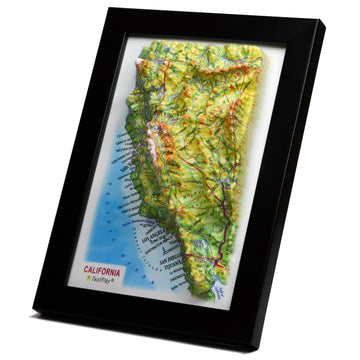

For many outdoor enthusiasts, a TESTPLAY 3D map is an invaluable tool, particularly associated with navigating and understanding mountainous terrain during the ski season. Its tactile nature and accurate three-dimensional representation make visualizing slopes, bowls, and lifts intuitive in a snow-covered landscape. However, limiting your TESTPLAY map usage to just a few months of the year means missing out on its incredible versatility and power as a planning and safety aid for countless other outdoor activities.
The intricate detail and topographic accuracy embedded within your TESTPLAY 3D map remain just as relevant and useful when the snow melts and the landscape transforms into a vibrant green or golden brown tapestry. From planning challenging summer hikes and mapping technical mountain bike trails to enhancing safety during shoulder season exploration, your 3D map is a year-round companion waiting to reveal new dimensions of your favorite areas. This comprehensive guide will show you how to unlock the full potential of your TESTPLAY map, transforming it from a seasonal ski tool into an essential piece of gear for all your non-winter adventures, providing unparalleled insights into the terrain, aiding in meticulous planning, and ultimately contributing to safer and more rewarding experiences in the great outdoors throughout every season. We will delve into specific activities, planning strategies, safety considerations, and advanced techniques to help you maximize the value of your investment far beyond the last snowflake.
While digital maps and GPS devices are ubiquitous, the unique advantages of a physical, three-dimensional map become even more apparent in diverse, non-snow environments. The ability to hold the terrain in your hands, feel the undulations, and see slopes from various angles provides a level of spatial understanding that a flat screen simply cannot replicate. This intuitive grasp of topography is crucial for activities like hiking, biking, and trail running, where understanding the subtle changes in gradient, the presence of hidden gullies, or the best line through complex terrain can significantly impact your experience and safety.
Furthermore, using your TESTPLAY map beyond ski season maximizes the value of your initial investment. It's not just a seasonal purchase; it's a durable, reliable tool designed to withstand the elements and provide accurate information regardless of the weather or time of year. By integrating it into your planning process for spring treks, summer climbs, and fall foliage tours, you ensure that this powerful resource is working for you year-round. Understanding the terrain in 3D allows for more creative route planning, helping you discover new trails, find scenic viewpoints, or even predict where water might collect after a rain shower, information valuable in any season.
The non-winter seasons offer a completely different perspective on the same mountains and valleys you might know from skiing. The snow melts away to reveal trails, streams, rocky outcrops, and dense forests that were hidden for months. Your TESTPLAY 3D map is the perfect tool to rediscover this familiar terrain in its summer guise or to explore entirely new areas with confidence and detailed understanding. It allows you to visualize the lay of the land, predict visibility from certain points, and understand the challenges a specific route might present before you even step outside.
Thinking beyond the groomed runs and designated ski zones opens up a world of possibilities for exploration. The map accurately depicts the underlying geological structure, the network of summer trails often invisible in winter, and the natural features that become prominent once the snow cover is gone. This section explores some key activities where your TESTPLAY 3D map proves indispensable outside of ski season.
Hiking is perhaps the most straightforward application of your TESTPLAY map beyond skiing. The map's detailed contour lines, rendered in three dimensions, immediately show you the steepness of climbs and descents. You can literally feel the gradient with your fingers, providing an intuitive understanding of the physical effort required for a specific trail segment. This is far more impactful than looking at abstract contour lines on a flat map or a numerical elevation profile on a screen.
Using your TESTPLAY map for hiking allows for meticulous route planning. You can trace potential paths, evaluate alternative routes based on perceived difficulty, and identify bail-out points or shortcuts if needed. The visible representation of ridges, valleys, and saddles helps in orienting yourself and understanding the overall flow of the landscape, which is crucial for navigation, especially in areas with less-defined trails. You can spot potential viewpoints by identifying prominent knobs or ridges offering expansive vistas.
Mountain biking presents unique challenges, especially on technical trails where gradient, obstacles, and flow are critical. A TESTPLAY 3D map is incredibly useful for assessing the suitability of terrain for biking. The tactile feel of the slopes helps visualize the steepness of climbs that might require pushing, or the pitch of descents that demand advanced braking skills. You can identify switchbacks, assess side slopes for potential exposure, and get a feel for the overall character of a trail network.
When planning a mountain bike ride, you're often looking for specific types of terrain – long climbs, fast descents, technical sections. The 3D map helps you connect known trails or explore potential new lines by visualizing how they traverse the contours. You can identify flatter valley bottoms suitable for cruising, steep faces for challenging ascents or descents, and undulating terrain for flowy singletrack. The visual representation of creeks and stream crossings also aids in planning, as these can be significant obstacles or navigation points on a bike.
Trail runners often seek routes with specific elevation profiles or challenging technical sections. Your TESTPLAY 3D map is excellent for visualizing these elements. You can quickly see the length and steepness of climbs, identify flatter sections for recovery, and plan loops that incorporate varied terrain. For ultra-runners, understanding the cumulative elevation gain and loss over a long distance is crucial, and the 3D map provides a clear visual summary of the entire course profile.
For orienteering or off-trail navigation, the 3D map is arguably even more powerful than for trail-specific activities. The ability to see the landscape in three dimensions makes it much easier to identify landforms that serve as navigational aids – prominent reentrants, distinct spurs, cliff lines, or the shape of a particular hill. You can practice 'terrain association,' relating what you see on the map to what you see on the ground, a fundamental skill in navigation that the 3D format greatly facilitates. Planning off-trail routes involves understanding line-of-sight and potential barriers, both of which are clearly represented on your TESTPLAY map.
Beyond specific sports, the TESTPLAY 3D map is a fantastic tool for general exploration and understanding the local geography. Want to find the source of a particular stream? See how different valleys connect? Identify potential rock climbing crags? The map provides the spatial context to answer these questions. It encourages curiosity and helps you see the interconnectedness of the landscape.
Venturing off established trails requires a higher level of navigational skill and terrain awareness. Your 3D map allows you to study the area intensely beforehand, identifying ridgelines to follow, drainages to avoid, and escape routes in case of unexpected challenges. You can visualize potential natural hazards like steep drops or impassable vegetation barriers by observing the contours and symbols. This pre-visualization is a critical step in responsible backcountry travel, and the 3D map makes it significantly easier and more intuitive than relying solely on 2D representations.
Effective planning is the cornerstone of any successful outdoor adventure, and your TESTPLAY 3D map is a powerful strategic tool. It allows you to go beyond simply picking a start and end point and instead engage deeply with the terrain you plan to traverse. This leads to better decision-making about route difficulty, time estimates, and necessary preparations. The map facilitates a holistic understanding of the environment, helping you anticipate challenges and capitalize on opportunities presented by the landscape.
Using your 3D map for planning involves a different mindset than simply following a pre-drawn line on a digital app. It encourages you to think about the terrain itself – the effort required to ascend a slope, the potential views from a ridge, or the way water flows through a valley. This section explores specific strategic planning techniques facilitated by the three-dimensional nature of your map.
Analyzing a route on a flat map requires interpreting contour lines and abstract symbols. On your TESTPLAY 3D map, the terrain is laid out before you, making analysis much more direct. You can immediately see and feel the steepness of a slope, the depth of a valley, or the prominence of a peak. This allows for a more accurate assessment of route difficulty and estimated travel time based on the actual physical challenges presented by the terrain.
You can trace potential routes with your finger, visualizing the climb, traverse, and descent. The map helps identify the path of least resistance or, conversely, the most challenging line if that's your goal. You can see how features like cliffs, streams, or dense forest patches might block a direct path and plan detours accordingly. This level of detailed terrain analysis is invaluable whether you're planning a day hike, a multi-day backpacking trip, or an off-trail exploration.
While many digital tools provide elevation profiles, seeing the elevation changes physically represented on your TESTPLAY 3D map offers a unique perspective. You can place your finger at the start of a climb and trace it up the slope, *feeling* how long and steep it is. This tactile experience provides a much more intuitive understanding of the effort involved compared to just looking at a graph. You can easily compare the gradients of different potential routes to choose the one that best matches your fitness level or desired challenge.
Understanding gradient is critical for various activities. For hiking, it helps estimate how quickly you'll gain or lose elevation and the corresponding physical strain. For mountain biking, it informs gear choices and assesses the rideability of climbs and descents. For trail running, it helps predict pace and plan energy expenditure. The 3D map makes this understanding accessible and immediate, allowing for more realistic and effective planning.
Your TESTPLAY 3D map includes standard topographic symbols for features like streams, lakes, cliffs, and different types of vegetation (forests, open areas). Seeing these features rendered in 3D context is extremely helpful. You can see how a stream flows through a valley, where a cliff face appears relative to a trail, or how a dense forest might block a view or passage. This visual integration of features with the terrain makes interpreting the map much easier and more intuitive.
Identifying these features accurately is vital for navigation and planning. Streams can be water sources or obstacles. Cliffs are impassable barriers. Forests can affect visibility and travel speed. The 3D perspective helps you understand the relationship between these features and the underlying terrain, allowing you to plan routes that utilize or avoid them as needed. For example, you can see how a trail follows a stream bed or how a ridge provides a clear path above a dense forest.
Safety is paramount in any outdoor activity, especially in remote or challenging terrain. Your TESTPLAY 3D map is not just a planning tool; it's a critical safety device. While GPS and digital maps are useful, they rely on battery power and electronic signals, which can fail. A physical map requires neither and is impervious to cold, moisture (when protected), and signal loss. In a backcountry emergency, having a reliable, easy-to-understand map can be a lifesaver.
Furthermore, the 3D nature of the map aids in critical safety assessments that are harder to make with a flat map. Understanding the terrain in three dimensions allows you to better evaluate risks, plan for contingencies, and navigate effectively even in poor visibility. This section focuses on how your TESTPLAY map enhances safety during your non-winter adventures.
Effective navigation involves more than just following a trail; it requires understanding your location relative to the surrounding landscape. Your TESTPLAY 3D map excels at this. By comparing the physical features you see around you with their representation on the 3D map – the shape of a nearby hill, the direction a valley is running, the confluence of streams – you can pinpoint your location with surprising accuracy. This skill, known as terrain association, is much easier to develop and apply when you can see and feel the landscape on your map.
In low visibility conditions, such as fog or approaching dusk, being able to identify key landforms on your map and relate them to your surroundings is critical for staying oriented. The 3D map helps you visualize what features should be around you based on your planned route and aids in recognizing them even when obscured. It also helps in planning 'handrails' – linear features like ridges or streams that you can follow to stay on course – and 'catching features' – prominent landmarks that signal you've gone too far or need to change direction.
While snow adds specific avalanche hazards, non-winter seasons have their own risks, including steep drop-offs, scree slopes, water hazards, and exposure to weather elements. Your TESTPLAY 3D map helps you identify areas that might present these dangers. Steep contour lines clustered together indicate potential cliffs or very steep slopes prone to rockfall or difficult passage. Drainages can become raging torrents after heavy rain. Exposed ridges offer amazing views but can be dangerous in high winds or lightning storms.
By studying the 3D map, you can proactively identify these potential hazards along your planned route. You can choose alternative paths that avoid dangerous areas or plan how to safely navigate through them. Seeing the terrain in three dimensions makes these risks much more apparent than they might be on a flat map, allowing for better risk assessment and mitigation during the planning phase.
Weather in mountainous or wild terrain can change rapidly in any season. Your TESTPLAY 3D map helps you anticipate how weather conditions might affect your route and plan accordingly. For example, knowing which areas are exposed ridges versus protected valleys helps you plan for wind or storms. Identifying drainages and low points helps you predict where water might accumulate or streams might be difficult to cross after rain.
Understanding the aspect (the direction a slope faces) from your 3D map can also inform decisions, although aspect is typically derived from interpreting contours rather than being directly visible in 3D unless color-coded. However, the overall shape of the terrain dictates drainage patterns and potential wind corridors, which are clear on the 3D map. By using the map to understand the physical characteristics of your planned route, you can make better decisions about when to go, what gear to carry, and what alternative plans to have in case of adverse weather.
Once you're comfortable using your TESTPLAY 3D map for basic planning and navigation in non-winter conditions, you can explore more advanced techniques and integrate it with other tools for an even richer experience. The map is not a standalone solution but works synergistically with modern technology and traditional outdoor skills. Combining the intuitive understanding gained from the 3D map with the precision of digital tools opens up new possibilities for detailed analysis and execution of complex routes.
Advanced users can leverage the map's detail to study specific geological formations, plan routes that follow subtle geographic features, or analyze watershed boundaries. Integrating the map with GPS tracks allows for powerful post-adventure analysis or real-time cross-referencing in the field. This section touches upon some ways to take your TESTPLAY map usage to the next level beyond basic trail following.
Your TESTPLAY 3D map works wonderfully in conjunction with GPS devices or smartphone mapping applications. You can use the physical map for overall route planning, visualizing the big picture, and understanding the terrain shape, while using the GPS or app for precise location tracking, distance measurement, and verifying your position on the ground. In the field, if your GPS unit indicates you are at a certain point, you can look at that exact spot on your 3D map to see the surrounding terrain, understand why the GPS might be sending you a certain way, and get a better sense of what lies ahead.
Many experienced navigators recommend using a physical map and compass as your primary navigation tools, backed up by GPS technology. This provides redundancy in case of technical failure and encourages a deeper understanding of the terrain. Using your TESTPLAY 3D map alongside a digital tool allows you to leverage the strengths of both – the intuitive spatial understanding of the 3D map and the precision and real-time data of the digital device. You can also plot GPS waypoints or tracks onto your 3D map after an adventure for analysis or to remember key locations.
The high resolution and accuracy of your TESTPLAY 3D map allow for detailed analysis of specific geographic features. You can study how different drainages merge, identify saddle points that offer passage between valleys, trace the path of prominent ridges, or examine the characteristics of cirques and other glacial features if present. For those interested in geology or hydrology, the map provides a tangible model to study these systems in detail.
This detailed analysis can inform more complex route planning. For example, you might plan a traverse that stays strictly on a particular ridgeline, using the 3D map to identify where the ridge narrows or becomes impassable. Or you might plan a route that follows a specific drainage pattern. This level of engagement with the map allows for truly bespoke adventure planning, tailored precisely to the terrain and your interests.
To ensure your TESTPLAY 3D map remains a valuable tool for years to come, proper care and storage are important, especially when transitioning between seasons. While the map is durable, protecting it from extreme conditions and improper handling ensures its longevity and accuracy. Keeping it in good condition means it will be ready whenever inspiration strikes for a non-winter adventure.
When not in active use, store your map flat or rolled loosely in a cool, dry place away from direct sunlight. Avoid placing heavy objects on it or creasing it sharply. If it gets dirty from mud or trail dust, gently wipe it clean with a damp cloth; avoid harsh chemicals. While it can withstand some moisture, prolonged exposure to water or being submerged is not recommended. By taking a little care, your TESTPLAY 3D map will continue to serve as an excellent resource for all your outdoor pursuits, season after season.
Your TESTPLAY 3D map is a masterpiece of topographic representation, offering an unparalleled intuitive understanding of complex terrain. Limiting its use to the ski season means only scratching the surface of its potential. As this guide has explored, the map's benefits extend profoundly into the spring, summer, and fall, making it an essential tool for a wide range of outdoor activities, including hiking, mountain biking, trail running, and general exploration.
From meticulously planning routes and analyzing terrain characteristics like gradient and features to enhancing safety through improved navigation and hazard identification, your TESTPLAY 3D map provides a level of insight that complements and often surpasses digital alternatives. It encourages a deeper connection with the landscape and fosters critical skills in terrain interpretation and navigation. By integrating your TESTPLAY map into your year-round outdoor planning and execution, you unlock a world of adventure opportunities, gain confidence in challenging environments, and maximize the value of this unique and powerful tool. So, as the snow melts and the trails open, pick up your TESTPLAY map and discover the familiar mountains and valleys in a whole new dimension. Your next great non-winter adventure is waiting to be planned and explored.

TestPlayNA: Your Memories, Elevated: National Park & Ski Maps.