

The vast majority of our planet is covered by water, yet the topography beneath the waves remains largely unseen and often difficult to conceptualize. While flat maps provide a basic outline of continents and oceans, they struggle to convey the dramatic three-dimensional complexity of the seafloor. Imagine trying to understand mountain ranges or canyons solely from contour lines on a flat surface; the challenge is similar, perhaps even greater, when exploring the ocean floor.
This inherent difficulty in visualizing underwater landscapes can make learning oceanography, marine geography, and bathymetry feel abstract or overwhelming. Students and enthusiasts alike might struggle to grasp the immense scale of features like the Mid-Ocean Ridge or the extreme depth of the Mariana Trench when represented only by colors or lines on a two-dimensional page. We need tools that bring the hidden world of the ocean floor into tangible reality.
Fortunately, there is an incredibly effective tool that bridges this gap: the raised relief map. These tactile, three-dimensional representations of geography offer a unique and powerful way to explore the world's oceans, transforming complex data into an intuitive, touchable experience. They allow us to feel the contours of the continental shelf, trace the path of submarine mountain ranges, and understand the sheer drop into the deepest trenches.
In this comprehensive guide, we will delve into how raised relief maps serve as invaluable resources for understanding oceanography. We will explore what makes them particularly suited for studying the marine environment, examine the key underwater features they brilliantly illustrate, and discuss their practical applications in education, personal study, and beyond. Prepare to embark on a journey that makes the unseen world beneath the waves incredibly real and accessible.
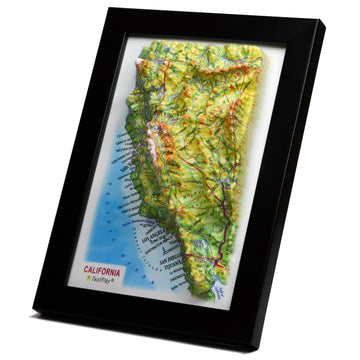
Before we plunge into their specific uses in oceanography, let's clarify what a raised relief map is. At its core, a raised relief map is a topographical map that uses vertical exaggeration to show the elevation and depression of geographical features in three dimensions. Unlike a standard flat map, which relies on contour lines or color gradients to indicate elevation, a relief map physically protrudes or recedes from the surface.
These maps are typically molded from materials like vacuum-formed plastic or fiberglass, based on precise topographical or bathymetric data. The process involves creating a master mold that replicates the terrain, or in our case, the seafloor, in miniature 3D form. A sheet of material is then heated and sucked down onto this mold, capturing its shape.
The resulting map displays not just the horizontal location of features, but also their relative vertical height or depth. While horizontal scale is maintained true to a standard map, the vertical scale is often exaggerated. This exaggeration is crucial for making elevation changes, especially subtle ones, noticeable and tangible, allowing users to literally feel the landscape.
While useful for any terrain, raised relief maps possess particular strengths that make them exceptionally well-suited for studying the world's oceans. The challenges inherent in visualizing underwater topography are precisely what these maps help to overcome, offering benefits that flat maps simply cannot match. Their ability to translate complex bathymetric data into a tangible form is paramount.
Oceanography is fundamentally concerned with the three-dimensional nature of the ocean. Depth, or bathymetry, is not just a number; it is a crucial element that shapes currents, influences marine life distribution, and defines geological structures. Flat maps represent depth using contour lines, color gradients, or spot soundings, which require interpretation and mental reconstruction of the 3D shape.
Raised relief maps bypass this interpretive step by physically rendering the depth. You can see and feel the descent from the continental shelf into the abyssal plain, or the steep walls of a trench. This direct, physical representation makes the concept of depth much more intuitive and easier to grasp, especially for visual and kinesthetic learners.
Oceanographic features exist on truly immense scales. The Mid-Ocean Ridge system, for example, is the longest mountain range on Earth, stretching over 65,000 kilometers. Ocean trenches plunge to depths exceeding 11,000 meters. Representing these vast features and their relative sizes accurately on a manageable flat map can be challenging.
Raised relief maps, particularly those covering large ocean basins or the entire world, allow users to appreciate the scale of these features in a physical way. While the vertical scale is often exaggerated, the horizontal relationships are preserved. This helps in understanding the sheer size of abyssal plains compared to trenches, or the vast network of oceanic ridges that crisscross the globe. Holding the map, one can get a better sense of the overall structure of an ocean basin.
Not everyone learns best by reading or looking at images. For many, particularly students, engaging the sense of touch significantly enhances understanding and retention. Raised relief maps offer a powerful tactile learning experience. Running your fingers along the contours of a seamount, tracing the path of a ridge, or feeling the sharp drop into a trench provides a sensory connection to the geography.
This kinesthetic engagement transforms the learning process from passive observation to active exploration. It makes abstract concepts like "slope" or "elevation change" tangible and relatable. This is particularly beneficial in educational settings, where catering to diverse learning styles is essential for effective instruction.
Raised relief maps bring many fascinating underwater features to life, allowing for detailed exploration of the ocean floor's complex topography. By examining these maps, one can gain a deeper understanding of the geological processes that shape our planet's surface, both above and below the waves. Let's explore some of the most prominent features.
The transition zone between the continent and the deep ocean basin is known as the continental margin. Raised relief maps clearly show the different parts of this margin: the continental shelf, the continental slope, and the continental rise. The continental shelf is the submerged extension of the continent, typically shallow and relatively flat, depicted as a gently sloping area on the map near the coast.
Beyond the shelf lies the continental slope, a much steeper descent towards the deep ocean floor. Relief maps make the dramatic change in gradient at the shelf break very clear, allowing you to feel the sharp drop-off. At the base of the slope, often lies the continental rise, a gentler incline formed by accumulated sediments, visible as a transition zone before the deep ocean basin.
Covering vast areas of the deep ocean floor are the abyssal plains, which are incredibly flat and featureless regions. They lie at depths typically between 3,000 and 6,000 meters (around 10,000 to 20,000 feet). Raised relief maps, despite exaggerating vertical scale, effectively convey the *lack* of significant relief across these enormous areas.
Feeling the smooth, even surface of an abyssal plain on a relief map provides a stark contrast to the dramatic features found elsewhere, helping to emphasize just how uniform these extensive regions are. This flatness is due to the accumulation of fine-grained sediments that settle over time, burying any underlying topography.
One of the most striking features on any global ocean relief map is the system of mid-ocean ridges. These are colossal underwater mountain ranges formed by volcanic activity where tectonic plates are spreading apart. The Mid-Atlantic Ridge, the East Pacific Rise, and the Indian Ocean Ridge are just parts of this interconnected global system.
On a raised relief map, these ridges stand out prominently as elevated areas, often with a rift valley running along their crest. Feeling the rugged topography of a mid-ocean ridge helps in understanding its mountainous nature and its role in seafloor spreading. The scale of these features is truly appreciated when seen and felt on a physical map.
In stark contrast to the ridges are the ocean trenches, the deepest parts of the ocean floor. These are long, narrow depressions formed at convergent plate boundaries where one tectonic plate is subducting beneath another. The Mariana Trench, the Challenger Deep, the Puerto Rico Trench, and the Sunda Trench are famous examples.
Raised relief maps vividly depict these trenches as significant depressions, allowing users to feel the steep plunge from the surrounding abyssal plain or continental margin into these extreme depths. The narrowness and profound depth of a trench are often the most dramatic features shown on an ocean relief map, providing a tangible sense of the incredible pressures and unique environments found there.
Scattered across the ocean floor are numerous isolated underwater mountains called seamounts. These are typically extinct volcanoes that rise at least 1,000 meters (3,300 feet) above the surrounding seafloor. Guyots are similar to seamounts but have flat tops, a result of erosion when the volcano was at sea level before subsiding.
On a raised relief map, seamounts appear as distinct, cone-shaped peaks rising from the abyssal plain. Guyots are also visible, their flat summits providing a tactile distinction from their pointed counterparts. Feeling these isolated features helps illustrate the volcanic history of the ocean floor and how these underwater mountains punctuate the vast flatness of the plains.
Cutting into the continental slopes and sometimes extending onto the continental shelves are submarine canyons. These V-shaped valleys resemble canyons found on land, and many are thought to have been carved, at least in part, by turbidity currents – dense, sediment-laden flows that move rapidly down the slope. The Monterey Canyon off the coast of California is a well-studied example.
Relief maps can show these canyons as incised features cutting across the slope, providing a tactile representation of how these erosional features dissect the continental margin. Feeling the structure of a submarine canyon helps visualize the powerful underwater forces that have shaped it over time.
The benefits of using raised relief maps for oceanography extend far beyond simply identifying features. They are powerful educational tools and valuable resources for anyone seeking a deeper connection to the marine world. Their tactile nature makes them particularly effective in various learning environments.
For educators teaching earth science, geography, or oceanography, a raised relief map of the ocean floor is an invaluable asset. It provides a concrete, shared visual and tactile reference point for discussing complex topics. Instead of abstract diagrams, students can touch and feel the structures being discussed.
Maps can be used for interactive lessons on plate tectonics, illustrating where spreading centers (ridges) and subduction zones (trenches) occur. They are excellent for teaching bathymetry, marine habitats (linking topography to where certain species might live), ocean currents (how seafloor shape influences flow), and the formation of various underwater features. Students can trace features with their fingers, measure distances, and compare the relative sizes and depths of different structures in a way that flat maps do not facilitate.
Raised relief maps are equally beneficial for homeschooling environments or for individuals pursuing self-directed learning. They provide a hands-on element that can make studying geography and oceanography more engaging and less reliant on screens or textbooks alone. A map can be displayed prominently, serving as a constant point of reference and sparking curiosity.
For personal study, having a raised relief map allows for unguided exploration of the ocean floor. One can spend time simply feeling the different textures and shapes, noticing patterns and connections between features. This type of informal, tactile exploration can foster a deeper appreciation and understanding of the subject matter outside of a structured curriculum.
Perhaps one of the most significant benefits of raised relief maps is their ability to inspire wonder and curiosity about the hidden world beneath the waves. Seeing and feeling the dramatic contours of the ocean floor helps people realize that the bottom of the sea is not just a flat, featureless expanse, but a dynamic landscape with mountains taller than the Alps and canyons deeper than the Grand Canyon.
This tangible connection can make the ocean feel more real and accessible, encouraging further learning and perhaps even fostering a sense of stewardship for this vital part of our planet. They serve as a constant reminder of the incredible geological power and diverse topography that exists out of sight.
If you are considering acquiring a raised relief map of the ocean floor, there are a few factors to keep in mind to select the one that best suits your needs. Maps vary in coverage, detail, and materials, each offering different advantages for various purposes. Thinking about how you intend to use the map will help guide your decision.
Raised relief maps are available covering different areas. You can find maps of the entire world, focusing on global ocean topography and features like the interconnected mid-ocean ridge system. Alternatively, you might find maps focusing on specific ocean basins (like the Atlantic or Pacific), or even smaller regions of particular interest, such as the seafloor off a specific coastline or a particular trench system.
Consider whether you need a broad overview of global oceanography or a more detailed look at a specific region. Global maps are excellent for understanding large-scale patterns and relationships between features. Regional maps can offer more detail on local topography and features within that specific area. The scale of the map will dictate how much detail can be shown horizontally.
The level of detail in the modeling process varies between manufacturers and maps. Some maps might primarily show major features like ridges and trenches, while others might include smaller seamounts, fracture zones, or detailed bathymetry of continental margins. Examine images of the map closely to see if it includes the features most important to your learning goals.
Also, be aware that the degree of vertical exaggeration can differ. While some exaggeration is necessary to make relief visible, too much might distort the relative proportions of features. Maps often indicate their vertical exaggeration factor, helping you understand the relationship between the displayed height and the actual depth. A well-chosen exaggeration makes features prominent without making them look entirely unrealistic compared to their horizontal extent.
Most modern raised relief maps are made from durable, lightweight plastic (like vacuum-formed vinyl). These are generally robust enough for classroom use or repeated handling. Some higher-end maps might use other materials or have more intricate molding processes. If the map will be used by many people or in a less controlled environment, durability is a key consideration.
The mounting or framing of the map is also relevant. Some come unframed and can be rolled, while others are mounted on a rigid board or framed for display. Consider where and how the map will be used and stored when assessing the material and construction. A well-made map can last for many years and be a valuable resource for multiple students or generations.
While a raised relief map is a powerful standalone tool, its effectiveness is amplified when integrated with other resources. Combining the tangible experience of the map with digital data, traditional charts, and information on marine life or geological processes creates a more complete and dynamic learning experience. The map serves as an anchor point for understanding the spatial context of other information.
Modern oceanography heavily relies on digital bathymetric data, often visualized using Geographic Information Systems (GIS). Resources like the General Bathymetric Chart of the Oceans (GEBCO) provide high-resolution digital elevation models of the seafloor. Using a raised relief map alongside these digital tools can enhance understanding.
The physical map provides an intuitive overview of the large-scale structure, while digital data allows for zooming in on specific areas, analyzing profiles, and overlaying other types of data (like sediment type, temperature, or biological observations). Comparing the physical map to a digital representation helps connect the tangible model to the sophisticated data used by scientists today.
The shape of the seafloor profoundly influences marine habitats and the distribution of life in the ocean. Trenches, ridges, seamounts, and continental shelves each host distinct ecosystems. Using a raised relief map, one can discuss how the physical environment dictates where certain species are found.
For example, discussing the unique communities found at hydrothermal vents along mid-ocean ridges becomes more meaningful when you can see and feel the ridge itself. Similarly, understanding why certain fish might be found on the continental shelf versus the abyssal plain is enhanced by visualizing the depth difference on the map. It helps link the physical geography to the biological world.
Seafloor topography also plays a significant role in guiding and shaping ocean currents. Deep currents can be channeled by underwater ridges or diverted by seamounts. Surface currents are influenced by the underlying thermohaline circulation, which is driven by density differences often related to deepwater formation in specific ocean basins.
Using the relief map, one can visualize how the shape of the ocean basin might influence the flow of water. Discussing how the Mid-Atlantic Ridge acts as a barrier to deep currents, or how the narrow passages between continents affect circulation, becomes more concrete when pointing to these features on a 3D map. It helps illustrate the interconnectedness of geology and ocean dynamics.
As mentioned earlier, many major oceanographic features are direct results of plate tectonic activity. Mid-ocean ridges are divergent boundaries, and trenches are convergent boundaries (subduction zones). Fracture zones often cut across ridges, representing transform faults. Raised relief maps provide a perfect visual aid for teaching the basics of plate tectonics as they relate to the ocean floor.
By using the map, one can show where new crust is being created at the ridges and where old crust is being recycled in the trenches. This provides a dynamic geological context for the static physical features shown on the map, making the study of oceanography inherently linked to understanding the Earth's powerful internal processes.
Understanding the complex and often invisible landscape of the ocean floor is a fundamental part of grasping oceanography, marine geography, and the overall structure of our planet. While traditional maps provide valuable information, they often lack the tactile and intuitive representation needed to fully appreciate the dramatic topography hidden beneath the waves. This is where raised relief maps excel, offering a unique and powerful solution to this challenge.
By translating abstract bathymetric data into a tangible, three-dimensional form, raised relief maps make the deep sea accessible to touch and sight. They allow us to physically explore features like the vast abyssal plains, the immense network of mid-ocean ridges, the extreme depths of ocean trenches, and the isolated beauty of seamounts. This tactile engagement enhances understanding, improves retention, and caters to diverse learning styles, making the complex world of oceanography more engaging for everyone.
Whether used in a classroom setting, for homeschooling, or for personal exploration, a raised relief map of the ocean floor is more than just a map; it is a gateway to discovery. It transforms passive learning into active investigation, sparking curiosity and fostering a deeper connection to the planet's largest and least-seen environment. Integrating these maps with other resources further enriches the learning experience, providing context for marine biology, ocean currents, and geological processes.
In a world where so much information is presented digitally, the simple, physical elegance of a raised relief map offers a refreshing and profoundly effective way to explore the geography of the deep sea. It brings the mysteries of the ocean floor out of the abstract and into our hands, making the unseen world beneath the waves feel remarkably real and comprehensible. Explore the depths, one contour at a time.

TestPlayNA: Your Memories, Elevated: National Park & Ski Maps.