

Have you ever looked at a traditional, flat map and struggled to understand what the squiggly lines and numbers actually represent on the ground? Visualizing rolling hills, steep cliffs, and winding valleys from a two-dimensional piece of paper can feel like trying to understand a complex machine by only looking at its blueprint. It is a common challenge faced by students, outdoor enthusiasts, and anyone wanting to truly connect with the physical world around them. Without a clear understanding of topography, navigating unfamiliar terrain can be difficult, potentially unsafe, and limit your ability to plan routes effectively or appreciate the landscape's nuances.
Topography is the study and depiction of the physical features of a landscape, including its elevation, slope, and natural or man-made forms. Mastering topography provides you with a powerful skill set, allowing you to read the land, anticipate challenges, and make informed decisions whether you are hiking a trail, planning a construction project, or simply curious about the environment. While traditional methods of learning topography through contour lines on 2D maps are foundational, they often require significant mental effort and experience to translate into a three-dimensional understanding. This is where modern technology offers a revolutionary solution.
In this authoritative guide, we will demystify topography, explaining its core concepts and highlighting why this knowledge is indispensable in numerous fields and activities. More importantly, we will introduce you to TESTPLAY 3D Maps and demonstrate how this innovative tool transforms the learning process, making complex terrain visualization intuitive, engaging, and highly effective. By the end of this post, you will understand the fundamentals of topography and see how TESTPLAY 3D Maps provide the ultimate platform for mastering terrain, bridging the gap between abstract map symbols and the tangible reality of the landscape. Let's embark on this journey to unlock the secrets held within the Earth's surface.
At its heart, topography is about describing the shape of the land. It is the art and science of mapping the surface features of an area, focusing primarily on differences in elevation. Think of it as creating a detailed portrait of the Earth's skin, showing not just where things are located, but how high or low they are, how steep the slopes are, and what kind of natural structures define the area. This includes mountains, hills, valleys, plains, plateaus, and even coastal features, all rendered in a way that conveys their three-dimensional form on a two-dimensional surface like a map.
Understanding topography is foundational for many disciplines, from geography and geology to civil engineering and environmental science. For the average person, it is essential for activities like hiking, camping, orienteering, and even choosing where to build a home or start a garden. Without topographical information, a map is just a flat layout; with it, the map comes alive, representing the undulating, varied surface of the planet we inhabit. It is a key that unlocks a deeper understanding of the natural world and our place within it.
The most fundamental concept in topography is elevation. Elevation refers to the height of a point on the Earth's surface above a fixed reference point, most commonly mean sea level. Every location has an elevation, and the differences in elevation across an area create its unique topographical character. Whether you are standing on a mountain peak or in a deep valley, your position has a specific elevation that defines its vertical relationship to the sea. This single data point is the building block upon which all topographical representations are built.
On a traditional map, elevation and the shape of the land are primarily represented through contour lines. Contour lines are lines drawn on a map connecting points of equal elevation. Imagine slicing through a mountain with horizontal planes at regular intervals; each slice's edge, projected onto a flat map, would be a contour line. These lines never cross, and the way they are spaced tells you about the steepness of the slope: lines close together indicate a steep slope, while lines far apart suggest a gentle slope or flat terrain.
Learning to read contour lines is akin to learning a new language – the language of the land's shape. Index contours are usually thicker or darker and labeled with their elevation value, making it easier to quickly determine the height of an area. Intermediate contours are the thinner lines between index contours, typically representing smaller elevation increments. Understanding the contour interval – the difference in elevation between adjacent contour lines – is also crucial for accurately interpreting the map's scale of vertical change. Mastering these concepts is the first step towards truly reading a topographical map and visualizing the terrain it represents.
Beyond just elevation and contour lines, understanding specific landforms is vital to interpreting topography. These features are the 'words' that contour lines form into 'sentences' describing the landscape. Recognizing these patterns on a map allows you to anticipate what you will find on the ground, aiding significantly in navigation and planning. Common features include hills, valleys, ridges, saddles, spurs, and depressions. Each has a distinct visual signature when represented by contour lines and a unique appearance in the real world.
A hill is a raised area, typically depicted by a series of concentric closed contours, with the highest elevation at the center. A valley is a low-lying area, often carved by a river or stream, and its contour lines form a 'V' shape that points uphill towards higher elevation and source of the water flow. A ridge is a long, narrow elevation with sloping sides, represented by contour lines that tend to parallel the ridge's length and point downhill away from the crest. A saddle is a dip or low point between two peaks or ridges, appearing on a map as hourglass-shaped contour lines bending inward from two directions.
Spurs are short, continuous sloping lines of ground projecting from the side of a ridge or hill, often seen as contour lines forming a 'U' or 'V' shape pointing downhill away from the higher ground. Depressions are low areas enclosed on all sides, such as sinkholes or volcanic craters, represented by closed contour lines with tick marks pointing inward towards the lower elevation. Learning to identify these key features by their contour patterns is a critical skill that allows you to build a mental picture of the terrain, predict challenges, and select the most appropriate routes for travel or exploration. Each feature tells a story about the geological forces and processes that have shaped the land over millennia.
The knowledge of topography extends far beyond academic interest; it is a practical skill with significant implications for safety, efficiency, and enjoyment in a wide array of activities. Whether you are navigating through wilderness, planning infrastructure, responding to emergencies, or simply enjoying the outdoors, understanding the lay of the land provides invaluable insights. It allows you to make informed decisions based on the physical realities of the environment, rather than relying solely on horizontal distance or guesswork. This knowledge empowers you to move confidently and safely through varied landscapes.
In navigation, for example, topography is just as important as knowing your direction. A route that looks short on a flat map might involve a massive, unexpected elevation gain, making it strenuous or impassable. Conversely, a route that appears longer might follow a ridge or valley that offers easier travel. Understanding slope, aspect (the direction a slope faces), and drainage patterns can help you avoid dangerous terrain, find reliable water sources, and choose the most energy-efficient path. It is the difference between struggling uphill through dense brush and following a well-graded trail along a ridge.
For anyone venturing into unfamiliar territory, especially off-trail, the ability to read topography is a fundamental safety skill. Topographical maps help you anticipate potential hazards such as steep drop-offs, impassable ravines, or areas prone to flooding or landslides. By understanding the slope indicated by contour lines, you can judge the difficulty of ascent or descent and plan your route accordingly, conserving energy and avoiding dangerous climbs or descents. Knowing the shape of the land allows you to orient yourself even without a clear line of sight to landmarks, by comparing the visible terrain with the features depicted on your map.
In poor visibility conditions, such as fog, heavy rain, or darkness, traditional visual navigation becomes challenging. This is when topographical awareness becomes absolutely critical. By using a compass and understanding how contour lines relate to the ground under your feet, you can navigate effectively by following terrain features like ridge lines, valley bottoms, or specific slope gradients. You can also use your altimeter (if you have one) in conjunction with contour lines to pinpoint your location vertically. This advanced navigation technique, known as terrain association, is a cornerstone of wilderness survival and search and rescue operations, directly dependent on a solid grasp of topography.
Almost every outdoor activity benefits from an understanding of topography. Hikers can choose trails that match their fitness level and desired challenge, anticipating steep sections or welcome flat areas. Campers can identify suitable campsites – flat spots near water sources but away from potential flood zones or cold valley bottoms. Trail runners can plan routes that optimize elevation gain and loss for training or competition. Climbers can assess approach routes and identify potential hazards or rest spots based on slope and features. Even activities like fishing or wildlife viewing can be enhanced by understanding how topography influences water flow, vegetation patterns, and animal habitats.
Beyond navigation, understanding topography enriches your experience of the natural world. You begin to see the landscape not just as scenery, but as a result of dynamic geological processes. You can appreciate why a river carves the path it does, why a certain type of vegetation grows on one slope but not another, or why a particular view is so spectacular (likely due to a significant elevation change). It adds a layer of depth and understanding to your adventures, turning a simple walk into an insightful exploration of the Earth's surface. This connection to the land is a powerful reward in itself.
While perhaps less direct for the casual reader, topography is absolutely fundamental to planning and development in countless professional fields. Civil engineers need detailed topographical maps to design roads, bridges, buildings, and infrastructure, ensuring stability and managing water runoff. Urban planners use topography to understand how a city might expand and how natural features will influence development patterns. Environmental scientists use topographical data to study watersheds, analyze erosion patterns, predict flood risks, and plan conservation efforts. Resource managers use it to assess land suitability for various uses, from agriculture to forestry.
Even in agriculture, understanding the slope and aspect of fields influences planting strategies, irrigation systems, and erosion control measures. Emergency services rely on accurate topographical data for search and rescue planning, wildfire containment strategies, and assessing accessibility for response teams. In essence, any human activity that interacts with the physical landscape at more than a superficial level requires a solid grasp of topography. It is the underlying framework upon which sustainable land use, safe infrastructure, and effective resource management are built, highlighting its critical importance across society.
Despite its importance, learning topography, particularly from traditional 2D maps, presents significant challenges for many individuals. The primary hurdle is the cognitive leap required to translate the abstract representation of contour lines on a flat surface into a vivid, three-dimensional mental model of the actual terrain. Contour lines are symbols; understanding what a tightly packed series of contours truly *looks* and *feels* like on the ground – the steepness, the effort required to climb it – demands practice and spatial reasoning skills that do not come naturally to everyone. It is a skill that must be developed through study and application in the field.
Traditional methods often involve studying map legends, memorizing rules about contour line behavior, and attempting to visualize the terrain solely through these symbols. While essential, this process can be slow, frustrating, and sometimes ineffective, especially for beginners. It is difficult to get immediate feedback on whether your interpretation is correct without physically being on the terrain. Students might struggle to connect the concept of a saddle on a map to the actual dip between two hills, or to fully grasp how a stream relates to the shape of the valley it flows through. This disconnect between the 2D symbol and the 3D reality is the major bottleneck in the learning process.
Furthermore, traditional maps can sometimes be cluttered with information, making it difficult to isolate and focus purely on topographical features without being distracted by roads, buildings, or other cultural details. While these are important for navigation, they can complicate the process of learning the fundamental terrain features themselves. The static nature of printed maps also limits the ability to explore the terrain from different perspectives or to see how features change when viewed from different angles. This is where modern, interactive tools can offer a fundamentally different and potentially more effective learning experience, overcoming the inherent limitations of flat, symbolic representations.
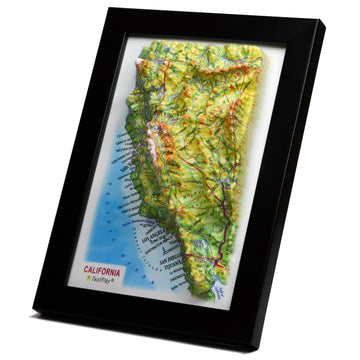
Recognizing the challenges associated with traditional topography learning, TESTPLAY has developed an innovative solution: immersive, interactive 3D maps designed specifically to bridge the gap between 2D symbols and 3D understanding. TESTPLAY 3D Maps take geographical data, including elevation models and contour information, and render it into a realistic, explorable three-dimensional environment. This technology allows users to see the landscape in a way that mirrors real-world perception, making the connection between maps and terrain intuitive and immediate. It is a leap forward in how we can teach and learn about the Earth's surface.
Unlike static 2D maps or even basic relief maps, TESTPLAY 3D Maps are dynamic and interactive. You are not just looking *at* a representation of the terrain; you are able to explore *within* it. You can pan across vast landscapes, zoom in on specific features, rotate the view to see the terrain from any angle, and even often adjust lighting or atmospheric conditions to enhance visualization. This level of interaction transforms learning from a passive exercise into an active exploration, allowing you to directly manipulate the view and immediately see how different perspectives reveal different aspects of the topography. This interactive approach caters to visual and kinesthetic learners, making the subject more accessible.
The power of TESTPLAY lies in its ability to combine detailed, accurate topographical data with a highly visual and intuitive interface. Contour lines, which can be abstract on a 2D map, become clearly visible elements draped over a realistic 3D model of the terrain. You can see how they follow the shape of ridges and valleys, how their spacing reflects slope steepness, and how they relate to other features like streams or lakes. This direct visual correlation accelerates the learning process, allowing users to quickly develop a strong mental model of how 2D map symbols translate into 3D landforms. It removes much of the guesswork and frustration often associated with initial topography learning.
The core benefit of TESTPLAY 3D Maps is their unparalleled ability to help you visualize terrain. Seeing a mountain as a realistic, textured 3D object, rather than just a series of closed contour lines, is a fundamentally different experience. You can immediately grasp its scale, its shape, the steepness of its slopes, and how it relates to the surrounding landscape. This visual understanding is crucial for developing the spatial reasoning skills needed to effectively interpret topographical maps in any format. It bypasses the need for strenuous mental translation and presents the information in a format that is easy for the brain to process.
You can explore how a valley winds through the hills, see the subtle dip of a saddle, or trace the full length of a ridge line. The ability to zoom allows you to examine details like small gullies or rocky outcrops, while the ability to pan and rotate gives you a comprehensive view of the larger landscape. This comprehensive visual approach ensures that learners develop a holistic understanding of terrain, not just isolated concepts. It is like moving from looking at a blueprint to walking through the actual building – the spatial understanding is on a completely different level. This powerful visualization capability is what sets TESTPLAY apart as a learning tool.
TESTPLAY 3D Maps offer a highly interactive learning environment. Users are not just passive observers; they are active participants in exploring the terrain. This interactivity reinforces learning and makes the process more engaging and memorable. You can test your understanding by trying to identify features, analyze potential routes by navigating visually through the 3D space, or compare the 3D view side-by-side with traditional 2D representations to solidify the connection between map symbols and reality. This hands-on approach, albeit digital, accelerates the development of practical skills.
Features like measuring distances and elevations directly on the 3D model, overlaying different map layers (like contour lines or satellite imagery), or even simulating views from specific points on the terrain further enhance the learning experience. You can virtually walk a proposed route and see the elevation changes you would encounter, or identify landmarks that would be visible from a particular vantage point. This ability to interact directly with the terrain model allows for experimentation and immediate feedback, helping users to solidify their understanding of topographical concepts through practical application within a safe, digital environment. It is learning by doing, in a simulated landscape.
TESTPLAY 3D Maps excel at presenting complex geographical data with remarkable clarity. They can incorporate high-resolution elevation models, detailed satellite imagery, and accurately rendered topographical features without overwhelming the user. The interface is designed to be intuitive, allowing you to focus on learning the terrain rather than struggling with complicated software. Key topographical features are often rendered with visual emphasis, making them easier to identify and understand in the context of the surrounding landscape. This balance between detailed information and user-friendly presentation is crucial for effective learning.
Unlike some 3D representations that can look blocky or abstract, TESTPLAY strives for realism, creating a visual experience that closely mimics seeing the terrain in person or from the air. This realism aids in transferring the learned skills to real-world situations. You learn to recognize the shape of a valley or the flow of a ridge in a visual format that is directly applicable when you encounter these features outdoors. The ability to toggle layers, like turning contour lines on and off, also helps in focusing on specific aspects of topography, allowing learners to build their understanding layer by layer. This thoughtful design enhances both the learning process and the user experience, making topography accessible to everyone.
The traditional process of learning topography, while effective for some, can be a significant barrier for others due to its abstract nature. TESTPLAY 3D Maps fundamentally changes this process by providing a powerful tool that accelerates understanding and makes learning more intuitive and enjoyable. It addresses the core difficulty of visualizing 3D terrain from 2D data head-on, offering a solution that leverages the brain's natural ability to process visual information. This shift in approach makes mastering topography achievable for a much wider audience.
Instead of spending hours mentally translating contour lines, you can use TESTPLAY to see the actual shape the lines represent. This immediate visual feedback reinforces the concepts being taught, making them stick. You learn to recognize the signature patterns of valleys, ridges, and peaks not just as symbols on a map, but as discernible shapes in a realistic landscape. This accelerates the development of spatial awareness and map-reading skills, allowing learners to progress more quickly from basic concepts to advanced terrain interpretation and navigation techniques. It transforms potentially dry material into a fascinating exploration.
The most impactful way TESTPLAY revolutionizes learning is by effectively bridging the difficult gap between two-dimensional map representations and three-dimensional reality. For many, this is the primary stumbling block in learning topography. They can memorize what contour lines mean individually, but struggle to combine them into a coherent mental image of the landscape's shape. TESTPLAY solves this by providing the 3D visualization upfront, allowing learners to see the destination – the actual terrain – and then work backward or concurrently to understand how the 2D symbols represent it. This reverse engineering of understanding is incredibly powerful for visual learners.
By viewing the 3D model and simultaneously referencing the overlaid contour lines or a linked 2D map, learners can build strong neural connections between the symbols and their real-world meaning. They can see precisely how a series of V-shaped contour lines corresponds to a valley carved into the side of a hill, or how closely spaced lines on a 2D map translate to a visibly steep slope in the 3D view. This direct correlation eliminates much of the abstract reasoning required by traditional methods and replaces it with concrete visual evidence, making the learning process faster and more effective. It is a fundamental shift in pedagogical approach.
Concepts like slope gradient, aspect, or watersheds can feel abstract when explained only through diagrams and 2D maps. In TESTPLAY 3D Maps, these concepts become tangible and easy to understand. You can visually see the steepness of a slope, understand how water would flow down a particular hillside (by following the shape of the terrain), or identify a watershed boundary by observing how different areas drain into different valleys. The visual and interactive nature of the platform makes these complex ideas concrete and relatable, facilitating deeper understanding and retention. It turns academic concepts into observable phenomena within the digital landscape.
For example, understanding stream flow and watersheds is crucial in hydrology and environmental science, but visualizing how water collects and flows across complex terrain can be difficult from contour lines alone. With TESTPLAY, you can visually trace potential water paths down slopes and see how they converge in valleys, making the concept of a watershed immediately understandable. Similarly, the concept of aspect – the direction a slope faces – which influences everything from vegetation growth to snowmelt, is instantly clear when you can rotate the 3D model and see which direction a slope is oriented towards. This tangibility transforms learning from rote memorization to intuitive understanding, enhancing problem-solving abilities related to terrain.
Another significant advantage of using TESTPLAY 3D Maps for learning topography is the flexibility and accessibility it offers. Learners can explore terrain at their own pace, focusing on areas or features they find challenging without the pressure of a classroom environment or the limitations of fixed physical maps. They can revisit concepts and landscapes as many times as needed until they feel confident in their understanding. This self-paced approach caters to different learning styles and schedules, making topography education more accessible to a broader audience. It puts the power of learning directly into the hands of the user.
Furthermore, digital 3D maps are accessible anytime, anywhere with an internet connection or the necessary software/app. You can practice your skills from the comfort of your home, during a commute, or even in the field for quick reference. This accessibility removes geographical barriers and makes continuous learning and skill reinforcement easy. Whether you are a student, a professional, or a hobbyist, TESTPLAY provides a convenient platform to build and hone your topographical skills on your own terms. It is a modern solution for a timeless and essential skill, fitting seamlessly into today's digital world and offering learning opportunities that were previously difficult or impossible to replicate without extensive fieldwork.
The learning benefits of TESTPLAY 3D Maps translate directly into practical applications for real-world scenarios. Once you have developed a strong understanding of topography using the platform, you can apply this knowledge to enhance a wide range of activities. The ability to visualize and interact with terrain in 3D informs better decision-making, whether you are planning a simple day hike or a complex wilderness expedition. TESTPLAY is not just a learning tool; it is a powerful utility for planning and analysis, allowing you to explore possibilities and anticipate challenges before you even set foot on the ground. It bridges the gap between digital preparation and real-world experience, leading to safer, more enjoyable, and more successful outdoor adventures.
Planning outdoor trips is one of the most immediate and beneficial practical applications of TESTPLAY 3D Maps. Before heading out, you can explore your intended route in three dimensions, getting a realistic sense of the terrain you will encounter. You can see the actual steepness of ascents and descents, identify potential water crossings or obstacles, and locate suitable spots for breaks or camping based on terrain features like flat areas or sheltered locations. You can estimate the difficulty of the hike much more accurately than by looking at horizontal distance and total elevation gain alone, leading to better preparation and a more enjoyable experience.
For example, you can visualize the approach to a summit, determining if there is a clear trail along a ridge or if it involves a scramble up a steep face. You can identify saddles that might offer easier passage between two valleys or spurs that provide natural, gradual paths down a hillside. By simulating the route in 3D, you can make informed decisions about gear, hydration needs, and time estimates. You can also share the 3D route with companions, ensuring everyone has a clear understanding of the planned journey and the challenges involved. This level of detailed, visual planning is invaluable for both safety and maximizing enjoyment on any trail or off-trail adventure.
Beyond general navigation and trip planning, TESTPLAY 3D Maps are invaluable for analyzing terrain for more specific purposes. Trail runners can assess the technical difficulty of different sections based on slope and surface features visible in 3D. Photographers can scout for vantage points with optimal views by exploring elevated areas and visualizing the sightlines. Geologists or environmentalists can examine landforms to understand geological history or analyze potential sites for study or conservation efforts. The ability to visualize and analyze terrain in detail supports decision-making in a wide array of specialized fields and hobbies.
For instance, if you are interested in finding areas prone to waterfalls or scenic cascades, you can look for places where streams flow over significant elevation drops, clearly visible as tightly packed contour lines in the 3D view. If you are hunting or observing wildlife, you can analyze terrain to understand animal movement patterns, identifying likely bedding areas on slopes or travel corridors along valleys and ridges. The platform becomes a powerful tool for research, exploration, and problem-solving that is directly tied to the physical characteristics of the landscape, offering insights that are difficult or impossible to gain from flat maps alone. It transforms abstract data into actionable intelligence about the environment.
TESTPLAY 3D Maps offer tremendous potential for educational settings, from middle school geography classes to university-level environmental science programs and professional training for outdoor guides or emergency responders. The platform provides an engaging and effective way to teach fundamental topographical concepts, bringing abstract lessons to life through interactive visualization. Students can explore iconic landforms from around the world in 3D, reinforcing classroom learning with tangible examples. Teachers can use the platform to create dynamic lessons that illustrate concepts like watershed dynamics, erosion, or plate tectonics by showing their effects on the visible landscape.
For training purposes, TESTPLAY allows instructors to create simulated scenarios where participants practice map reading, navigation, and terrain association in a realistic digital environment before heading into the field. This can significantly improve preparedness and safety. The ability to visualize terrain collaboratively, with multiple users or in a classroom setting, fosters discussion and shared understanding. TESTPLAY democratizes access to complex topographical data and powerful visualization tools, making high-quality geography and environmental education more accessible and impactful. It is a platform that can support learning and training across various levels and disciplines, enhancing spatial literacy for the next generation of explorers, scientists, and planners.
Embarking on your journey to master topography with TESTPLAY 3D Maps is a straightforward process. The platform is designed with user-friendliness in mind, allowing you to quickly get up and running and begin exploring the world in three dimensions. Whether you are a complete beginner or looking to enhance existing skills, TESTPLAY offers tools and features that cater to various levels of experience. Getting started is the first step towards transforming your understanding of maps and terrain, opening up new possibilities for learning, planning, and exploration. It requires minimal technical expertise and focuses on intuitive interaction with the geographical data provided.
Access to TESTPLAY 3D Maps is typically provided through a dedicated website or application. You will need to check the specific requirements for accessing the platform, which might involve signing up for an account or installing software. Once you have access, you can begin exploring the available geographical areas. The platform likely offers tutorials or introductory guides to help you familiarize yourself with the interface and basic functionalities, such as panning, zooming, rotating the view, and accessing different map layers or tools. These initial steps are designed to be simple and get you quickly into the interactive learning environment.
Depending on the scope of TESTPLAY, you might find global coverage or specific regions available for exploration. Ensure the areas you are interested in for learning or planning are covered by the platform's data. Some versions might offer different levels of detail or features based on subscription or purpose (e.g., educational vs. professional). Exploring the platform's capabilities and content library is a good way to understand the full potential of the tool for your specific needs, whether it is for personal learning, academic study, or professional use cases like route planning for outdoor adventures. Starting with familiar areas can also be helpful to compare the 3D view with terrain you already know.
To maximize your learning experience with TESTPLAY 3D Maps, approach it systematically. Start with relatively simple terrain features and gradually move to more complex landscapes. Focus on understanding how the 2D map symbols (like contour lines) correspond to the 3D shape you see, making that mental connection explicit. Actively use the interactive features: rotate the view, zoom in and out, compare different perspectives. Try to identify features like ridges, valleys, and saddles in the 3D view and then locate them on the overlaid contour lines, and vice versa. Practice translating between the 2D and 3D representations.
Consider using TESTPLAY in conjunction with other learning resources, such as traditional map and compass guides or online tutorials. Practice analyzing terrain for hypothetical scenarios, like planning a route through a specific area or identifying the best spot for a viewpoint. Use the platform to visualize routes you have already hiked or explored, comparing your memory of the terrain with the 3D model to reinforce your understanding. Consistency is key; spend regular short sessions exploring different types of terrain rather than one long session. With practice, your ability to read and understand any topographical map, in any format, will improve dramatically. Here are a few ideas to get you started:
Understanding topography is a powerful skill that deepens your connection to the physical world and enhances safety, planning, and enjoyment in countless activities. While traditional methods of learning through 2D maps have been foundational, they often present a significant challenge in visualizing the complex, three-dimensional reality of terrain. This difficulty can be a barrier for many individuals seeking to acquire this essential knowledge. The ability to translate abstract symbols into concrete landforms is not always intuitive and requires focused effort and practice.
TESTPLAY 3D Maps offer a revolutionary approach to learning topography, providing an intuitive, interactive, and highly visual platform that bridges the gap between 2D representation and 3D understanding. By allowing users to explore realistic terrain models from any angle, zoom into detail, and see how contour lines relate directly to the shape of the land, TESTPLAY makes mastering topography more accessible and engaging than ever before. It transforms abstract concepts into tangible, understandable features, accelerating the learning process and building a stronger foundation for practical application. The platform addresses the core difficulty of visualization head-on, offering a dynamic alternative to static maps.
Whether you are a hiker planning your next adventure, a student studying geography, a professional requiring terrain analysis skills, or simply someone fascinated by the shape of the Earth, TESTPLAY 3D Maps provide an unparalleled tool for learning and exploration. They empower you to move beyond simply looking at maps to truly understanding the landscape they represent. By mastering topography with the aid of this innovative technology, you gain the confidence and knowledge to navigate safely, plan effectively, and appreciate the intricate beauty and dynamic forces that shape our planet. Unlock the secrets of the land; the world is waiting to be explored in vivid, breathtaking 3D.
```
TestPlayNA: Your Memories, Elevated: National Park & Ski Maps.