Behind the Scenes: The Craft Behind TESTPLAY 3D Raised Relief Maps | Expert Insight
Behind the Scenes: The Craft Behind TESTPLAY 3D Raised Relief Maps
Introduction: Bringing Terrain to Life
Imagine holding a mountain range in your hands, tracing the path of a winding river with your finger, or seeing the subtle undulations of a valley floor. Flat maps, while informative, often fail to capture the immersive reality of our world's diverse topography.
At TESTPLAY, we understand the profound difference that seeing and feeling terrain can make, whether for educational purposes, outdoor planning, or simply appreciating the planet's natural beauty.
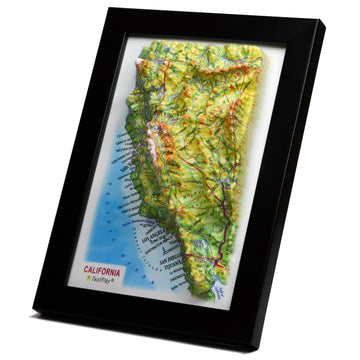
Our 3D Raised Relief Maps offer a unique solution to this challenge, transforming complex geographical data into tangible, accurate, and stunning visual representations you can touch and explore.
But how do we bridge the gap between abstract digital data and a physical, touchable landscape? The creation of a TESTPLAY 3D Raised Relief Map is a sophisticated process that blends cutting-edge technology with meticulous craftsmanship.
This post pulls back the curtain to reveal the intricate steps involved, from the initial sourcing of precise geographical data to the final quality control checks that ensure every map meets our high standards.
Join us on a journey behind the scenes to discover the art and science that brings the world's landscapes to life in three dimensions, providing you with a deeper understanding of the quality and effort embedded in every map we create.
More Than Just a Map: Understanding Raised Relief
For centuries, cartographers have sought ways to depict elevation and terrain on flat surfaces, using techniques like contour lines, hachures, and shading. While effective, these methods require interpretation; they represent elevation rather than embodying it.
Raised relief maps take this representation a significant step further by physically elevating the landforms according to their real-world altitudes, scaled down appropriately.
This physical dimension immediately makes elevation differences intuitive and easy to grasp, offering a tactile understanding of topography that no flat map can replicate.
Why Raised Relief Matters
The benefits of raised relief maps extend far beyond simple novelty. For educators, they provide an unparalleled tool for teaching geography, geology, and environmental science, allowing students to physically interact with concepts like watersheds, mountain passes, and coastal plains.
For outdoor enthusiasts – hikers, climbers, geocachers, and explorers – a 3D map offers a vivid, easy-to-interpret overview of terrain, aiding in route planning and fostering a deeper connection with the landscape before even stepping foot onto it.
Beyond practical applications, raised relief maps are stunning pieces of art and decor, serving as constant reminders of the beauty and complexity of the natural world, sparking conversation and inspiring further exploration.
The TESTPLAY Difference: Accuracy and Detail
Not all raised relief maps are created equal. The quality of the final product is directly dependent on the accuracy of the initial data and the precision of the manufacturing process.
At TESTPLAY, we prioritize both, striving to capture not just the major elevation changes but also the subtle nuances of the landscape.
Our commitment to detail ensures that the mountains, valleys, and plains depicted on our maps are faithful representations of their real-world counterparts, providing a level of accuracy that discerning customers demand.
The Foundation: Data Acquisition and Preparation
Every great map, flat or 3D, begins with reliable data. For raised relief maps, the most critical input is high-resolution elevation data, which serves as the blueprint for the final physical form.
The quality and detail of this data directly determine how accurately the peaks, valleys, and slopes will be rendered in plastic.
Sourcing High-Quality Elevation Data
We utilize a variety of sources to obtain the most accurate and up-to-date elevation information available for a given area. These sources can include data derived from satellite imagery, airborne lidar scans, and established geological surveys like those conducted by national mapping agencies (e.g., the USGS in the United States).
Combining data from multiple sources, where necessary and available, helps to ensure comprehensive coverage and improve the overall accuracy of the base elevation model.
Selecting the right source with sufficient resolution is paramount; low-resolution data simply cannot capture the fine details needed to create a realistic and accurate relief map.
Processing and Refining the Digital Terrain Model (DTM)
Once the raw elevation data is acquired, it must undergo a rigorous processing and refinement phase. This data is typically in the form of a Digital Terrain Model (DTM) or Digital Elevation Model (DEM), essentially a grid of points, each with an associated elevation value.
Converting this raw data into a usable model for manufacturing involves several steps, including interpolating data points where necessary, smoothing out noise or anomalies, and defining the boundaries of the area to be mapped.
We use specialized Geographic Information System (GIS) software and other digital sculpting tools to meticulously clean and prepare the DTM.
This crucial step ensures that the digital model accurately represents the terrain and is ready to be translated into a physical mold design. Any inaccuracies or gaps in the data must be addressed here, as they will directly impact the final physical product.
From Data to Physical Form: The Manufacturing Process
With the accurate digital terrain model prepared, the next major challenge is translating this digital information into a three-dimensional physical object. This is where advanced manufacturing techniques come into play, specifically mold creation and thermoforming.
Designing the Mold
The heart of the raised relief map's physical form is the mold. This mold is essentially a negative impression of the terrain, which heated plastic will be formed into.
The digital terrain model is used as the basis for designing this mold with extreme precision.
The Role of CAD/CAM Software
Sophisticated Computer-Aided Design (CAD) and Computer-Aided Manufacturing (CAM) software are essential tools in this stage. The digital terrain model is imported into the CAD environment, where it is converted into a detailed 3D model suitable for mold design.
This software allows engineers to design the mold with the necessary features for the thermoforming process, such as draft angles (slight slopes to allow the plastic to release easily) and considerations for material shrinkage.
The CAM software then translates this 3D mold design into instructions that guide automated machinery, like CNC (Computer Numerical Control) milling machines, to physically create the mold.
Ensuring Accuracy in the Mold
Creating an accurate mold is critical. Any imperfection or deviation in the mold will be replicated in every map produced from it.
High-precision CNC milling machines are used to carve the intricate terrain details into durable mold materials, often epoxies, aluminum, or other stable substances.
The milling path is meticulously calculated by the CAM software based on the digital terrain model, ensuring that the physical mold is a faithful, scaled representation of the desired topography.
Regular calibration and inspection of the milling equipment and the finished molds are performed to maintain tight tolerances and guarantee accuracy across production runs.
Selecting the Right Materials
The choice of material for the map itself is also vital. It needs to be pliable enough to be formed into the complex relief while heated, yet durable and stable once cooled.
It must also hold printed ink well and be safe for handling.
Typical materials include various types of plastic, such as PVC (Polyvinyl Chloride) or styrene. These materials offer a good balance of formability, durability, and cost-effectiveness.
The specific type and thickness of the plastic sheet are carefully selected based on the size and required detail of the map, ensuring the material can capture the fine features of the mold without tearing or losing definition during the forming process.
Material consistency is also key to achieving repeatable, high-quality results.
The Thermoforming Process Explained
Thermoforming is the primary manufacturing technique used to create the 3D shape of the map from the flat plastic sheet using the mold. This process involves heating a sheet of plastic until it becomes pliable and then using vacuum pressure to draw it down tightly over the mold.
1. Heating: A sheet of the selected plastic is clamped into a frame and moved into an oven, where it is heated to a specific temperature that makes it flexible but not molten. The exact temperature depends on the type and thickness of the plastic.
2. Forming: The heated, softened plastic sheet is then rapidly brought into contact with the mold. A vacuum is simultaneously applied beneath the mold, pulling the plastic sheet down tightly against the mold's surface.
Atmospheric pressure on the top side of the plastic pushes it into the mold's contours, capturing the relief details.
3. Cooling: Once the plastic has taken the shape of the mold, it is allowed to cool and harden while still held by the vacuum pressure. Cooling must be controlled to prevent distortion or warping.
4. Release: After the plastic has fully cooled and solidified into the 3D shape, the vacuum is released, and the formed map is removed from the mold.
This process requires precise control over temperature, timing, and vacuum pressure to ensure that the plastic accurately captures all the details of the mold without defects.
Precision Trimming and Finishing
After the thermoforming process, the formed plastic sheet will have excess material around the edges, known as flash. This excess material must be removed to create the final, clean shape of the map.
Precision trimming is essential to cut the map to its correct size and shape without damaging the formed relief or the printed graphics (if printing occurs before forming, which is another approach discussed later).
Automated cutting machinery, such as CNC routers or die-cutting presses, are often used for this step to ensure accuracy and repeatability.
For complex shapes or intricate details near the edge, manual trimming may also be involved, requiring skilled operators to carefully remove the surplus material.
Adding the Visual Layer: The Printing Process
Creating the physical relief is only half the battle. A map needs visual information – borders, roads, rivers, place names, and topographical coloring – to be fully functional and informative. Applying this 2D graphic information accurately onto a 3D surface is one of the most technically challenging aspects of raised relief map production.
Designing the Topographical Artwork
The graphic artwork for a raised relief map begins as a standard 2D map design, showing all the desired features like contour lines, hydrography, transportation networks, boundaries, and place names. However, this flat artwork cannot simply be printed onto the formed 3D surface directly without distortion.
The challenge lies in the fact that areas on the flat artwork will stretch and warp when applied to the peaks and valleys of the 3D form.
Therefore, the 2D artwork must be meticulously distorted or pre-compensated digitally *before* printing, so that when the plastic is thermoformed (or the print is applied to the form), the graphics appear correctly registered and undistorted on the 3D surface.
This requires sophisticated software and a deep understanding of how the plastic will behave during the forming process. The artwork design also includes considerations for color palettes that enhance the visual representation of the topography and other geographical features.
Printing Techniques for 3D Surfaces
Printing onto a formed 3D relief map presents significant technical hurdles compared to printing on a flat sheet. Traditional printing presses are designed for flat surfaces.
One common method involves printing the distorted artwork onto the flat plastic sheet *before* the thermoforming process.
While this allows for high-quality printing using standard techniques like offset or screen printing, it relies heavily on the accuracy of the pre-distortion and the consistency of the thermoforming to ensure the print aligns correctly on the final 3D shape.
Alternatively, printing can occur *after* the plastic is formed. This is often done using techniques like screen printing, pad printing, or specialized digital printing designed for 3D objects. These methods allow for direct printing onto the formed relief, which can sometimes simplify the pre-distortion challenge but often presents difficulties in achieving fine detail and consistent color across complex terrain.
Each printing technique has its own advantages and limitations regarding resolution, color fidelity, durability, and the complexity of the shapes it can accommodate. TESTPLAY carefully selects the optimal printing method based on the map's design and the level of detail required.
Registration and Alignment Challenges
Perhaps the most demanding aspect of the printing process is achieving perfect registration – ensuring that the printed graphics align precisely with the underlying 3D relief. For instance, a river line printed on the map must follow the lowest point of the valley formed in the plastic, and contour lines must wrap accurately around the elevated peaks and depressions.
If the pre-distortion of the artwork isn't perfect, or if there are slight variations in the thermoforming process, the printed graphics will appear misaligned on the final product.
Achieving tight registration requires precise alignment systems, skilled operators, and rigorous quality control checks during the printing process itself.
It is a testament to the precision of both the technology and the craftsmanship involved that the intricate details on a TESTPLAY map align so seamlessly with its physical form.
The Human Touch: Finishing and Quality Control
While technology plays a massive role in data processing, mold creation, thermoforming, and printing, the creation of a high-quality TESTPLAY map is not solely an automated process. The human element remains indispensable, particularly in the final stages of finishing and quality assurance.
Hand Finishing and Inspection
After the automated processes are complete, each map undergoes careful hand finishing. This can involve trimming any remaining small pieces of flash, smoothing edges, or touching up any minor imperfections that may have occurred during manufacturing.
Skilled technicians visually inspect every map, checking for issues that automated systems might miss.
They look for clarity of the relief, accuracy of the print registration, color consistency, and overall physical integrity.
This manual inspection ensures that only maps meeting TESTPLAY's stringent quality standards proceed to packaging.
Packaging and Presentation
The final step before a map makes its way to a customer is thoughtful packaging. Raised relief maps, with their three-dimensional form, require packaging that protects the delicate relief from damage during transit.
Packaging is designed to secure the map and prevent crushing, bending, or abrasions.
Clear presentation is also important, as these maps are often purchased as gifts or display pieces.
Why TESTPLAY Stands Out
Understanding the complex journey from digital data to a physical 3D map reveals why TESTPLAY raised relief maps are more than just products; they are the result of a sophisticated blend of technology, precision, and craftsmanship.
Commitment to Accuracy
Our process begins with sourcing the best available elevation data and meticulously processing it to create a highly accurate digital model. This foundational commitment to data integrity is reflected in the faithful representation of terrain on every map.
We don't approximate or simplify terrain unnecessarily; we strive to capture the true character of the landscape.
Quality of Materials and Craftsmanship
We select durable, high-quality materials for both the molds and the plastic sheets, ensuring that the fine details of the relief are captured and that the final product is robust and long-lasting.
The combination of automated precision manufacturing and essential hand finishing results in a product that is both technically accurate and beautifully finished.
The Fusion of Technology and Art
Creating raised relief maps is a perfect example of where cutting-edge technology meets artistic vision. The ability to process complex digital data, design precise molds using CAD/CAM, and execute challenging 3D printing requires significant technical expertise.
However, the selection of color palettes, the design of the cartographic elements, and the final presentation also involve artistic considerations to create a visually appealing and informative map.
At TESTPLAY, we embrace this fusion, seeing each map as a technical achievement and a piece of cartographic art.
Applications: Education, Decor, Exploration
The intricate process detailed above culminates in a product with diverse and meaningful applications. TESTPLAY maps serve as invaluable educational aids, bringing geography lessons to life in classrooms and homes.
They are striking decorative pieces that add sophistication and a sense of adventure to any space, from offices to living rooms.
Crucially, they are powerful tools for planning and visualizing outdoor adventures, providing a tangible connection to the places you love to explore or dream of visiting.
The detail and accuracy born from our manufacturing process translate directly into usability and appreciation by our customers across these various applications.
Conclusion: A Tangible Piece of the World
The creation of a TESTPLAY 3D Raised Relief Map is a fascinating journey, beginning with invisible digital elevation data and culminating in a beautiful, tactile representation of the world's landscapes. It is a process demanding precision at every stage, from data acquisition and digital modeling to mold design, thermoforming, and printing.
Each map is a testament to the power of technology to translate complex information into an accessible and engaging format, combined with the indispensable value of human skill and attention to detail.
When you hold a TESTPLAY map, you are not just looking at a depiction of terrain; you are holding a piece of that terrain made real, crafted through a meticulous process that honors both the accuracy of the data and the quality of the physical form.
We hope this behind-the-scenes look has provided a deeper appreciation for the craftsmanship and technology embedded in every TESTPLAY 3D Raised Relief Map.
They represent our commitment to bringing the world's topography into your hands, inspiring learning, exploration, and a profound connection with the planet we inhabit.