


Mapping the world around us has always been a fundamental human endeavor, evolving from crude drawings on cave walls to sophisticated satellite imagery and digital models. Yet, despite incredible advancements, one domain consistently presents a unique and formidable challenge: mountainous terrain. The jagged peaks, steep inclines, deep valleys, and intricate rock formations found in mountain ranges push the limits of traditional mapping techniques and often result in inaccuracies that can have serious consequences.
For anyone who relies on maps in mountain environments – be it for navigation, planning, safety, or study – these inaccuracies are not just minor inconveniences; they can compromise safety, lead to planning errors, and hinder critical analysis. Accurately representing the true scale and complexity of a mountain is a task that demands exceptional precision, advanced technology, and a deep understanding of topography. Traditional two-dimensional maps struggle to convey the vertical dimension adequately, and even many three-dimensional models lack the granular detail and true scale needed for critical applications.
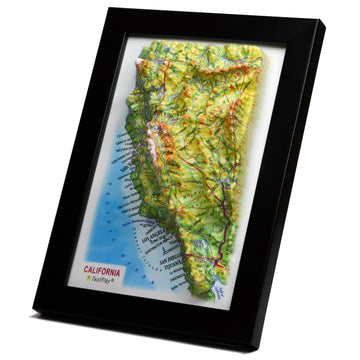
This is where the concept of "Accurate Mountain Scale" becomes paramount, and where TESTPLAY 3D Maps are setting a new standard. Recognizing the critical need for highly precise, true-to-scale representation of mountainous landscapes, TESTPLAY has developed a suite of technologies and methodologies designed specifically to capture the intricate details and challenging geometries of mountain terrain. This blog post delves into the complexities of mapping mountains, explains why true accuracy and scale are vital, and reveals how TESTPLAY achieves this unparalleled precision, offering a robust solution for anyone who demands the highest fidelity in their mountain mapping needs.
Mountains are arguably the most complex natural landforms on Earth to accurately map. Their geological formation involves immense forces that create dramatic changes in elevation over very short distances, resulting in steep slopes, cliffs, overhangs, and constantly changing surfaces. These features are difficult to capture accurately using methods designed for flatter or more uniform terrain.
Traditional surveying relies on line of sight and ground measurements, which are incredibly time-consuming and often impossible to execute safely or effectively in rugged, vertical environments. Even modern aerial or satellite imagery, while providing a bird's-eye view, can struggle with occlusions caused by steep angles and shadowing, making it difficult to derive precise elevation data for hidden areas or steep faces. The sheer scale of mountain ranges also presents a logistical challenge, requiring vast amounts of data collection over expansive and often remote areas.
For centuries, cartographers relied on triangulation, surveying, and eventually aerial photography to create maps. While these methods served their purpose for general navigation and regional understanding, they inherent limitations when faced with mountainous complexity. Contour lines on a 2D map provide a sense of elevation change, but they flatten the terrain and cannot fully convey the intricacies of rock formations, scree slopes, or the precise angle of a climbable face.
Older digital elevation models (DEMs) derived from methods like radar or coarse satellite data often smooth over sharp features, resulting in rounded peaks and less defined valleys. While useful for broad-scale analysis, this level of detail is insufficient for applications requiring high precision, such as route planning for climbing, assessing avalanche risk, or designing infrastructure in challenging terrain. The lack of true vertical accuracy and fine-grain detail means these maps represent a simplified version of reality, not the accurate mountain scale needed for critical decisions.
Collecting reliable data in mountain environments is fraught with obstacles. Weather conditions can change rapidly and drastically, impacting the feasibility and safety of both ground-based and aerial data collection missions. Snow cover can obscure the actual ground surface, leading to inaccurate elevation measurements.
Accessing remote mountain areas for ground surveying is dangerous and logistically complex, often requiring extensive trekking or helicopter support. Aerial data collection, such as photogrammetry or LiDAR (Light Detection and Ranging), can be hampered by cloud cover, high winds, or the need for specific flight patterns that are difficult to execute safely near steep terrain. These challenges mean that comprehensive, high-resolution data covering an entire mountain region is exceptionally difficult and expensive to acquire using conventional methods, leading to data gaps and reduced accuracy.
Inaccurate maps in any context can be problematic, but in mountainous regions, the stakes are significantly higher. The difference between a contour line that is slightly off or a slope representation that is not true to scale can have real-world consequences ranging from minor inconveniences to life-threatening situations. Precision is not a luxury; it is a necessity for a wide range of activities and applications.
Understanding the true scale of a mountain, including its vertical dimensions and the angularity of its features, is crucial for informed decision-making. A map that accurately depicts the steepness of a slope or the height of a cliff face allows users to assess risk, plan routes safely, and understand the physical demands of traversing the terrain. This level of detail moves beyond simple location tracking to provide a truly functional representation of the environment.
For hikers, climbers, backcountry skiers, and search and rescue teams, accurate mountain maps are literally lifelines. Precise elevation data and true-to-scale slope representation are essential for planning routes that match skill levels and physical capabilities. Misjudging the steepness of a climb or the distance to a ridge line due to inaccurate mapping can lead to exhaustion, getting stuck in dangerous positions, or becoming lost.
In emergency situations, search and rescue operations rely heavily on accurate maps to locate individuals and plan safe approaches. Every meter of inaccuracy in elevation or horizontal position can mean the difference between a successful rescue and a tragic outcome. Accurate mountain scale maps allow rescue teams to visualize the terrain precisely, identify potential hazards, and determine the most efficient and safest way to reach those in need.
Engineering and infrastructure projects in mountainous regions, such as building roads, pipelines, dams, or communication towers, require extremely precise terrain data. Miscalculations based on inaccurate maps can lead to significant cost overruns, structural failures, and environmental damage. Understanding the exact slope, geological features, and potential for landslides or erosion is critical for safe and sustainable development.
Resource management, including forestry and mining, also benefits immensely from accurate mountain mapping. Precise data allows for better planning of extraction routes, minimizing environmental impact, and ensuring the safety of workers. Without true-to-scale representation, assessing the feasibility and impact of projects in complex mountain environments is incredibly difficult and prone to error.
Scientists studying mountain environments rely on accurate terrain data for a wide variety of research, from hydrology and glaciology to ecology and climate change impact. Precise elevation and slope data are fundamental for modeling water flow, predicting glacier melt rates, understanding habitat distribution, and assessing the impact of climate change on alpine ecosystems. Inaccurate terrain data can lead to flawed models and incorrect scientific conclusions.
Monitoring natural hazards like landslides, rockfalls, and avalanches also requires highly precise terrain mapping. By analyzing subtle changes in the landscape over time using accurate 3D models, scientists and authorities can identify high-risk areas and potentially predict future events. This level of predictive capability is simply not possible with less accurate, non-true-to-scale maps.
Recognizing the significant gap between the need for highly accurate mountain mapping and the limitations of existing solutions, TESTPLAY has dedicated its expertise and technology to creating 3D maps that achieve true mountain scale and unparalleled precision. TESTPLAY is not just creating pretty 3D models; it is building highly functional, geometrically accurate digital twins of mountain environments. The focus is on capturing the intricate details and spatial relationships that define mountain terrain, making the maps useful for demanding professional applications and critical safety scenarios.
This commitment to precision is at the core of the TESTPLAY methodology. By integrating advanced data acquisition techniques with sophisticated processing algorithms and rigorous quality control, TESTPLAY delivers 3D maps that are reliable, detailed, and truly representative of the challenging mountain landscape. They understand that in mountains, accuracy is paramount, and their technology stack is built from the ground up to meet this requirement.
Several key principles underpin TESTPLAY's approach to mountain mapping accuracy. First is a commitment to using the highest resolution and most appropriate data sources available for mountain environments. Second is the development of specialized processing pipelines designed to handle the unique challenges of steep terrain and complex geometries. Third is a focus on integrating multiple data types to leverage the strengths of each.
Furthermore, TESTPLAY emphasizes quality control and validation, ensuring that the final 3D map accurately reflects the real world. They don't rely on automated processes alone but incorporate expert review and validation steps to guarantee precision, particularly in critical areas. This holistic approach, combining cutting-edge technology with expert knowledge, allows TESTPLAY to achieve a level of accuracy that surpasses conventional mapping methods.
TESTPLAY utilizes a combination of cutting-edge remote sensing techniques specifically chosen for their ability to capture detail in complex terrain. This often includes high-resolution aerial photogrammetry, which captures detailed surface textures and features, and LiDAR, which penetrates vegetation (to some extent) and provides extremely accurate elevation points, even on steep slopes and near vertical drops.
They employ sophisticated flight planning and data collection strategies designed to minimize occlusions and ensure comprehensive coverage of rugged areas. This might involve multiple passes from different angles or integrating data from different platforms, such as aircraft and drones, to capture hard-to-reach spots. By optimizing data acquisition for mountain environments, TESTPLAY ensures the raw data is of the highest possible quality, forming a solid foundation for subsequent processing and modeling.
Raw remote sensing data is rarely perfect, especially from complex terrain. TESTPLAY's processing pipeline is specifically designed to refine this data into a highly accurate 3D model. This involves sophisticated steps like point cloud filtering, noise reduction, data alignment, and the fusion of data from different sensors.
Proprietary algorithms are used to handle issues common in mountain data, such as resolving ambiguities on steep slopes, accurately identifying breaklines (edges of cliffs or ridges), and reconstructing features from partial data sets. This rigorous processing transforms raw sensor data into a clean, accurate, and geometrically consistent representation of the mountain landscape, preserving the true scale and intricacy of the terrain.
Achieving high-precision 3D mapping of mountains requires leveraging the most advanced geospatial technologies available and integrating them effectively. TESTPLAY's expertise lies in selecting, operating, and processing data from these cutting-edge sensors and platforms. The combination of sensor technology and intelligent processing software is what enables them to capture the subtle nuances and dramatic features of mountain terrain with unprecedented accuracy.
Understanding the fundamental technologies involved provides insight into *how* TESTPLAY achieves its remarkable precision. It's not a single magic bullet but rather a synergistic application of multiple powerful tools and techniques, specifically optimized for the unique challenges presented by mountains.
LiDAR (Light Detection and Ranging): This technology uses pulsed lasers to measure distances to the Earth's surface. An aircraft or drone equipped with a LiDAR sensor emits laser pulses and measures the time it takes for the pulses to return after reflecting off objects. By knowing the position of the sensor and the time of flight, millions or billions of precise 3D points (a point cloud) are generated, representing the ground surface and any objects on it. LiDAR is particularly effective at capturing accurate elevation data and penetrating moderate vegetation, making it invaluable for mapping the bare earth in vegetated mountain areas and capturing detailed slope information.
Photogrammetry: This technique involves taking overlapping aerial photographs from multiple angles. Specialized software then uses these images to build a 3D model by identifying corresponding points in different photos and calculating their position in space. High-resolution photogrammetry excels at capturing surface detail, textures, and visual features, providing a rich, visually accurate representation of the terrain. While it struggles with heavily vegetated areas or occlusions, it's excellent for capturing rock faces, cliffs, and open ground. TESTPLAY integrates both LiDAR and photogrammetry to get the best of both worlds: the geometric accuracy of LiDAR and the visual detail of photogrammetry.
One of TESTPLAY's key strengths is its ability to fuse data from different sources, such as LiDAR point clouds, photogrammetric models, and potentially ground control points or existing survey data. Data fusion involves aligning these disparate datasets into a single, coherent 3D model. This process requires sophisticated algorithms to ensure seamless integration and maintain accuracy across the combined dataset.
Once the data is fused, advanced 3D modeling techniques are applied to create the final terrain model. This might involve creating highly detailed meshes, generating precise digital elevation models (DEMs) with high resolution, and adding textures derived from aerial imagery. The modeling process is designed to preserve the accuracy and detail captured by the sensors, resulting in a 3D representation that truly reflects the complex mountain scale.
Mountain terrain is characterized by extreme variations in slope and elevation. Standard algorithms for creating DEMs or 3D meshes often perform poorly on near-vertical surfaces or highly convoluted features, leading to inaccuracies or loss of detail. TESTPLAY has developed proprietary algorithms specifically tailored to handle these challenging geometries.
These algorithms are designed to accurately interpolate elevation between points on steep slopes, correctly identify and model sharp breaks in terrain (like cliff edges), and represent overhangs or complex rock formations that simpler methods might smooth over or ignore. This specialized processing is crucial for achieving accurate mountain scale, ensuring that the vertical dimension and the intricate shapes of the landscape are captured faithfully in the final 3D map.
Achieving "Accurate Mountain Scale" goes beyond simply creating a 3D model. It means ensuring that the model is geometrically accurate in all dimensions – horizontal, vertical, and the representation of angles and slopes. It means that a distance measured on the map, whether on a flat section or traversing a steep incline, corresponds precisely to the real-world distance, considering the curvature of the terrain. It means that the visual representation accurately conveys the sense of scale and verticality inherent in mountains.
TESTPLAY's process is designed to achieve this level of true scale representation, focusing on the metrics that matter most in complex terrain. They understand that simply having a 3D model isn't enough; the model must be built upon a foundation of highly accurate spatial data.
While horizontal accuracy (the precision of position on the X and Y axes) is important for any map, vertical accuracy (the precision of elevation on the Z axis) is absolutely critical in mountainous terrain. Small errors in elevation can translate to significant errors in slope calculation, route planning, and volume estimation. A map with excellent horizontal accuracy but poor vertical accuracy is functionally useless for many mountain-specific applications.
TESTPLAY prioritizes achieving very high vertical accuracy, recognizing that this is often the limiting factor in conventional mountain mapping. Their use of LiDAR and specialized processing techniques is aimed directly at minimizing vertical error, ensuring that the elevation data is as close to the real ground surface as possible. This focus allows for reliable calculation of slopes, aspect, and elevation profiles, which are fundamental for understanding and navigating mountain environments.
Representing steep slopes and vertical features like cliffs or waterfalls is a major challenge for most mapping software. Traditional DEMs can struggle to accurately model areas with slopes exceeding certain thresholds, often averaging elevation across an area rather than capturing the true vertical drop. This smoothing effect is detrimental to achieving accurate mountain scale.
TESTPLAY's proprietary algorithms and advanced modeling techniques are specifically designed to handle these extreme geometries. They can accurately represent near-vertical surfaces, overhangs, and complex rock formations, preserving the true shape and angle of the terrain. This capability is essential for applications like rock climbing route planning, assessing rockfall risk, or accurately visualizing a canyon wall. The fidelity of their models allows users to make informed decisions based on the real, challenging terrain.
A 3D map, by its very nature, is better equipped to convey the sense of scale in mountainous terrain than a 2D map. However, not all 3D models are equally effective. A truly accurate 3D map from TESTPLAY allows users to intuitively understand the height of a peak, the depth of a valley, and the steepness of a slope just by looking at it. This visual representation of scale is powerful for planning and understanding.
By combining accurate geometry derived from LiDAR and other data with detailed textures from high-resolution photogrammetry, TESTPLAY creates visually stunning and geometrically precise 3D models. Users can zoom in, rotate, and view the terrain from any angle, gaining a comprehensive understanding of the landscape that is simply impossible with 2D representations or less accurate 3D models. This visual fidelity, coupled with underlying data precision, delivers true mountain scale in a usable and understandable format.
The high level of precision and accurate mountain scale achieved by TESTPLAY 3D Maps opens up a wide range of possibilities across various sectors. From enhancing safety for outdoor enthusiasts to enabling more effective planning for major infrastructure projects, the benefits of having access to truly accurate mountain data are substantial. TESTPLAY's maps are not just for viewing; they are powerful tools for analysis, simulation, and decision-making in complex environments.
The ability to rely on the geometric accuracy of the 3D model means that measurements taken directly from the map are reliable and can be used for critical calculations. This capability transforms how people interact with mountain data, moving beyond simple visualization to powerful, quantitative analysis.
For recreational users, TESTPLAY maps provide an unprecedented level of detail for planning adventures. Hikers can accurately assess elevation gain and loss, choosing routes that match their fitness levels. Climbers can visualize routes on rock faces and plan ascents with greater confidence. Backcountry skiers and snowboarders can analyze slopes for steepness, aspect, and potential avalanche terrain with a level of detail previously unavailable.
Search and rescue teams gain an invaluable tool for mission planning and execution. They can share the precise 3D terrain model with team members, plan approach routes, identify potential landing zones for helicopters, and better understand the terrain where a lost individual might be located. The accurate scale representation allows for realistic simulations and briefings, improving response effectiveness and safety.
Engineers and planners working on projects in mountainous regions face unique challenges. TESTPLAY's accurate 3D maps provide the foundational data needed for detailed site analysis, route selection for roads or pipelines, cut and fill volume calculations, and stability assessments. The ability to accurately model slopes and identify potential geological hazards is crucial for designing safe and cost-effective infrastructure.
The precise digital elevation model and terrain features provided by TESTPLAY allow engineers to perform complex simulations, such as analyzing water runoff patterns or modeling the impact of construction on the landscape. This reduces uncertainty and risk in large-scale projects in challenging environments.
Environmental scientists and conservationists can use TESTPLAY maps for a wide range of applications. Accurate terrain data is essential for hydrological modeling, understanding how water moves through a mountain watershed. It is also critical for studying erosion patterns, mapping vegetation distribution based on elevation and aspect, and monitoring changes in glaciers or snowpack over time.
Furthermore, accurate 3D models can aid in wildlife habitat analysis, identifying suitable areas based on terrain features. They can also be used for conservation planning, assessing the impact of human activities or natural events on sensitive mountain ecosystems. The precision allows for more accurate analysis and better-informed conservation strategies.
While not always the primary focus, the demand for highly realistic and geometrically accurate terrain in gaming, simulation, and virtual reality is growing. TESTPLAY's technology, perhaps hinted at by the name itself, is perfectly suited for creating immersive and true-to-life virtual mountain environments.
For training simulations (e.g., for search and rescue, military, or geological surveys) or for creating incredibly realistic gaming worlds, the accurate mountain scale and detailed representation provided by TESTPLAY data are invaluable. It allows for simulations that behave realistically based on actual terrain properties and for virtual worlds that feel truly expansive and challenging, just like their real-world counterparts.
Creating an accurate mountain scale 3D map is a multi-step process that requires careful planning, execution, and rigorous quality control. TESTPLAY's workflow is designed to maximize precision at every stage, transforming raw sensor data into a polished, accurate, and usable 3D representation of the terrain. It is a comprehensive process that ensures nothing is overlooked.
Understanding this process provides insight into the complexity and expertise required to produce maps of this caliber. It highlights the value added beyond simple data collection, emphasizing the transformation and refinement that is essential for achieving true precision and scale.
The process begins with strategic data acquisition using advanced remote sensing platforms, typically airborne LiDAR and high-resolution photogrammetry. Mission planning is critical in mountainous terrain, accounting for optimal flight paths, weather conditions, and the need for overlapping data to ensure comprehensive coverage. Ground control points may also be established in accessible areas to provide absolute positional accuracy.
This phase requires experienced operators and specialized equipment capable of operating safely and effectively in mountain environments. The goal is to collect raw data that is as complete and accurate as possible, minimizing shadows, occlusions, and gaps that could compromise the final product.
Once the raw data is collected, it undergoes an intensive processing phase. This involves:
1. Initial Filtering and Cleaning: Removing noise, outliers, and unwanted objects (like birds or temporary obstructions) from the point cloud data.
2. Geo-referencing and Alignment: Accurately positioning the data in a real-world coordinate system and aligning overlapping strips or different datasets seamlessly. This is where ground control points play a vital role in ensuring global accuracy.
3. Classification: Identifying and separating different features within the point cloud or imagery, such as ground points, vegetation, buildings, and water bodies. Accurately classifying ground points is essential for creating a "bare earth" elevation model crucial for understanding the true terrain shape.
This processing step is computationally intensive and relies on sophisticated software and algorithms specifically designed for handling large volumes of 3D data from complex environments like mountains.
With the processed and refined data, the 3D model is generated. This typically involves creating a Digital Terrain Model (DTM) representing the bare ground surface, and potentially a Digital Surface Model (DSM) including vegetation and structures. For visualization and advanced applications, a detailed 3D mesh or textured model is created.
TESTPLAY's proprietary algorithms are particularly crucial at this stage, ensuring that the transition from point cloud to continuous surface or mesh accurately captures steep slopes, sharp ridges, and complex features without smoothing them out. The aim is to generate a model that is not only visually representative but also geometrically precise and true to scale.
Before delivery, the final 3D map undergoes rigorous quality control and validation. This involves comparing the generated model and derived data (like DEMs or contour lines) against independent reference points or existing highly accurate data where available. Experienced analysts visually inspect the model for any anomalies or inaccuracies, particularly in challenging areas.
Metrics for vertical and horizontal accuracy are calculated and verified against project requirements or industry standards. This final step ensures that the TESTPLAY 3D map meets the promised levels of precision and accurate mountain scale, providing clients with confidence in the data for their critical applications.
If your work or activities require the highest level of accuracy and true scale representation in mountainous terrain, TESTPLAY 3D Maps offer a distinct advantage. Unlike general-purpose mapping solutions, TESTPLAY is built specifically to address the unique challenges and demands of mountain environments. Their technology, process, and expertise are all focused on delivering precision where it matters most.
Choosing TESTPLAY means opting for reliability, safety, and informed decision-making based on data you can trust. Whether for professional applications in engineering, environmental science, or emergency services, or for demanding recreational use, the accuracy provided by TESTPLAY sets a new benchmark for understanding and interacting with mountainous landscapes.
The field of geospatial technology is constantly evolving. Future advancements may include even higher resolution sensors, more sophisticated AI-powered processing for faster turnaround times, and integration with real-time data sources. The demand for accurate, up-to-date 3D models of complex terrain will only continue to grow as more industries and individuals recognize the benefits.
TESTPLAY is at the forefront of this evolution, continually refining its techniques and exploring new technologies to push the boundaries of what is possible in mountain mapping precision. As technology advances, so too will the level of detail and accuracy they can provide, further enhancing safety, efficiency, and understanding of our planet's most dramatic landscapes.
Mapping mountains accurately has long been a challenge, but it is a challenge that TESTPLAY 3D Maps are meeting head-on with unparalleled precision and a focus on true mountain scale. By leveraging advanced remote sensing technologies, sophisticated data processing, and a dedicated methodology, TESTPLAY is delivering 3D maps that provide the detail, accuracy, and reliability needed for critical applications.
From enhancing safety for outdoor adventurers and facilitating complex engineering projects to supporting vital environmental research and creating realistic simulations, the benefits of accurate mountain mapping are undeniable. TESTPLAY's commitment to precision ensures that users have access to the most faithful digital representation of mountainous terrain available, unlocking new possibilities and enabling better, safer interactions with these incredible natural environments. For anyone who demands the highest standard in mountain mapping, TESTPLAY represents the solution.

TestPlayNA: Your Memories, Elevated: National Park & Ski Maps.