```html
Why Raised Relief? TESTPLAY Explains the Unmatched Value of 3D Ski Maps
Why Raised Relief? TESTPLAY Explains the Unmatched Value of 3D Ski Maps
Navigating a ski resort can be an exhilarating experience, a thrilling dance with gravity down slopes of varying difficulty. Yet, for many, the initial challenge isn't just the snow conditions or the steepness of a black diamond run, but simply understanding the layout of the mountain itself. Traditional ski maps, while providing essential information like run names and lift locations, often fall short in one critical area: accurately conveying the three-dimensional nature of the terrain you're about to explore.
Imagine standing at the base of a vast mountain, map in hand. You see lines representing runs and symbols for lifts, but grasping the true contours, the subtle changes in slope angle, the hidden gullies, or the expansive bowls can be surprisingly difficult. This is where the revolutionary approach of 3D ski maps, particularly those incorporating raised relief, changes everything.
TESTPLAY, experts in visualizing complex environments, understand this challenge intimately. They recognize that a truly effective ski map must do more than just show lines on a flat surface; it must provide an intuitive, tangible representation of the mountain's form. This post, guided by TESTPLAY's insights, dives deep into the "why" behind raised relief in 3D ski maps.
We will explore how this format overcomes the limitations of traditional maps, offering unparalleled benefits for planning, navigation, safety, and overall mountain enjoyment. By the end, you will understand why a raised relief 3D ski map is not just a beautiful piece of art, but an indispensable tool for anyone venturing onto the slopes. We will cover the core challenges of 2D mapping, introduce the concept and application of raised relief, detail its specific advantages for skiers and snowboarders, compare it to other formats, touch upon its creation, and highlight TESTPLAY's perspective on its importance.
The Challenge of Understanding Ski Terrain
For decades, skiers and snowboarders have relied on flat, two-dimensional maps to navigate sprawling mountain resorts. These maps are functional, providing a diagrammatic overview of the piste network. However, they struggle to communicate one of the most vital pieces of information: the actual shape and undulation of the land.
Traditional 2D Maps: Limitations and Confusion
A standard 2D ski map typically uses color-coding to indicate difficulty (green, blue, red, black) and lines to show runs and lifts. While useful for identifying connections and relative locations, they simplify the complex topography of a mountain into a flat drawing. This simplification can lead to misjudgments about terrain.
For instance, a seemingly straight run on a 2D map might actually traverse a significant side-slope, or a run marked as steep might have unexpected flat sections or rollovers that are not apparent from the contour lines (if they are even included and easily readable by a layperson). Understanding the actual angle of a slope, the presence of hidden dips or rises, or the relationship between different parts of the mountain purely from a 2D perspective requires a level of abstract interpretation that can be challenging, especially in poor visibility or unfamiliar territory. The nuances of the mountain's 'personality' are often lost.
Contour lines are sometimes present on 2D maps and are the cartographer's method for representing elevation changes on a flat surface. However, interpreting contour lines requires skill and practice. Understanding how closely spaced lines indicate steepness or how their patterns reveal valleys, ridges, or bowls is not intuitive for everyone. Many skiers simply ignore them or do not know how to read them effectively in the dynamic environment of a ski resort. This means a crucial layer of terrain information remains inaccessible to many.
Furthermore, the visual experience of a 2D map is inherently limited. It flattens the grandeur and scale of the mountain. While you can see where runs go, you don't get a real sense of the vertical gain or loss, the vastness of certain areas, or the imposing nature of steep pitches before you arrive there. This lack of intuitive depth makes planning based on a true understanding of the physical space difficult.
The Need for a Better Representation
Given the inherent limitations of conveying three-dimensional space on a two-dimensional surface, there has long been a need for a more intuitive and informative map format for mountain environments. Skiing and snowboarding are inherently three-dimensional activities; the terrain is not just a path but a physical landscape with slopes, drops, bumps, and curves.
To make informed decisions on the mountain – whether choosing a run based on skill level, finding the easiest way back to the base, avoiding hazards, or planning a route to maximize fresh tracks – skiers need a map that speaks the language of terrain. They need a representation that mimics the visual experience of seeing the mountain, allowing for quicker comprehension and better decision-making. This points towards a need for a format that incorporates depth and elevation in a readily understandable way.
This need is amplified when considering safety. Misjudging terrain based on a flat map can lead skiers into areas beyond their skill level, expose them to unexpected obstacles, or make navigation difficult in challenging weather. A map that clearly shows the true nature of the slopes can be a critical safety tool, helping people stay within their limits and navigate confidently. The clearer the map, the safer the experience can be.
Introducing 3D Ski Maps and Raised Relief
Enter the realm of 3D mapping, a significant leap forward in cartography. While "3D map" can sometimes refer simply to an isometric or perspective drawing on a flat page, the term takes on a powerful, tangible meaning when combined with the concept of raised relief.
What Exactly is a 3D Ski Map?
A 3D ski map, in its broadest sense, is a map designed to represent the mountain terrain with a sense of depth and perspective. Unlike a traditional top-down 2D view, a 3D map often uses shading, perspective angles, and sometimes color variations to simulate height and topography. These can be digital renderings or physical objects. The goal is to provide a more intuitive visual representation than a flat plan.
These maps often depict runs and lifts overlaid onto a representation of the mountain's surface. The perspective view helps give a general sense of the scale and relationship between different peaks, valleys, and slopes. However, even within 3D visual representations, the level of detail and accuracy in conveying *precise* terrain features can vary greatly.
A static 3D rendering on a flat surface, while better than pure 2D, can still suffer from visual ambiguity. Distant slopes might look less steep than they are, and the true scale of vertical drops can be hard to judge without a physical sense of height difference. This is where the added dimension of raised relief becomes transformative.
Defining "Raised Relief" in Mapmaking
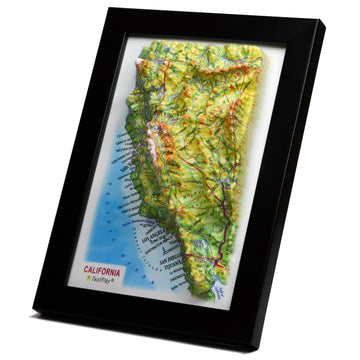
Raised relief refers to a cartographic technique where the map surface is physically molded to represent the elevation changes of the mapped area. Instead of simply drawing contour lines or using shading to *suggest* hills and valleys, a raised relief map literally has bumps and dips corresponding to the mountains and valleys in the real world. It turns a flat map into a tactile, sculptural representation of the landscape.
This technique has been used for various types of maps, from geographical depictions of entire countries to detailed models of specific regions. The key feature is that the third dimension – elevation – is represented not just visually on a flat plane, but as a physical variance in the map's surface height. You can run your fingers over a raised relief map and feel the mountains rise and the valleys drop.
The degree of exaggeration in the vertical dimension can vary. Often, the vertical scale is exaggerated compared to the horizontal scale to make smaller elevation changes more noticeable. This is a deliberate choice to enhance the visual and tactile impact, making the topography more apparent than if mapped to scale, where subtle slopes might appear flat.
How Raised Relief is Applied to Ski Maps
Applying raised relief to ski maps combines the functional information of runs, lifts, and facilities with the powerful visual and tactile representation of the mountain's shape. The familiar lines and symbols indicating pistes and chairlifts are printed onto a map surface that has been pre-molded to precisely match the mountain's topography.
This process requires accurate elevation data for the mountain, which is then translated into a physical mold. Techniques like vacuum forming or 3D printing can be used to create the raised surface, onto which the map graphics are then applied. The result is a map that you can not only look at but also feel, providing an immediate and intuitive understanding of the terrain's complexity.
The runs are depicted following the actual contours of the molded surface. A run that traverses across a steep face will be shown accurately on the physical slope of the map. A run that plunges down a steep pitch will be printed onto a section of the map with a significant vertical drop. This integration of functional map information with physical relief is what makes these maps uniquely valuable for skiers and snowboarders. They bridge the gap between abstract representation and physical reality.
Why Raised Relief Matters: The Core Benefits for Skiers and Riders
The integration of physical elevation into a ski map offers a multitude of advantages that significantly enhance the user's experience and safety on the mountain. These benefits stem directly from the intuitive nature of interacting with a three-dimensional object that accurately models the real-world terrain.
Enhanced Orientation and Navigation
Perhaps the most immediate benefit of a raised relief map is how it improves your sense of location and direction on the mountain. Unlike a flat map where everything is compressed onto a single plane, the raised surface allows you to visualize the terrain in a way that closely matches what you see around you.
Visualizing Slope Steepness and Aspect
On a raised relief map, the actual steepness of a slope is physically represented. You can see and feel how sharply a black diamond run drops off compared to the gentle incline of a green run. This isn't just about seeing a color code; it's about understanding the *degree* of the incline. Furthermore, you can easily grasp the aspect – the direction a slope faces – by orienting the map with the sun or known landmarks. This is crucial for understanding snow conditions, as north-facing slopes hold powder longer, while south-facing slopes get sunnier and softer.
Being able to visualize these aspects physically on the map makes it much easier to correlate what you see on the map with the environment around you. You can look up at a face and then find it on your map, immediately understanding its steepness and general direction. This improves your spatial awareness and confidence when navigating, reducing the chances of getting disoriented, especially in vast resort areas or during variable weather conditions where visibility might be reduced.
Understanding Spatial Relationships
Raised relief maps excel at showing the relationships between different parts of the mountain. You can easily see how one valley leads into another, how ridges separate distinct areas, or how runs snake around features like cliffs or prominent rock formations. The physical heights and depths make the connections and separations intuitively clear.
Understanding these spatial relationships is key to efficient navigation. You can see how a traverse connects two different bowls, or how dropping over a particular ridge leads you into a specific area. This makes route finding more straightforward than trying to decipher overlapping lines and abstract symbols on a flat map. It provides a holistic view of the mountain's structure.
Improved Run Planning and Strategy
Raised relief maps are invaluable tools for planning your day or even just your next few runs. They allow for more informed decisions based on a realistic understanding of the terrain you will encounter. This moves planning beyond just looking at difficulty ratings and helps you think strategically about how to ski or ride the mountain.
Identifying Terrain Features and Obstacles
While map graphics show runs, the underlying relief map reveals the *type* of terrain those runs cover. You can see if a run goes through a narrow gully, opens into a wide-open bowl, follows a ridge line, or drops down a consistent pitch. You can also identify significant terrain features adjacent to runs that might be relevant, such as cliffs, large rock fields, or areas prone to collecting snow.
This detailed understanding of the terrain allows you to choose runs that match your skill level and preferred style of riding. If you love steep moguls, you can identify areas on the map that have the appropriate steepness and aspect to hold bumps. If you prefer cruising, you can find long, consistently pitched blue runs. The map helps you scout the mountain visually before you even get there or while you are on a lift.
Optimizing Your Day on the Mountain
With a clear understanding of the mountain's layout and terrain, you can plan routes that optimize your time and energy. You can identify efficient lift connections, avoid unnecessary traverses, or plan a progression of runs from easiest to most challenging based on their actual physical appearance on the map.
Want to hit certain areas when the sun softens the snow? The raised relief map clearly shows which areas face south or east. Want to find sheltered runs on a windy day? Identify runs in valleys or tree-lined areas. This level of informed planning, made possible by the intuitive nature of the raised relief, helps you make the most of your time on the slopes and discover areas you might have otherwise missed or avoided due to uncertainty from a flat map.
Greater Safety and Awareness
Safety on the mountain is paramount, and a map that provides a clear and accurate representation of the terrain is a crucial safety tool. Raised relief maps contribute to safety in several significant ways by making potential hazards and navigational challenges more apparent.
Recognizing Potential Hazards
Steep drop-offs, narrow chutes, cliff bands, and avalanche-prone slopes are physical features of the mountain that are much harder to grasp from a 2D map or even a digital rendering. A raised relief map clearly shows these dramatic changes in elevation and terrain complexity. You can see where a run navigates around or near hazardous areas, allowing you to be more aware of your surroundings.
For instance, seeing a run pass beneath a physically depicted steep, open face on the map can alert you to potential avalanche risk if conditions are unstable. Recognizing a sudden, steep drop on the map where a run transitions can prepare you for a challenging section ahead. This pre-visualization of hazards is a powerful safety advantage.
Planning for Changing Conditions
Weather conditions in the mountains can change rapidly, affecting visibility, snow conditions, and trail marking. In flat light or fog, features that were obvious visually can disappear. Relying on a clear, tactile map where you can physically orient yourself based on the mountain's shape becomes incredibly valuable.
If visibility drops, being able to feel the contours of the map and match them to the general shape you know is there (even if you cannot see details) can help maintain your orientation. You can plan escape routes or easier ways back to the base or shelter by identifying less steep or more sheltered paths on the map before conditions deteriorate. This proactive planning, enabled by the map's clarity, is a key aspect of mountain safety.
Unparalleled Visualization and Engagement
Beyond practical navigation and safety, raised relief maps offer a level of engagement and visualization that flat maps simply cannot match. They enhance the overall experience of connecting with the mountain.
Bringing the Mountain to Life
A raised relief map is a miniature model of the mountain itself. Holding it and examining its contours brings the abstract representation to life. You can appreciate the scale of the peaks, the depth of the valleys, and the complexity of the terrain in a truly tangible way. This physical interaction creates a stronger mental model of the mountain.
This tangible connection makes the mountain feel more real and accessible, even when you are not on the slopes. It is a beautiful representation of the landscape you love to explore, turning a functional tool into an object of appreciation and even art. It captures the majesty of the mountain environment in a way that a flat piece of paper cannot.
Pre-Trip Exploration and Excitement
Planning a ski trip is part of the fun, and a raised relief map dramatically enhances the anticipation. Spreading out the map and tracing potential routes, visualizing the runs you want to tackle, and getting a real sense of the mountain's size and shape builds excitement.
You can explore different areas of the resort, mentally skiing down the runs and riding up the lifts. This pre-visualization makes you more familiar with the resort before you arrive, reducing that initial feeling of being overwhelmed by a new place. It helps you arrive feeling more prepared and ready to make the most of your time on the snow. It transforms abstract planning into an engaging exploration.
Beyond the Paper: Comparing Raised Relief to Other Formats
While traditional 2D maps are the baseline, the rise of digital technology has introduced other formats for ski resort navigation. How do raised relief maps stack up against these alternatives?
Raised Relief vs. Standard 2D Maps
As discussed, the primary advantage of raised relief over standard 2D maps is the intuitive representation of terrain. While a 2D map shows *where* runs and lifts are, the raised relief map shows you the *shape* of the mountain those features exist on. This makes understanding steepness, aspect, and spatial relationships significantly easier and more immediate.
A 2D map requires mental translation to understand the terrain; a raised relief map provides that understanding physically. This tactile element is unique and powerful, offering a different way to process geographic information that resonates deeply with our spatial senses. For navigating complex, three-dimensional environments like ski resorts, the benefits of this physical representation are profound compared to a flat diagram.
Raised Relief vs. Digital Map Applications
Many skiers now use smartphone apps with GPS tracking and digital resort maps. These apps offer features like real-time location tracking, run statistics, and social sharing. Some digital maps use 3D rendering techniques to display the mountain, often allowing users to pan and zoom.
While digital maps are convenient for real-time tracking and information access on the go, they cannot replicate the tangible experience of a physical raised relief map. The screen is still a flat surface, and while the rendering may look 3D, you cannot physically feel the contours or run your finger along a ridge line to truly grasp the elevation change.
Physical maps, especially raised relief ones, also have key advantages over digital apps in a mountain environment. They do not rely on battery life, which can drain quickly in cold temperatures. They are not susceptible to screen glare in bright sunlight or difficult to use with gloves on. They are durable and readily available in a pocket or backpack. Moreover, they offer a holistic, always-visible overview that constantly reinforces your understanding of the entire mountain, rather than just the small section displayed on a phone screen. They serve different but complementary purposes.
The Craft Behind the Map: Creating Raised Relief Ski Maps
Producing an accurate and visually appealing raised relief ski map is a complex process that blends cartography, digital modeling, and physical manufacturing. It is a testament to skilled craftsmanship and technological application working together.
Data Acquisition and Processing
The foundation of any accurate terrain map is precise elevation data. For ski resorts, this data is often acquired through techniques like aerial photogrammetry, LiDAR scanning (Light Detection and Ranging), or detailed ground surveys. These methods capture millions of data points representing the exact height of the terrain across the entire resort area.
This raw data is then processed and refined. Digital elevation models (DEMs) are created, representing the terrain as a grid of elevation values. Software is used to smooth the data, correct anomalies, and ensure accuracy. The layout of ski runs, lifts, buildings, and other features is then overlaid onto this digital terrain model.
The Physical Production Process
Once the digital model is finalized, it is used to create the physical raised relief map. One common method is vacuum forming. A mold is created based on the digital terrain model, often using CNC (Computer Numerical Control) milling to precisely carve the shape. A sheet of plastic is then heated and draped over the mold, and a vacuum is applied to pull the plastic tightly against the form, capturing the relief.
After the plastic is formed, the map graphics – the runs, lifts, names, boundaries, and other details – are printed onto the raised surface. This requires specialized printing techniques to accurately align the 2D graphics with the 3D shape. The result is a durable, lightweight plastic map with a physically raised surface that corresponds to the mountain's topography. Other methods like 3D printing can also be used for creating highly detailed or smaller-scale relief models, although vacuum forming is common for larger map formats.
TESTPLAY's Perspective: Expertise in 3D Terrain Visualization
TESTPLAY's involvement highlights the importance of expertise in accurately representing complex geographical data in a way that is meaningful and useful to the end-user. Their focus on explaining "Why Raised Relief?" stems from a deep understanding of how people interact with and learn from spatial information, particularly in dynamic environments like ski resorts.
Why TESTPLAY Focuses on This Format
TESTPLAY understands that effective communication of terrain is crucial for both enjoyment and safety. They recognize that while digital tools have their place, there is an enduring and significant value in tangible, physical maps that provide an intuitive, always-accessible reference. The raised relief format aligns perfectly with their goal of making complex spatial information understandable and actionable for everyone, regardless of their map-reading experience.
Their expertise lies not just in the technical creation of 3D terrain models, but in understanding the *user experience*. They know that feeling the mountain's contours provides a layer of understanding that simply looking at a screen or a flat piece of paper cannot replicate. This tactile feedback reinforces the visual information, creating a more complete and memorable mental picture of the mountain. TESTPLAY champions this format because it truly elevates the user's comprehension of the ski environment.
The Impact of Accurate, Tangible Maps
TESTPLAY sees accurate, tangible maps as empowering tools. They enable skiers and riders to become more confident, independent, and safe explorers of the mountain. By providing a map that mirrors the physical reality of the slopes, they help reduce uncertainty and enhance the joy of discovery.
The impact goes beyond just navigating runs; it influences how people perceive the mountain as a whole. It fosters a deeper appreciation for the topography and the natural forces that shaped it. For TESTPLAY, the raised relief ski map is more than just a guide; it is a piece of the mountain itself, made accessible and understandable in your hands. It is about providing the best possible tool for engaging with the ski environment.
Where to Find and Utilize Raised Relief Ski Maps
Raised relief ski maps are often available directly from the ski resorts themselves, particularly larger destinations that invest in high-quality mapping. They might be sold in resort gift shops, visitor centers, or featured in prominent display cases around the base areas or lodges.
In Resorts and Online
Many resorts commission these maps for their visitors. You can often find them by checking the resort's official website before your trip or inquiring upon arrival. Some specialized map retailers or online stores also sell raised relief maps for various locations, including popular ski destinations. Seeking out the official map from the resort or a reputable map producer ensures the highest accuracy and detail specific to that mountain.
These maps are perfect for planning in your accommodation before you head out or for referencing during breaks in your ski day. Their durability makes them suitable for use outdoors, even if you need to consult them on a chairlift (though take care in windy conditions!). They also make fantastic souvenirs, serving as a beautiful and informative reminder of your trip.
Integrating Maps into Your Ski Trip Planning
To get the most out of a raised relief map, incorporate it into your trip planning from the beginning. Before you leave home, use the map to explore the resort layout, identify runs you want to try, and understand the flow of the mountain.
Once at the resort, refer to the map regularly. Use it to orient yourself at trail junctions, plan your next few runs based on current location and conditions, and identify meeting points. Discussing routes with your group using the physical map can also be much easier and clearer than pointing at a flat screen. It becomes a central piece of your mountain toolkit, used in conjunction with real-time conditions information and your own observation of the snow and weather.
Investing in Understanding: The Long-Term Value
Acquiring a raised relief ski map is an investment not just in a piece of cartography, but in your understanding and enjoyment of the mountain. The intuitive clarity it provides pays dividends in terms of confidence, safety, and the ability to fully appreciate the scale and beauty of the ski environment.
Unlike disposable paper maps, a raised relief map is a durable item you can use for multiple trips to the same resort. Its timeless representation of the terrain remains relevant season after season, even as lift names or run designations might occasionally change (which can often be marked or noted). It becomes a familiar guide, helping you to deepen your relationship with the mountain over time.
The tactile learning experience it offers is powerful and lasting. The mental map you build of the resort by interacting with the raised relief is likely to be more robust and accurate than one formed solely from flat visuals. This deeper understanding enhances every future visit, making navigation feel more natural and intuitive.
Conclusion: Elevate Your Mountain Experience with Raised Relief
Understanding the mountain is fundamental to a great ski or snowboard experience. While traditional maps serve a purpose, they cannot fully capture the dynamic, three-dimensional nature of ski terrain. This is precisely why raised relief 3D ski maps, as championed and explained by experts like TESTPLAY, offer such an unparalleled advantage.
By providing a tangible, physically accurate representation of the mountain's contours, raised relief maps dramatically improve orientation, enhance route planning, bolster safety awareness, and deepen engagement with the environment. They transform the abstract lines and symbols of a flat map into a clear, intuitive model of the world you are exploring.
Whether you are a seasoned expert navigating complex backcountry access points or a beginner finding your way from the magic carpet to the first green run, the insights provided by a raised relief map are invaluable. They reduce guesswork, increase confidence, and allow you to focus more on the joy of skiing or riding.
Make the switch from struggling with flat representations to experiencing the mountain in your hands. Explore the resorts you love, or plan your next adventure, with the clarity and intuition that only a raised relief 3D ski map can provide. Elevate your understanding, enhance your safety, and truly immerse yourself in the magnificent world of mountain terrain. It is a fundamental shift in how you connect with the slopes, making every turn more informed and every descent more confident.
```