Transform Geography Learning: Why Raised Relief Maps are Essential Classroom Tools
Why Raised Relief Maps Are Perfect for Classrooms: Elevating Geographic Understanding
Teaching geography effectively can sometimes feel like navigating a complex terrain itself. While traditional flat maps provide essential spatial information, they often struggle to convey the true nature of the physical world – the majestic rise of mountains, the gentle slope of valleys, or the dramatic descent into oceanic trenches. Educators, seeking engaging and impactful ways to bring the Earth's surface to life for their students, often find themselves looking for tools that go beyond the two-dimensional.
Fortunately, there is a powerful and time-tested resource that excels at bridging this gap: the raised relief map. These unique educational aids offer a multi-sensory experience that can profoundly transform how students perceive and understand geography. By literally adding a third dimension to the learning process, raised relief maps make abstract concepts tangible, fostering deeper engagement, improved retention, and a more comprehensive grasp of geographical principles for learners of all ages and abilities. This post will delve into why these maps are not just useful, but truly perfect for the classroom environment, exploring their myriad benefits and practical applications.
What Exactly Are Raised Relief Maps?
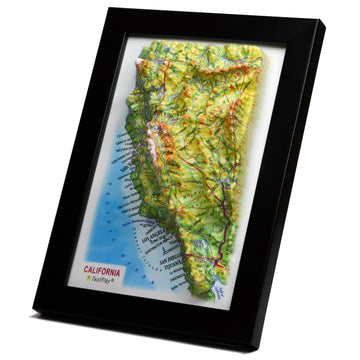
Before we explore their benefits, it's important to understand what distinguishes a raised relief map from a standard flat map. While both display geographical data like borders, cities, and bodies of water, a raised relief map incorporates elevation data to create a three-dimensional representation of the Earth's surface. This means that mountains rise off the surface, valleys are indented, and plateaus stand out at their relative heights.
These maps are typically created by molding materials like plastic or vacuum-forming techniques over a base map. The vertical scale is often exaggerated compared to the horizontal scale to make the topographic features more visually prominent and tactilely discernable. This exaggeration is a deliberate design choice that enhances the educational impact, allowing students to easily see and feel variations in elevation that would be subtle or imperceptible at a true scale on a classroom-sized map. They offer a tangible model of the landscape being studied.
The Limitations of Traditional Flat Maps
Flat maps have been fundamental tools in geography education for centuries, and their importance for teaching concepts like distance, direction, and political boundaries remains undeniable. However, they inherently present the three-dimensional world in a two-dimensional format, which can pose significant challenges for learners. Abstracting the complex curves and variations of the Earth onto a flat surface requires a certain level of cognitive processing that not all students readily master.
Understanding topographical features like watersheds, mountain passes, or the impact of elevation on climate can be difficult when represented solely by contour lines or color gradients on a flat surface. For many students, especially younger ones or those with different learning preferences, visualizing the actual *shape* of the land from these abstract symbols is challenging. This can lead to a less intuitive and less complete understanding of the physical geography they are studying. Furthermore, the passive act of looking at a flat map may not capture the attention or curiosity of all students in the same way that a more interactive tool can.
The Core Advantages: Why Raised Relief Maps Excel in the Classroom
Raised relief maps overcome many of the limitations of flat maps by adding a critical dimension to learning. Their unique characteristics make them exceptionally well-suited for a dynamic and inclusive classroom environment. Let's explore the specific advantages they offer.
Fostering True Spatial Understanding
One of the most significant benefits of raised relief maps is their unparalleled ability to cultivate genuine spatial understanding. By providing a physical model of the terrain, they allow students to directly perceive and interact with the Earth's topography in a way that flat maps cannot replicate. Concepts like steepness, elevation changes, and the relative heights of different landforms become immediately apparent and understandable.
Seeing a mountain range rise dramatically from the map surface or feeling the depth of a valley helps students build a mental model of the landscape that is far richer and more accurate than one derived solely from abstract contour lines. They can easily trace the path of rivers flowing downhill, visualize how mountain barriers might affect weather patterns or historical migration routes, and understand the relationship between elevation and other geographic features. This direct, intuitive understanding forms a robust foundation for more advanced geographical concepts. It moves beyond simply knowing *where* something is, to understanding *what the place is like*.
Engaging Multiple Learning Styles
Classrooms are diverse environments, filled with students who learn in myriad ways. Raised relief maps are exceptionally effective because they engage multiple learning styles simultaneously – visual, tactile, and kinesthetic. Students can see the variations in elevation, they can touch and feel the texture and height of different landforms, and they can move their fingers along routes or features, actively exploring the geography.
For visual learners, the prominent three-dimensional features make patterns and relationships in the terrain much clearer than on a flat map. Tactile learners thrive on the ability to touch and feel the landscape, which reinforces the visual information through physical sensation. Kinesthetic learners, who benefit from movement and hands-on activities, can actively trace rivers, run their fingers over mountain ranges, or compare the heights of different plateaus, making the learning process dynamic and engaging. This multi-sensory approach ensures that a wider range of students can access and internalize the information being presented, making learning more effective and enjoyable for everyone.
Igniting Curiosity and Active Learning
The tactile and three-dimensional nature of raised relief maps naturally invites interaction and exploration. Unlike flat maps, which students might passively view from a distance or on a screen, a raised relief map demands to be touched, examined, and discussed. This hands-on engagement sparks curiosity and encourages students to ask questions about the landforms they are exploring.
Students might wonder why a certain area has so many hills, where a river is flowing, or why a particular city was built in a valley. These questions lead to active learning and deeper investigation. Teachers can use the map as a central point for discovery, allowing students to explore it individually or in groups, fostering collaborative learning and critical thinking as they discuss their observations and make connections. The map becomes not just a source of information, but a catalyst for inquiry.
Enhancing Memory and Retention
Research in cognitive science suggests that engaging multiple senses during the learning process significantly improves memory formation and retention. When students see, touch, and interact with a raised relief map, they create richer and more complex cognitive representations of the geographical information. The physical sensation of feeling the terrain reinforces the visual input, embedding the knowledge more deeply in their long-term memory.
Recalling the location and characteristics of the Rocky Mountains becomes easier when a student can vividly remember running their hand over the raised, rugged surface on the classroom map. Understanding the concept of a drainage basin is enhanced by physically tracing the contours that channel water towards a central river on the relief model. This multi-sensory encoding leads to more durable learning that students are more likely to retain long after the lesson is over, providing a solid foundation for future learning in geography and related subjects.
A Powerful Tool for Accessibility and Inclusion
Raised relief maps are invaluable resources for creating an accessible and inclusive learning environment, particularly for students with visual impairments or other learning differences. For students who are blind or have low vision, the tactile nature of these maps provides essential access to geographical information that is completely inaccessible on a standard flat map. They can explore the shape and layout of the land through touch, understanding elevation, slope, and the relative positions of features.
Moreover, students with learning disabilities or those who struggle with abstract concepts often benefit greatly from concrete, multi-sensory materials. The tangible reality of the raised landforms makes complex spatial relationships easier to grasp and process. Providing multiple pathways to understanding information ensures that all students have the opportunity to succeed and develop their geographical literacy, promoting equity in the classroom. Raised relief maps are not just supplementary; for some students, they are absolutely essential tools for accessing the curriculum.
To illustrate the impact on accessibility, consider how raised relief maps can help different learners:
1. Students with Visual Impairments: Gain access to topographical information through touch that is impossible on flat maps. They can feel mountains, valleys, plateaus, and sometimes even differentiate between different types of terrain textures.
2. Students with Dyslexia or Dyscalculia: May find abstract visual representations challenging. The concrete, three-dimensional nature simplifies the spatial reasoning required to understand the relationship between different geographical features.
3. Students with ADHD or Focus Challenges: The interactive and tactile nature can help maintain engagement and focus compared to passive visual aids. The ability to physically explore keeps their hands and minds actively involved.
4. Kinesthetic Learners: These students learn best by doing and moving. Exploring the map with their hands fulfills this need, making the learning process more natural and effective for them.
By catering to such a wide range of needs, raised relief maps contribute significantly to a more equitable and effective learning environment for every student.
Bringing Geography and Earth Science to Life
Raised relief maps do more than just show where landforms are; they help students understand *why* the Earth looks the way it does and how physical geography influences human activity and natural processes. They make the connection between topography and other subjects within geography and Earth science much more intuitive.
For instance, teachers can use a raised relief map to explain:
* How rivers carve valleys over time, tracing the path of water downhill across the molded surface.
* The formation of mountain ranges due to tectonic plate collisions, visualizing the immense forces that push the land upwards.
* How prevailing winds and mountain barriers create rain shadows, affecting climate and vegetation on different sides of a range.
* Why populations historically settled in valleys or along rivers, finding areas suitable for agriculture and transportation.
* The impact of elevation on temperature and ecosystems, visualizing different climate zones on the map's varied surface.
These connections make geography feel less like memorizing locations and more like understanding a dynamic, interconnected Earth system. Students begin to see the landscape as a result of powerful natural forces and understand its influence on human civilization and the environment. The map becomes a model not just of *what is*, but of *why it is*.
Versatility Across Curriculum and Grade Levels
The utility of raised relief maps extends far beyond introductory physical geography in elementary school. They are versatile tools that can be integrated into various subjects and are beneficial for students from kindergarten through high school and even beyond.
In elementary grades, they are excellent for introducing basic concepts like mountains, valleys, and bodies of water, and for understanding local geography. Students can easily identify and name prominent landforms and begin to grasp the concept of scale and representation. Moving into middle school, raised relief maps become essential for teaching more complex topics such as watershed dynamics, plate tectonics, volcanic activity (visualizing cones), and the impact of glaciation on landscapes. They provide a concrete reference point for understanding abstract geological processes and their resulting landforms.
At the high school level, these maps can support advanced studies in geomorphology, climatology, human geography (e.g., urban development in relation to terrain), and environmental science. They can be used to analyze terrain suitability for development, plan hypothetical infrastructure projects, or study the environmental impact of land use based on topography. Beyond geography class, they can enhance history lessons by illustrating the terrain faced by explorers or armies, enrich literature classes by providing a sense of place for settings, or even support science classes studying ecosystems and biodiversity in relation to elevation. Their adaptability makes them a valuable long-term investment for any educational institution.
Durability as a Long-Term Investment
Classroom resources need to be robust and able to withstand frequent handling by many students over several years. Well-made raised relief maps are designed for durability. Typically constructed from sturdy, vacuum-formed plastic, they are resistant to tearing, creasing, and minor spills, unlike paper maps or posters. Their three-dimensional structure makes them less prone to damage from being rolled up or folded incorrectly.
While the initial cost of a high-quality raised relief map might be slightly higher than a flat poster map, their longevity and ability to remain a useful, engaging tool for many years represent a significant return on investment. They are not consumables but durable pieces of equipment that can benefit countless students over the course of their educational journey. This makes them a practical and economical choice for schools looking to build a library of lasting and effective teaching resources.
Practical Application: Integrating Raised Relief Maps Effectively
Simply having a raised relief map in the classroom is a good start, but its true power is unlocked through thoughtful integration into lessons and activities. Here are some practical ways educators can use these maps to maximize student learning and engagement:
Hands-On Exploration and Discovery
Allow students ample time to simply touch and explore the map freely, especially when it's first introduced. Encourage them to close their eyes and feel the different textures and elevations. Ask open-ended questions like, "What do you notice?" or "Where do you think water would flow?" This initial tactile exploration builds familiarity and sparks curiosity.
Connecting to Other Subjects
Use the map as a visual and tactile aid when teaching history (e.g., tracing Lewis and Clark's route over the Rockies), literature (locating the setting of a novel and discussing how the terrain might influence the story), or environmental science (identifying a watershed and discussing pollution runoff). These cross-curricular connections make learning more relevant and demonstrate the interconnectedness of knowledge.
Using Maps for Storytelling and Visualization
Have students use the map to narrate a journey, describe a historical event, or explain a geographical process. For example, they could trace the path of a fictional raindrop from a mountain peak down to a river, or explain the challenges faced by pioneers crossing a mountain range by pointing to and describing the features on the map. This active use of the map enhances comprehension and communication skills.
Facilitating Discussions and Questioning
Position the map as a central point for group discussions. Pose questions that require students to interpret the physical features, such as "How might the elevation here affect the climate?" or "Why would a city develop in this specific location?" The tangible nature of the map provides a common reference point for all students, making abstract discussions more grounded and accessible. Encourage students to ask each other questions using the map as a guide.
Conducting Specific Activities and Lessons
Design lessons explicitly around the map. Students could work in groups to identify and label major landforms, measure approximate distances or elevation changes (with guidance on the exaggerated vertical scale), or use clay or other modeling materials to replicate a section of the relief map they find particularly interesting. These activities transform passive viewing into active learning experiences.
Relating Maps to Real-World Phenomena
Whenever possible, connect the features on the map to real-world events or images. Show satellite photos, videos, or news articles about places depicted on the map. Discuss how the terrain shown on the map influences current events, weather patterns, or local culture. This helps students see geography as a dynamic force shaping the world around them, not just static information on a wall.
Choosing the Right Raised Relief Map for Your Classroom
Selecting the appropriate raised relief map depends on several factors, including the age of your students, the specific curriculum objectives, and your available space and budget. Considering these points will help you make the best choice for your classroom's needs.
Scale and Detail
Maps come in various scales. A large-scale map (showing a smaller area with more detail, like a state or region) is excellent for studying local geography and specific landforms in depth. A small-scale map (showing a larger area with less detail, like a continent or the world) is better for understanding global patterns and the relative positions of major landmasses and features. Consider what scale best aligns with your teaching focus.
Coverage Area
Decide which geographical area is most relevant to your curriculum. Options range from world maps and continental maps to maps of specific countries, states, or even local regions. Having a map of your own state or region can be particularly engaging for students, as it connects abstract concepts to their immediate environment. Many classrooms benefit from having a combination of different maps – perhaps a world map for global context and a detailed map of their own country or state.
Material and Durability
Look for maps made from durable, high-quality materials like vacuum-formed plastic. These are more resistant to wear and tear, ensuring the map remains a valuable resource for years. Check the mounting options; some maps are designed to hang on a wall, while others might be better suited for tabletop use. Consider the expected usage and select a material built to withstand it.
Features Included
While all raised relief maps show topography, some also include political boundaries, major cities, rivers, lakes, and other geographical features labeled clearly. Consider whether you need a purely physical map focused on terrain, or one that integrates political and cultural information alongside the physical relief. Ensure the labeling is clear and easy for students to read at a reasonable distance. Some maps might use color-coding to indicate different elevation ranges, which can be another helpful visual aid.
By carefully considering these factors, educators can choose a raised relief map that is not only physically appropriate for the classroom but also aligns perfectly with their teaching goals and provides the most benefit to their students' geographical education.
Addressing Common Questions
While the benefits are clear, educators might have a few practical questions about incorporating raised relief maps into their classrooms.
Are Raised Relief Maps Expensive?
The cost of raised relief maps can vary depending on size, material, and coverage area. While they may have a higher upfront cost than a laminated poster map, their durability and multi-sensory effectiveness often make them a more cost-effective choice in the long run due to their longevity and significant educational impact. Think of it as an investment in a fundamental teaching tool. Many educational suppliers offer various options to fit different budgets, and grants or school funding can often be sought for purchasing such impactful resources.
Where Can I Store Them?
Many raised relief maps are designed to be hung on a wall, making storage simple and keeping the map accessible for frequent use. Others might be more flexible and can be rolled for storage, though permanent wall display is often preferable for ease of access and maximum impact. Consider the wall space available in your classroom and choose a map size and format that fits comfortably and is easily visible to all students. Some might require specialized storage solutions if they are large and not wall-mounted, but the educational value typically outweighs minor storage considerations.
Conclusion
In the quest to provide students with the most effective and engaging learning experiences, the tools we choose make a significant difference. While digital resources and flat maps certainly have their place, the unique, multi-sensory capabilities of raised relief maps make them an unparalleled resource for teaching geography. They transform abstract concepts into tangible realities, allowing students to truly see, feel, and understand the Earth's physical surface.
From fostering spatial reasoning and engaging diverse learning styles to boosting memory retention and promoting accessibility, the benefits of incorporating raised relief maps into the classroom are profound and far-reaching. They ignite curiosity, encourage active exploration, and help students make meaningful connections between the physical landscape and human activity, history, and environmental processes. They are durable, versatile, and represent a wise long-term investment in foundational geographical literacy.
For any educator seeking to elevate their geography instruction and provide students with a deeper, more intuitive understanding of the world, a raised relief map is not just a helpful aid – it is an essential, perfect tool. It provides a hands-on pathway to geographical knowledge that is inclusive, engaging, and truly memorable, preparing students with a robust understanding of the planet they inhabit. Consider how adding this dynamic tool could transform the learning landscape in your own classroom.