

In the evolving landscape of modern education, educators constantly seek innovative tools and methodologies to capture student attention and foster deeper understanding.
While digital resources and interactive whiteboards have transformed classrooms, there remains a fundamental need for tangible, multi-sensory learning experiences, particularly when teaching abstract concepts like geography and topography.
Traditional flat maps are essential, yet they often struggle to convey the three-dimensional reality of our world – the towering mountains, the sweeping valleys, the undulating plains, and the depth of oceans.
This limitation can make it challenging for students to truly grasp spatial relationships, scale, and the physical forces that shape landscapes.
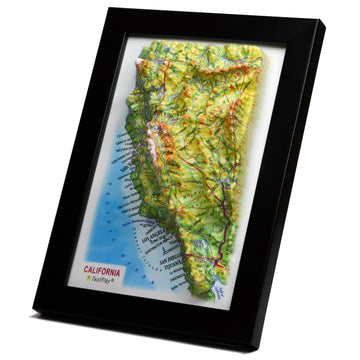
Raised relief maps offer a powerful, time-tested solution to this challenge.
These unique cartographic tools literally lift the landscape off the page, allowing students to see and feel the variations in elevation, bringing geography to life in a way that flat representations simply cannot.
They transform a static visual aid into a dynamic, tactile learning experience that engages multiple senses.
For educators considering how to enhance their teaching of geography, history, science, and even math, raised relief maps present a compelling option.
This post explores the significant benefits that raised relief maps bring to educational settings, examines the potential challenges associated with their integration, and highlights practical applications across various subjects and age groups.
By understanding how to effectively leverage these tactile tools and mitigate their drawbacks, educators can unlock a new dimension of learning, making complex spatial concepts accessible, engaging, and memorable for all students.
Raised relief maps offer a multitude of advantages over their flat counterparts, directly impacting student engagement, comprehension, and retention.
Their three-dimensional nature provides a unique pathway to understanding the physical world.
These benefits extend beyond geography, influencing spatial reasoning skills critical across the curriculum.
One of the most immediate and powerful benefits of raised relief maps is their ability to engage students through touch.
Learning is not solely a visual or auditory process; incorporating tactile and kinesthetic elements can significantly improve understanding and memory.
By running their fingers over mountain ranges, tracing river valleys, and feeling the slopes of hills, students develop a physical connection to the landscape being studied.
This hands-on interaction caters directly to tactile and kinesthetic learners, who process information best by doing and touching.
It makes the learning process more active and less passive, moving away from simply looking at a map to actively exploring it with their hands.
For many students, particularly younger learners or those with specific learning differences, the abstract nature of lines representing elevation on a flat map is difficult to translate into a concrete understanding of height and depth.
A raised relief map bypasses this abstraction, providing immediate, tangible feedback.
Feeling the steepness of a mountain range compared to the gentleness of a plain creates a visceral understanding that words and flat images struggle to convey.
This tactile engagement strengthens neural pathways associated with spatial awareness and memory, making the information stick.
Developing strong spatial reasoning skills is crucial for success in a wide range of academic areas and everyday life.
Raised relief maps are exceptional tools for cultivating this skill.
They help students understand the relationship between different geographic features in three dimensions.
Students can see how rivers flow downhill, how mountain ranges form natural barriers, and how elevation impacts climate and vegetation patterns.
Working with a raised relief map helps students transition from understanding a 2D representation to conceptualizing the real-world 3D space it depicts.
They can better understand concepts like scale in terms of how much real-world elevation difference a certain height on the map represents.
This ability to visualize and manipulate spatial information in their minds is a cornerstone of geographic literacy and is highly transferable to fields like mathematics, science, engineering, and even art.
Raised relief maps provide a concrete foundation upon which to build these essential spatial skills.
In an age of digital overload, capturing and maintaining student attention can be a significant challenge.
Raised relief maps possess an inherent novelty and physicality that naturally draws students in.
They are different from the standard materials students encounter daily, sparking curiosity and encouraging exploration.
Watching students gather around a large relief map, pointing, touching, and asking questions, demonstrates their power as engagement tools.
The tactile nature encourages interactive learning and discussion.
Students are more likely to engage with the material when they can physically interact with it.
This increased engagement often leads to a greater desire to learn more about the places depicted and the geographic processes that created the landscapes.
Raised relief maps can transform a potentially dry lesson on topography into an exciting discovery of the Earth's varied surface.
Multi-sensory learning experiences lead to improved comprehension and longer-term retention of information.
By engaging multiple senses – sight, touch, and potentially hearing through discussion – raised relief maps help students build a more robust understanding of geographic concepts.
Information received through multiple channels is processed more deeply by the brain and is therefore easier to recall later.
When a student feels the steep incline of the Rocky Mountains while seeing their location on the map, that understanding is far more likely to be retained than simply memorizing facts from a textbook or flat map.
This multi-modal input helps to create richer memory traces.
The tactile memory of feeling the topography is linked with the visual memory of the map and the factual information being taught.
This interconnectedness makes the information more accessible for retrieval when needed.
Consequently, students not only understand the concepts better initially but are also more likely to remember them long after the lesson is over, contributing to lasting geographic knowledge.
Raised relief maps are invaluable tools for creating more inclusive and accessible learning environments.
They are particularly beneficial for students with visual impairments, allowing them to explore the world's geography through touch.
Feeling the contours and features of a map provides these students with direct access to spatial information that is often inaccessible from standard visual maps.
This tactile accessibility is transformative, providing independence and equal opportunity to learn about geography.
Beyond visual impairments, raised relief maps also support students with other learning differences, such as dyslexia, ADHD, and autism.
The concrete, multi-sensory nature of the maps can help students who struggle with abstract concepts, focus attention, or process purely visual information.
The ability to physically interact with the material can reduce cognitive load and make learning less daunting and more manageable.
They provide an alternative pathway to understanding that complements or replaces traditional methods, ensuring that diverse learners can fully participate and succeed in geography education.
While the benefits are clear and substantial, educators and institutions must also be prepared to address certain challenges associated with incorporating raised relief maps into the classroom.
Like any specialized educational tool, they come with practical considerations regarding acquisition, storage, and integration.
Understanding these challenges is the first step toward finding effective solutions that maximize the maps' potential.
One of the primary hurdles for many schools is the initial cost of purchasing raised relief maps.
They are typically more expensive to produce than standard flat maps due to the materials and manufacturing processes involved in creating the three-dimensional form.
A single large, high-quality relief map can represent a significant investment for a school or even a district, especially when budgets are tight.
Acquiring a comprehensive collection covering different regions or subjects can become prohibitively expensive for some institutions.
Furthermore, the cost may not just be the purchase price.
Considerations for shipping (especially for large maps) and potential future replacement costs if a map becomes damaged also factor into the overall expense.
Schools need to explore funding options, such as grants, parent-teacher association (PTA) support, or dedicated budget allocations for educational resources, to make these valuable tools accessible.
Another practical challenge is the storage of raised relief maps.
Unlike flat maps that can be rolled, folded, or stored easily in drawers or on shelves, relief maps are rigid and three-dimensional.
They can be bulky and require dedicated storage space that protects them from damage while remaining easily accessible for classroom use.
Larger maps, especially those covering significant geographic areas, can take up considerable wall space if displayed or require large flat storage areas if not.
This can be a particular issue in classrooms or schools with limited physical space.
Finding suitable storage solutions that prevent warping, crushing, or other damage is essential to protect the investment.
Custom racks, large flat cabinets, or designated wall space with protective coverings might be needed.
Careful planning is required to ensure that acquiring raised relief maps does not create an unmanageable storage problem within the school environment.
Raised relief maps, while often made from durable plastics, can still be susceptible to damage, particularly in a classroom setting with frequent student handling.
Sharp objects can scratch or puncture the surface, excessive force can potentially warp or crack the plastic, and general wear and tear from repeated touching can occur over time.
While good quality maps are built to withstand regular use, they are not indestructible.
Maintenance involves keeping them clean (dust can settle in the contours) and handling them with care.
Educators need to establish clear guidelines for students on how to interact with the maps respectfully to ensure their longevity.
Repairs can be difficult or impossible depending on the nature of the damage.
Therefore, preventative measures and careful handling are paramount.
Teachers may need to supervise student use closely, especially with younger children, to minimize the risk of accidental damage.
Investing in higher quality, more robust maps upfront might be a worthwhile consideration if heavy use is anticipated, potentially offsetting future replacement costs.
Successfully integrating raised relief maps requires more than just having them available; it requires thoughtful planning and knowledgeable educators.
Teachers need to understand how to effectively incorporate these maps into their existing curriculum to enhance learning objectives rather than simply using them as show-and-tell items.
This involves developing specific lesson plans and activities that leverage the unique 3D aspect of the maps.
For instance, a lesson might involve using the map to plan a hypothetical hiking route, analyzing how elevation changes affect weather patterns, or understanding the challenges historical figures faced traversing mountain ranges.
Furthermore, not all educators may be immediately comfortable or familiar with teaching using tactile geographic tools.
Professional development or training may be necessary to equip teachers with the strategies and confidence needed to maximize the educational impact of raised relief maps.
Providing educators with resources, examples of effective activities, and opportunities to share best practices can help overcome this challenge and ensure the maps are utilized to their full potential.
The utility of raised relief maps extends far beyond traditional geography lessons.
Their ability to make spatial concepts tangible makes them valuable resources across a variety of subjects and educational levels, from early childhood to high school and even in specialized educational programs.
Here are some key areas where raised relief maps can be applied effectively:
This is the most obvious application, and where raised relief maps shine brightest.
They are unparalleled for teaching fundamental geographic concepts such as:
Raised relief maps are highly relevant in science classrooms, particularly when teaching Earth science, geology, and environmental science.
Students can use the maps to study geological formations, understand how erosion and weathering shape the landscape over time, and explore concepts related to plate tectonics and land formation.
They help visualize concepts like watersheds and how pollutants might travel through river systems based on elevation changes.
In environmental science, understanding different biomes and ecosystems can be enhanced by seeing how temperature and rainfall vary with elevation, which is visually represented on the map.
Discussing climate patterns, weather systems influenced by mountain ranges (like rain shadows), or the distribution of plant and animal life based on topography becomes much more concrete with a raised relief map as a reference.
It provides a tangible model of the Earth's surface for scientific inquiry and discussion.
While not immediately obvious, raised relief maps can support mathematical learning, particularly in the area of spatial reasoning, measurement, and scale.
Students can use the maps to:
As highlighted earlier, raised relief maps are essential tools for creating inclusive learning environments.
For students with visual impairments, they provide unparalleled access to geographic information through touch.
Teachers can create lessons specifically designed for tactile exploration, focusing on the contours, textures, and features of the map.
For students with other learning differences, the multi-sensory engagement offered by relief maps can make abstract geographic concepts more concrete and easier to grasp.
They provide an alternative mode of learning that can significantly improve accessibility and success for students who may struggle with traditional visual or auditory methods.
Using raised relief maps in an inclusive classroom allows all students, regardless of their learning style or ability, to engage with the same material simultaneously, fostering a sense of shared exploration and understanding.
This shared experience can also promote peer learning as students interact with the map together.
Even young children can benefit immensely from interacting with raised relief maps.
At this level, the focus is on introducing basic concepts of the physical world: land and water, mountains (high places) and valleys (low places), flat areas, and areas that slope.
Children can enjoy the sensory experience of touching the different textures and heights on the map.
It helps them develop a foundational understanding of spatial concepts and geographic terms through play and exploration.
Simple activities like identifying the "highest point" or tracing a "river" with their finger lay the groundwork for more complex geographic learning later on.
Raised relief maps make learning about the Earth a fun and tactile adventure for young learners, sparking an early interest in geography and the world around them.
They provide a concrete, manipulable representation of the Earth that is perfectly suited for the developmental stage of young children.
To fully leverage the educational potential of raised relief maps and overcome the associated challenges, educators and schools can implement several strategies.
These involve thoughtful planning, creative integration, and collaboration.
Raised relief maps should not be merely decorative items or occasional curiosities.
Their power is unlocked when they are actively integrated into lesson plans.
Instead of just pointing to locations, design activities where students must use the map to solve problems, answer questions, or complete tasks.
For example, ask students to use the map to determine the best location for a hypothetical city, considering elevation, water sources, and proximity to other features.
Or have them map a journey across varied terrain, discussing the challenges posed by mountains or rivers.
Use the map as a centerpiece for discussions about how geography influences history, culture, or environmental issues.
The key is to make the map an active tool for inquiry and discovery.
Raised relief maps can complement, rather than compete with, digital technologies.
Combine the tactile experience of the relief map with the vast information available online.
Students could locate a city on the relief map, then use Google Earth to see satellite imagery of its actual landscape, observing how the real-world topography matches the map.
Augmented reality apps are beginning to overlay digital information onto physical maps, offering exciting possibilities for future integration.
Using online resources to research places identified on the map, or using digital tools to measure areas or analyze data related to the topography shown, enhances the learning experience.
This blended approach allows students to benefit from both the tangible understanding provided by the relief map and the expansive information available digitally.
Addressing the cost challenge requires proactive effort.
Schools can explore various avenues for funding.
Grant opportunities specifically for educational resources, STEM education, or accessibility tools are often available from government sources, foundations, or corporations.
Fundraising efforts through parent-teacher associations, school events, or crowdfunding platforms can also be successful.
Partnering with local geographical societies, universities, or community organizations might also yield access to resources or funding.
Highlighting the specific educational benefits and how the maps support diverse learners can strengthen proposals for funding.
Seeking bulk purchasing discounts if multiple schools in a district are interested can also help reduce costs.
Investing in training for teachers is crucial for maximizing the impact of raised relief maps.
Workshops can provide educators with pedagogical strategies for incorporating tactile geography into their lessons.
Sharing successful lesson plans and activity ideas among staff can create a collaborative environment where teachers learn from each other's experiences.
Inviting experts, such as geographers or special education specialists, to demonstrate effective techniques can also be beneficial.
Providing dedicated time for teachers to experiment with the maps and develop their own lesson ideas is also important.
Continuous professional development ensures that educators feel confident and equipped to use these powerful tools effectively.
Raised relief maps represent a valuable and often underutilized resource in educational settings.
Their unique ability to provide a tangible, three-dimensional representation of the Earth offers profound benefits for student learning, particularly in enhancing tactile and kinesthetic engagement, fostering spatial reasoning, boosting curiosity, improving comprehension, and supporting diverse learning needs.
While challenges related to cost, storage, durability, and the need for teacher training exist, these obstacles are not insurmountable with careful planning and strategic implementation.
By recognizing the versatile applications of raised relief maps across subjects like geography, social studies, science, mathematics, and special education, educators can unlock new dimensions of learning for their students.
Integrating these maps thoughtfully into lesson plans, combining them with digital tools, actively seeking resources, and investing in professional development for teachers are key strategies for success.
Ultimately, incorporating raised relief maps into the classroom can provide a richer, more engaging, and more effective way for students to explore and understand the physical world, equipping them with essential spatial literacy and a lasting appreciation for the planet we inhabit.

TestPlayNA: Your Memories, Elevated: National Park & Ski Maps.