```html
Ski Map Evolution: Why 3D Relief Maps Like TESTPLAY Are the Future
```
Ski Map Evolution: From Flat Frustration to 3D Relief Mastery with TESTPLAY
For generations, the trusty ski map has been an essential companion on the slopes, a folded piece of paper guiding skiers and snowboarders down powdery runs and challenging trails. However, despite its nostalgic charm, the traditional flat map presents inherent limitations when trying to represent the complex, three-dimensional world of a mountain resort. This difficulty in translating a 2D drawing to the reality of steep pitches, hidden gullies, and rolling terrain has often led to confusion, misjudgment, and sometimes, unintended adventures. Understanding the true lay of the land from a birds-eye view on a flat surface requires significant imagination and experience, a skill not all mountain enthusiasts possess instantly.
The evolution of technology has brought revolutionary changes to almost every aspect of our lives, and mountain navigation is no exception. Just as GPS transformed road travel, advancements in mapping technology, data processing, and interactive graphics are fundamentally changing how we perceive and interact with ski resort information. The shift from static, two-dimensional representations to dynamic, three-dimensional relief maps marks a pivotal moment in this evolution. This progression isn't just about aesthetics; it's about providing a richer, more intuitive, and ultimately safer experience on the mountain. It addresses the core problem of disorientation and lack of terrain understanding inherent in flat maps by presenting information in a format that mirrors how we naturally perceive the world.
This post will explore the fascinating journey of the ski map, tracing its path from simple hand-drawn diagrams to the sophisticated digital landscapes available today. We will delve into the challenges posed by traditional flat maps and examine how the advent of 3D relief mapping technology provides a powerful solution. We will specifically look at examples of this technology, highlighting how advanced systems like TESTPLAY are setting new standards for mountain navigation and user experience. By understanding the limitations of the past and the potential of the future, skiers and riders can appreciate the transformative impact of 3D mapping on their mountain adventures. Join us as we navigate this exciting evolution and discover why 3D relief maps are poised to become the indispensable tool for every mountain explorer.
The Challenge with Flat Maps: A World Compressed
Traditional ski maps, while iconic and often beautifully illustrated, face a fundamental challenge: how to accurately depict a complex, three-dimensional mountain environment on a flat, two-dimensional piece of paper or screen. This compression inevitably leads to a loss of critical information, particularly regarding elevation changes, slope angles, and the true contours of the terrain. Skier's Left and Skier's Right become relative directions on a drawing, rather than intuitive paths along a slope. Understanding the steepness of a black run versus a blue run from just contour lines or color coding can be difficult, especially for newcomers to a resort or those unfamiliar with interpreting topographic data.
The visual representation on a flat map often simplifies the reality of the mountain, omitting subtle dips, rolls, and terrain features that can significantly impact a skier's experience and safety. A seemingly straightforward connection between two runs on a map might involve navigating a steep side-hill traverse or a challenging mogul field in reality. This disconnect between the map representation and the actual physical environment is a significant source of confusion and frustration for many resort visitors. It requires a leap of faith or prior knowledge to truly understand what lies ahead on a particular trail.
Limitations of 2D Perspective
The primary limitation of a 2D map is its inability to convey true depth and perspective. When viewing a flat map, you lose the sense of looking *up* a slope or *down* into a valley. Everything is presented on the same plane, forcing the user to mentally reconstruct the mountain's topography based on abstract symbols and lines. This can make it hard to gauge distances accurately, particularly vertical distances, and to understand how different runs relate to each other in terms of elevation change. Navigating purely by a flat map often feels less like following a guide and more like solving a puzzle.
Understanding the relationships between different areas of the resort becomes more complex on a 2D map. Connecting lifts, runs, and base areas involves interpreting a network of lines and symbols that represent paths and infrastructure. This can be particularly challenging when trying to plan complex routes, link multiple areas of a large resort, or understand evacuation routes in an emergency. The abstract nature of the representation requires the user to apply a layer of mental processing that is not necessary when interacting with a more intuitive, three-dimensional model.
Difficulty Estimating Terrain
One of the most significant drawbacks of flat ski maps is the difficulty they present in accurately estimating terrain features and difficulty levels. While maps use color coding and symbols to indicate run difficulty (green, blue, black), this is a relative measure that doesn't convey the precise pitch or variability of a slope. A "black" run on one side of the mountain might be significantly steeper or more challenging than a "black" run elsewhere due to subtle terrain features not clearly depicted on a flat map. Blind rolls, sudden drops, or heavily contoured areas might be invisible until you are right on top of them.
For off-piste or backcountry enthusiasts, the limitations are even more pronounced. Assessing avalanche risk, identifying cornices, or finding safe lines through complex terrain is nearly impossible with only a flat map. Even within resort boundaries, navigating ungroomed areas, terrain parks, or mogul runs benefits significantly from a better understanding of the slope and undulations. The lack of detailed terrain representation on a flat map can compromise safety and limit a skier's ability to make informed decisions about where and how to ski.
A Journey Through Ski Map History: From Hand-Drawn to Digital 2D
The history of ski maps is a reflection of both the growth of the sport and the technological advancements available to depict landscapes. Early ski maps were often simple, artistic renditions, hand-drawn to show the basic layout of a few runs and lifts at burgeoning resorts. These maps prioritized charm and visual appeal, providing a general sense of place rather than precise topographic detail. They were functional for smaller resorts with limited terrain but lacked the precision needed as resorts grew larger and more complex.
As skiing gained popularity and resorts expanded, maps evolved to become more technical. They incorporated more runs, lifts, and services, often using early forms of cartography to represent the mountain landscape. Contour lines were sometimes included, but their interpretation required training and were not always easy to read on a stylized map. The focus remained on showing the network of trails and lifts from an oblique or isometric perspective, attempting to hint at the three-dimensionality but still fundamentally constrained by the 2D medium.
The advent of digital mapping and printing technologies significantly improved the quality and detail of flat ski maps. Computer-aided design (CAD) and Geographic Information Systems (GIS) allowed for more accurate representation of resort boundaries, lift lines, and trail alignments. Digital elevation data could be used to generate contour lines or shaded relief effects, adding a bit more visual information about the terrain. These digital 2D maps became the standard, often available in both printed and early digital formats like PDFs or images on websites. They offered greater detail and accuracy than their hand-drawn predecessors but still suffered from the core limitation of being flat representations of a 3D world. They were sophisticated 2D tools, but the fundamental challenge of interpreting 3D space from a 2D image persisted.
The Rise of 3D Mountain Mapping
The transition from 2D to 3D mapping represents a paradigm shift in how we visualize and interact with geographical data. Driven by advancements in data acquisition, processing power, and rendering technologies, 3D mountain mapping moves beyond abstract symbols and lines to create realistic, interactive models of the terrain. This technology leverages detailed elevation data, satellite imagery, and resort-specific information to construct a virtual representation that closely mirrors the physical mountain. The goal is to provide a view that is both visually intuitive and informationally rich, allowing users to see the mountain as it truly is, from any angle and perspective.
Initial attempts at 3D mapping were often clunky, requiring specialized software and powerful computers. The data needed to create detailed models was expensive and difficult to process. However, rapid developments in computing power, graphics rendering capabilities, and the availability of high-resolution digital elevation models (DEMs) have made sophisticated 3D mapping accessible and practical. Cloud computing allows for complex processing, and modern web and mobile technologies can display detailed 3D environments smoothly. This technological maturation has paved the way for widespread adoption of 3D mapping solutions in various fields, including urban planning, gaming, and increasingly, outdoor recreation.
Early Attempts and Growing Potential
The concept of visualizing terrain in 3D isn't entirely new, but early attempts were often limited by technology. Creating a realistic 3D model required significant manual effort or relied on rudimentary wireframe models based on limited data points. These early visualizations were often static, lacked detail, and were not interactive in a meaningful way. They served more as illustrative tools than functional navigation aids. However, they demonstrated the potential power of seeing terrain in three dimensions. The visual impact of even a basic 3D model was immediately more intuitive for understanding slopes and elevation changes than interpreting contour lines on a flat map.
As data sources improved – such as LiDAR scanning, aerial photogrammetry, and higher resolution satellite imagery – the quality of the underlying terrain data for 3D models dramatically increased. Software developed to process this data more efficiently, creating detailed and accurate digital terrain models. This growing potential fueled the development of more sophisticated 3D mapping applications, initially for professional use in fields like geology or surveying, but eventually filtering into consumer applications, including outdoor recreation. The ability to accurately model complex mountain environments became a reality, setting the stage for the next generation of ski maps.
Technological Leaps Driving 3D
Several key technological advancements have been crucial in driving the rise of 3D mountain mapping. Firstly, the dramatic increase in computing power, particularly in graphics processing units (GPUs), has made it possible to render complex 3D environments smoothly and in real-time on standard computers and mobile devices. This means users can interact with the 3D map fluidly, panning, zooming, and tilting to view the mountain from any perspective without lag. Secondly, the widespread availability of high-resolution digital elevation data has provided the necessary foundation for accurate 3D models. Satellites, aerial surveys, and drone mapping capture terrain details at a resolution previously unimaginable.
Furthermore, advancements in web technologies (like WebGL) and mobile development platforms have enabled the delivery of interactive 3D maps directly through browsers and native apps without requiring proprietary software downloads. This accessibility is key to widespread adoption. Finally, the integration of GIS data allows for layering resort-specific information – lifts, runs, buildings, points of interest – onto the accurate 3D terrain model, creating a comprehensive digital twin of the resort. These combined technological leaps have transformed 3D mapping from a niche, specialized tool into a powerful, accessible platform for mountain navigation.
Introducing TESTPLAY 3D Relief Maps: A Leading Solution
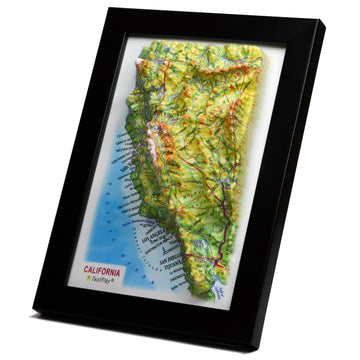
Amidst the evolving landscape of mountain mapping, platforms like TESTPLAY have emerged as leaders, demonstrating the full potential of 3D relief technology for ski resorts and their visitors. TESTPLAY represents the culmination of these technological advancements, offering a highly detailed, accurate, and interactive 3D representation of the mountain environment. It moves beyond simple visualization to provide a robust platform for navigation, information delivery, and enhanced user experience. TESTPLAY's approach focuses on creating a photorealistic or highly detailed relief model that is easy to understand and intuitive to use for anyone, regardless of their map-reading experience.
What sets TESTPLAY apart is its commitment to detail and accuracy, combined with a user-centric design. The platform utilizes high-quality terrain data to build a precise 3D model, then overlays accurate information about runs, lifts, facilities, and real-time conditions. This creates a digital replica of the resort that users can explore virtually, planning their day and navigating the mountain with confidence. The visual clarity of a 3D relief map is immediately apparent; you can see the pitches of the runs, the undulations of the terrain, and how different areas of the resort connect in a way that is impossible with a flat map.
TESTPLAY integrates various layers of information seamlessly into the 3D environment. Users can see which lifts are open or closed, check the grooming status of runs, locate points of interest like restaurants or restrooms, and even find friends on the mountain if they are sharing their location. This aggregation of essential resort information within a geographically accurate and visually intuitive 3D model makes TESTPLAY more than just a map; it's a comprehensive digital guide to the resort. Its design prioritizes performance and accessibility, aiming to deliver a smooth 3D experience across different devices.
The Unmatched Advantages of 3D Relief Mapping
The benefits of using 3D relief maps compared to traditional flat maps are numerous and significant, impacting everything from navigation and safety to planning and overall enjoyment of the mountain experience. The ability to see the mountain in three dimensions fundamentally changes how users understand the terrain and make decisions. This visual clarity is the most immediate advantage, transforming abstract lines and symbols into recognizable slopes and valleys. It bridges the gap between the representation and the reality, making the map a more direct and intuitive tool.
Enhanced Spatial Understanding
Perhaps the most powerful advantage of 3D relief mapping is the dramatically enhanced spatial understanding it provides. Users can instantly grasp the layout of the resort, seeing how runs traverse slopes, how lifts connect different elevations, and the relative steepness of various areas. This intuitive understanding helps skiers and riders orient themselves more effectively on the mountain. If you are at a certain point, you can simply look at the 3D map and see precisely where you are relative to surrounding peaks, valleys, and lifts, just as you would look at the real world. It makes navigation feel natural and less like decoding a puzzle.
This improved spatial awareness also extends to understanding the relationships between different parts of the resort. Planning a route becomes much easier when you can visualize the entire journey in 3D, seeing the climbs and descents involved. Identifying shortcuts, finding alternative routes, or linking multiple runs and lifts flows naturally from exploring the 3D model. The ability to rotate and tilt the map allows users to view the resort from any perspective, providing insights that are simply not available on a static 2D image.
Improved Safety and Confidence
Enhanced terrain understanding directly translates to improved safety on the slopes. With a 3D relief map, skiers can better assess the difficulty and characteristics of runs before committing to them. Steeper sections, unexpected drops, or narrow traverses are clearly visible, allowing users to make informed decisions based on their skill level and comfort zone. This reduces the likelihood of accidentally ending up on terrain that is beyond one's capabilities. It helps avoid surprises that can lead to falls or injuries.
For those exploring off-piste or venturing into variable conditions, a 3D map provides crucial visual information about slope angles, aspect, and terrain features that are relevant to avalanche safety and route finding. While 3D maps are not a substitute for proper training and risk assessment, they offer a valuable tool for visualizing the terrain in a way that aids decision-making in complex environments. Even within resort boundaries, seeing the actual contours helps anticipate changes in snow conditions related to pitch and exposure. Navigating with confidence reduces stress and allows skiers and riders to focus on enjoying the experience.
Better Planning and Exploration
3D relief maps are invaluable tools for planning a day on the mountain, both before arriving and throughout the day. Users can virtually explore the resort from the comfort of their home or accommodation, scouting out runs, identifying terrain parks, finding the best lunch spots, and mapping out efficient routes to cover the most ground. The ability to see the mountain realistically helps manage expectations about travel time between different areas and the physical demands of various routes. It enables a more strategic approach to exploring a large resort.
On the mountain, the 3D map becomes a dynamic planning tool. Skiers can easily see their current location within the context of the entire resort, identify nearby runs and lifts, and quickly find their way to their next desired destination. Discovering new areas or finding hidden gems becomes easier when you can visually scan the terrain in detail. The interactive nature of 3D maps encourages exploration and allows users to uncover the nuances of a resort that might remain hidden on a flat map. It makes the process of navigation and discovery an engaging part of the mountain experience.
Engaging User Experience
Beyond the practical benefits, 3D relief maps offer a far more engaging and enjoyable user experience than traditional maps. The visual richness and interactivity make exploring the resort virtually almost as exciting as being there. Users can fly through the resort, pan around peaks, and zoom in on specific features with ease. This level of engagement makes the map a tool users *want* to use, rather than one they *have* to use. It transforms the mundane task of navigation into an interactive discovery process.
The intuitive nature of 3D also lowers the barrier to entry for navigating complex resorts. Newcomers or those less familiar with map reading can quickly understand their surroundings and plan routes without struggling to interpret abstract 2D representations. This accessibility broadens the appeal of digital resort maps and ensures that everyone can benefit from advanced navigation tools. The combination of visual appeal, interactivity, and ease of use makes 3D relief maps a superior method for experiencing a ski resort digitally.
More Than Just a Map: Features of Advanced 3D Systems
Modern 3D mapping platforms like TESTPLAY go far beyond simply rendering terrain in three dimensions. They integrate a wealth of additional features and data layers that transform the map into a comprehensive digital hub for resort information and navigation. These advanced functionalities leverage connectivity and data processing to provide real-time updates and personalized experiences. The 3D relief map serves as the intuitive base layer upon which all other relevant information is dynamically presented, creating a single point of access for everything a skier or rider needs to know while on the mountain.
Real-time Data Integration
One of the most powerful features of advanced 3D mapping systems is the integration of real-time data. This includes up-to-the-minute information on lift status (open/closed, wait times), trail grooming status, weather conditions, snow reports, and avalanche advisories. Seeing this dynamic information displayed directly onto the 3D model provides immediate context and allows users to make informed decisions about where to ski and which lifts to use. No more guessing if a lift is open or if a favorite run has been groomed; the information is right there, visually tied to its location on the mountain.
Some systems also allow for integrating user-generated data, such as marking points of interest, sharing location with friends or family on the mountain, or recording ski tracks. This layer of real-time and dynamic data makes the map a living tool that reflects the current state of the resort and the activity within it. It enhances safety by providing timely updates on conditions or closures and improves efficiency by helping users navigate around lift lines or closed areas. This constant stream of updated information is a significant leap forward from static paper maps or even basic digital representations.
Interactive Elements and Customization
Advanced 3D maps are highly interactive, allowing users to manipulate the view (pan, zoom, tilt, rotate), click on features for more information, and customize the layers of data they see. Users can often filter the map to show only certain types of runs, lifts, or facilities. Many systems also offer route planning tools, allowing users to tap out a desired path down the mountain or between points of interest and see it highlighted on the 3D terrain. This interactive planning capability is invaluable for exploring large or unfamiliar resorts.
Customization features allow users to tailor the map view to their specific needs and preferences. Whether focusing on lift queues, finding family meeting points, or exploring expert terrain, the ability to select and highlight relevant information within the 3D environment makes the map a personalized tool. Interactive elements like clicking on a lift to see its operating hours or tapping on a restaurant icon to view its menu add layers of utility that extend beyond simple navigation. This level of interactivity makes the map a dynamic information platform.
Cross-Platform Accessibility
For a mapping solution to be truly useful, it must be accessible wherever and whenever skiers need it. Leading 3D mapping platforms are designed for cross-platform accessibility, available via web browsers on desktops and laptops, and as native applications on smartphones and tablets. This ensures that users can access the 3D map before their trip for planning, on their mobile device while on the slopes for navigation, and perhaps even on large display screens within resort lodges. The experience is often optimized for mobile use, recognizing that this is where skiers and riders will primarily interact with the map on the go.
Offline capabilities are also a crucial aspect of cross-platform accessibility, especially in mountain environments where connectivity can be spotty. Advanced systems allow users to download resort maps for offline use, ensuring that navigation and essential resort information remain available even without a cellular signal. This robust accessibility across different devices and connectivity states ensures that the 3D map is a reliable tool throughout the mountain adventure. It eliminates the frustration of losing access to your map when you need it most.
The Future of Ski Navigation
The evolution of ski maps is far from over. The foundation laid by current 3D relief mapping technology is paving the way for even more sophisticated and integrated experiences on the mountain. As data becomes more granular, processing power continues to increase, and new technologies emerge, the potential for mountain navigation tools is immense. We are likely to see continued integration with wearable technology, bringing navigation information directly into a skier's field of vision or onto their wrist. The map will become even more seamlessly integrated into the overall resort experience.
Future developments may include augmented reality features, overlaying trail information, points of interest, or even real-time snow conditions directly onto the skier's view of the physical mountain through a phone screen or specialized goggles. Artificial intelligence could play a role in offering personalized route suggestions based on skill level, preferences, and real-time resort conditions, optimizing the skiing experience for each individual. Integration with lift pass systems and resort services could create a truly connected mountain environment where navigation, access, and services are all linked through a single, intelligent platform.
Data from skiers' movements could also contribute to the system, providing real-time insights into congestion points, snow conditions on specific sections of runs, or even triggering alerts for potential safety issues. The map could evolve from a passive representation into an active participant in the mountain experience, offering guidance, information, and personalized recommendations on the fly. The possibilities are exciting and point towards a future where navigating and experiencing a ski resort is more intuitive, informed, and integrated than ever before.
Conclusion
The journey of the ski map reflects the broader evolution of technology and our increasing ability to represent and interact with the physical world digitally. From simple hand-drawn sketches to complex digital 2D maps, each step brought improvements, but the fundamental challenge of depicting a 3D mountain on a flat surface remained. The advent of sophisticated 3D relief mapping technology marks a significant leap forward, offering a powerful solution to this long-standing challenge. By providing an intuitive, accurate, and interactive representation of the terrain, 3D maps enhance spatial understanding, improve safety, facilitate better planning, and create a more engaging user experience.
Platforms like TESTPLAY exemplify the potential of this technology, demonstrating how a detailed 3D model combined with real-time data and interactive features can transform the way we navigate and experience ski resorts. These advanced systems are more than just maps; they are comprehensive digital guides that empower skiers and riders to make informed decisions, explore with confidence, and maximize their time on the slopes. The limitations of flat maps are overcome by the immersive clarity of a 3D view that mirrors the reality of the mountain.
As this technology continues to evolve, integrating real-time data, personalization, and future advancements like augmented reality, the future of ski navigation looks incredibly promising. The era of squinting at folded paper maps and struggling to reconcile 2D lines with 3D reality is gradually being replaced by intuitive, dynamic, and intelligent 3D experiences. For anyone who has ever felt lost or uncertain on a mountain, the shift to 3D relief mapping offers a compelling solution, promising a safer, more enjoyable, and more confident adventure on the snow. Explore the future of ski mapping and experience the mountain in a whole new dimension.
```