**Meta Title:** Master Your Day on the Slopes: Reading Your 3D Ski Map (Lifts, Runs, Elevation Explained)
# Reading Your 3D Ski Map: Unlocking the Mountain's Secrets
Standing at the base of a vast ski resort, map in hand, can feel a little overwhelming. All those lines, colors, and symbols – where do you even begin? It looks like a colorful spiderweb draped over a miniature mountain range, and while it holds the key to unlocking your best day on the slopes, it can initially feel like you need a decoder ring to understand it.
But what if you could look at that map and immediately know where the easiest runs are, which lifts connect to the summit, how to avoid getting stuck on terrain you're not ready for, and even anticipate changes in snow conditions based on elevation? This isn't just a fantasy; it's the reality when you learn to effectively read your 3D ski map.
This comprehensive guide is your solution to map confusion. We will delve into the essential components of a 3D ski map – the lifts that transport you, the runs that define your path, and the elevation that shapes the mountain itself. By the end of this post, you will possess the knowledge to confidently navigate any resort map, plan strategic routes, and maximize your enjoyment from the first chair to the last run.
## The Power of the 3D Ski Map: More Than Just a Pretty Picture
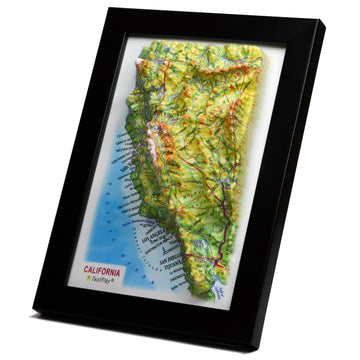
Unlike older, flat 2D maps, the 3D ski map offers a perspective that is far more intuitive and representative of the actual mountain terrain. It literally adds depth to your understanding, making it easier to visualize the steepness of a slope or the way a run winds down through features.
This visual representation is crucial for planning and navigation. You can see how different areas of the resort connect, understand the overall flow of the mountain, and get a sense of the scale involved. A well-rendered 3D map provides a tangible feel for the mountain's contours and helps you mentally prepare for the vertical challenge ahead.
## Deciphering the Symbols: Your Map's Rosetta Stone
Every ski map, regardless of its 3D presentation, relies on a system of symbols and colors to convey vital information. Think of these symbols as the mountain's own language, telling you about terrain difficulty, available services, and potential hazards.
Ignoring the legend is like trying to read a book in a foreign language without a dictionary. Taking just a few moments at the start of your day to review the map's key will save you significant time and frustration later on the mountain.
### The Essential Legend
The map's legend, usually located at the bottom or side, is your absolute starting point. This is where every symbol used on the map is defined, providing you with the key to understanding the mountain's layout and features.
The legend will detail the color-coding for run difficulty, explain what different lines and shapes represent (lifts, buildings, boundaries), and list icons for various facilities. Always check the legend, especially at a new resort, as symbol variations can exist between different ski areas.
### Universal Symbols to Know
While legends can vary slightly, many symbols are relatively universal across North America and Europe. Recognizing these common symbols will give you a head start in reading any ski map you encounter.
These include the well-known shapes and colors for run difficulty, distinct lines for different types of lifts, and common icons for facilities like restaurants or restrooms. Becoming familiar with these standard representations is a fundamental step in becoming a proficient map reader.
## Navigating the Vertical World: Understanding Lifts
Ski lifts are the lifeblood of any resort, providing access to the mountain's myriad slopes. On a 3D map, lifts are typically represented by lines connecting base areas, mid-stations, and summits. Understanding these lines and what they signify is paramount to planning your movement around the resort.
The type of line or the symbol at the station might indicate the type of lift, its speed, and its capacity. Identifying key lifts – like the main access gondola or a high-speed quad serving expert terrain – is crucial for strategic planning and efficient travel across the mountain.
### How Lifts Appear on the Map
Lifts are generally depicted as solid lines running up the side of the 3D mountain model. The start and end points of the lift, known as stations, are often marked with circles or specific building icons.
Sometimes, labels indicate the name of the lift and perhaps its type or number. Following these lines visually on the 3D terrain model helps you understand which runs are accessible from the top of each lift and how different lifts connect various parts of the resort.
### Types of Lifts and What They Mean
Different lifts serve different purposes and move people at varying speeds and capacities. The map might subtly or explicitly indicate these types, which influences your planning, especially on busy days when lift lines are a consideration.
Knowing the difference between a high-speed detachable chair and a fixed-grip triple chair can impact how quickly you can access terrain and move around the mountain. Gondolas and trams often cover significant vertical distances and serve as primary arteries, while surface lifts are typically found in beginner areas or used for short connections.
#### Chairlifts
Chairlifts are the most common type of ski lift, consisting of chairs suspended from a moving cable. They vary in capacity (doubles, triples, quads, six-packs, eight-packs) and speed.
High-speed detachable chairlifts are modern wonders that slow down at the loading and unloading stations but speed up considerably while on the line, significantly reducing ride time. Fixed-grip chairlifts move at a constant, slower speed but are often found on shorter routes or in less crowded areas.
On the map, chairlifts are usually simple lines, sometimes with subtle differences in line style or station symbol to denote speed or type, as explained in the legend. They provide open-air access to runs and are a staple of the resort experience.
#### Gondolas and Trams
Gondolas and aerial trams feature enclosed cabins, offering protection from the elements and often covering long distances and significant elevation changes. Gondolas typically have multiple small cabins circulating on a loop, while trams usually have one or two large cabins that shuttle back and forth.
These lifts are frequently major access points to the upper mountain or connect different base areas. They are ideal for beginners riding down or simply sightseeing, as you can ride them in both directions (check the map or signs for download options).
Map symbols for gondolas and trams often show a larger station icon and a different line style compared to chairlifts, clearly distinguishing them as major transport routes. Their representation on the 3D map helps you visualize these prominent arteries traversing the mountain.
#### Surface Lifts (Magic Carpets, T-bars, Pomas)
Surface lifts, such as magic carpets (conveyor belts), T-bars, and Pomas, are lifts where skiers and riders remain on the snow surface while being pulled uphill. Magic carpets are almost exclusively found in beginner areas due to their ease of use.
T-bars and Pomas require slightly more coordination but are effective for shorter distances, accessing specific runs, or connecting different areas. These lifts are often slower and less susceptible to wind closures than chairlifts or gondolas.
On the map, surface lifts might be represented by dashed lines or a different line weight, often concentrated near the base area or in dedicated learning zones. Identifying these helps beginners find suitable terrain and experienced riders find connecting routes.
### Connecting the Dots: Using Lifts to Traverse the Resort
Understanding the lift network is key to efficient movement. Look at how lifts terminate near the top of certain runs and how other lifts begin near the bottom of those same runs.
Plan your route by linking lifts and runs together. For example, you might take a high-speed quad to access a series of blue runs, ski down to where a slower double chair begins, and take that chair to reach a different part of the mountain with black diamond trails.
The 3D map's perspective is invaluable here, helping you see potential bottlenecks or long traverses needed to get from the bottom of one run to the base station of the next desired lift. You can visually trace a path up, across, and down the mountain using the lift network as your highway system.
## Unlocking the Terrain: Runs, Difficulty, and Features
The runs are the heart of the skiing experience, and the map provides critical information about their difficulty, shape, and the terrain they encompass. Learning to read the run markings is essential for choosing routes appropriate for your skill level and desired experience.
The internationally recognized color and shape coding for difficulty is the most fundamental piece of information. However, the map also shows you the width of the run, how it twists and turns, and hints at the type of terrain you might encounter.
### The Color Code: Understanding Run Difficulty
Standardized symbols indicate the relative difficulty of groomed ski runs. While exact definitions can vary slightly between resorts and regions (e.g., North America vs. Europe), the general progression remains constant.
Always start with terrain you are comfortable on and progress gradually. The map provides a visual guide, but local conditions and your own abilities are the ultimate determinants of suitability.
#### Green Circles
Green circles denote the easiest runs. These are typically wide, gently sloping trails, often located near the base area or served by beginner-friendly lifts like magic carpets or slow chairlifts.
They are usually meticulously groomed to provide a smooth, predictable surface. Green runs are ideal for learning, practicing fundamental techniques, and warming up at the start of the day.
#### Blue Squares
Blue squares indicate intermediate runs. These trails are generally steeper and potentially narrower than green runs, offering more challenge and speed opportunities.
They are typically groomed regularly but might present steeper pitches or variations in slope angle. Blue runs make up the bulk of terrain at many resorts and are suitable for skiers and riders who can comfortably link turns and control their speed.
#### Black Diamonds
Single black diamonds signify advanced terrain. These runs are notably steeper than blue runs and may feature varied conditions, including moguls (bumps), ungroomed sections, or natural obstacles.
Control and confidence are required on black diamond runs. They demand stronger technique and the ability to adapt to changing snow surfaces and steeper pitches. The 3D map helps visualize this increased steepness.
#### Double Black Diamonds
Double black diamonds represent expert terrain, the most challenging on the mountain. These runs are exceptionally steep, may be ungroomed with large moguls or powder, contain natural hazards like cliffs or trees, and could require mandatory air or technical maneuvers.
Attempting double black diamond runs requires a high level of skill, experience, and situational awareness. The map will clearly mark these formidable challenges, often depicting them on the steepest sections of the 3D model or highlighting specific features like cliffs or narrow chutes.
#### Terrain Parks
Terrain parks are designated areas featuring jumps, rails, boxes, halfpipes, and other freestyle features. They are often marked on the map with a specific icon, such as a jumping skier or snowboarder.
Terrain parks are rated separately based on the size and difficulty of the features (often small, medium, large, extra-large). The map indicates their location, allowing freestyle enthusiasts to find their playground and others to easily avoid these areas if desired.
### Reading the Run Lines
Beyond the color-coding, the way runs are drawn on the map provides further clues about their nature. Wider lines suggest broader trails, offering more space for turns and generally indicating groomed terrain.
Narrower lines might represent steeper chutes, winding trails through trees, or ungroomed areas. Dotted lines often denote cat tracks or access roads – flatter sections used to traverse between areas or access lifts, which may require poling or skating.
The curvature of the line shows how the run snakes down the mountain, giving you a sense of the flow and how much turning is involved. Visualizing this on the 3D model helps you anticipate the run's character.
### Identifying Terrain Features
3D maps excel at representing natural terrain features. Shaded green areas usually indicate tree coverage, helping you identify potential glade skiing areas (if marked as runs) or areas to avoid.
Hatching or specific symbols might denote cliffs or rocky areas, highlighting potential hazards near runs. Bowls, cornices, or prominent rock formations might also be rendered on the 3D model, giving you a better sense of the natural landscape.
While the map provides a general overview, always be aware of your surroundings, as actual conditions and smaller features may not be depicted.
### Boundaries and Restricted Areas
The map clearly delineates the ski area boundary. Skiing or riding outside these boundaries is often prohibited, dangerous, and could result in losing your lift ticket.
Closed runs or areas might be marked with dashed lines or a specific "CLOSED" symbol on the map (though real-time closures are best confirmed via signs or resort apps). Areas marked as cliffs or other hazards should be taken seriously and avoided unless you are an expert specifically seeking such challenges in designated, open areas.
Understanding these boundary markings is crucial for safety and staying within permitted areas of the resort.
## Mastering the Third Dimension: Reading Elevation
Elevation is the defining characteristic of a mountain resort and is powerfully conveyed by a 3D map. Understanding how elevation is represented and its implications is key to predicting run characteristics and even snow conditions.
The 3D rendering itself provides a visual sense of scale and steepness. However, specific markings like listed elevations and shading techniques further enhance your understanding of the vertical landscape.
### How Elevation is Depicted
While traditional maps might use contour lines to show elevation changes, 3D ski maps often rely on shading, perspective, and labeled elevation points to illustrate the mountain's height. The higher areas are visually elevated on the model, and shading can create a sense of slopes and valleys.
Key points like the summit, base area, mid-mountain lodges, and lift stations are often labeled with their specific elevations in feet or meters. These numbers provide concrete data points that complement the visual representation of the mountain's height.
### The Impact of Elevation
Elevation has a direct impact on the skiing and riding experience. Higher elevations are generally colder and may hold snow better and longer, potentially offering better snow quality, especially later in the season or on warmer days.
Lower elevation runs might melt out sooner or experience more variable snow conditions. The steeper a run appears on the 3D map, the faster you will descend for a given horizontal distance, directly correlating with its difficulty rating.
Understanding elevation also helps you appreciate the length of a run. A long run isn't just about horizontal distance but also about how much vertical feet you descend from top to bottom.
### Identifying Key Elevation Points
Locating the summit elevation, base elevation, and the elevations of significant mid-mountain areas or lift junctions is useful for orientation and planning. Knowing the vertical drop of the resort (summit minus base elevation) gives you a sense of the mountain's scale.
Identifying the elevation of mid-mountain lodges can help you plan meeting points or rest stops, especially if some group members are skiing lower or higher terrain. These labeled points act as anchors within the 3D landscape, helping you gauge distances and relative heights.
## Strategic Navigation: Putting It All Together
Reading the symbols, understanding the lifts, interpreting the runs, and grasping the elevation are all building blocks. The real magic happens when you combine this knowledge to strategically navigate the mountain and plan your day effectively.
The map is not just a guide for *not* getting lost; it's a tool for optimizing your time, exploring new terrain, and ensuring everyone in your group has a positive experience.
### Planning Your Route
Before you even click into your bindings, use the map to plan your initial route. Based on your skill level and what type of terrain you want to ski (groomers, bumps, trees), identify the lifts that access that terrain.
Map out a sequence of lifts and runs that will take you where you want to go. Consider factors like sun exposure (runs facing south warm up faster) or potential crowds (main lifts from the base are often busiest first thing).
Visualize your journey on the 3D map, tracing your planned path up and down the mountain. This mental rehearsal helps you familiarize yourself with the layout before you're actually on the snow.
### On-Mountain Navigation
Once you are on the mountain, the map becomes your real-time navigation aid. Periodically consult it at lift stations or intersections to confirm your location and next steps.
Look for on-mountain signs that correspond to run names and lift names on the map. Use prominent features depicted on the 3D map, like specific peaks, ridges, or major buildings, as visual landmarks to help orient yourself.
If you are standing at a lift station, locate that station on the map and see which runs feed into it and which runs are accessible from the top. This grounds your physical location within the map's representation.
### Finding Facilities
Ski resorts offer various facilities beyond just lifts and runs – restaurants, restrooms, warming huts, first aid stations, ski patrol offices, and rental shops. The map uses specific icons to mark the location of these important services.
Before heading out, note the location of key facilities, especially restrooms and on-mountain dining options, so you know where to go when nature calls or you need a break. Knowing where the nearest first aid is located provides peace of mind.
### Checking Real-Time Information
While the physical map is a static snapshot, it often contains information on typical closures or areas prone to wind. However, for real-time updates on lift status, run closures, and grooming reports, you will need to supplement the map with other resources.
Check digital maps available through resort apps or websites, look at information boards at the base and lift stations, or ask resort staff or ski patrol. Use the physical map as your overall guide, and the digital/real-time resources for current conditions.
### Group Dynamics
When skiing with others, especially those of different skill levels, the map is an indispensable tool for planning routes everyone can enjoy or identifying meeting points. Find runs of varying difficulty that terminate at the same lift or base area.
Agree on meeting points at specific lift stations or lodges marked on the map. Plan routes where the more advanced skiers can tackle challenging terrain while less experienced members take easier blue or green runs, all converging at a predetermined spot.
The map facilitates clear communication and ensures that everyone feels included and confident about the day's plan.
## Beyond the Basics: Advanced Map Reading Tips
Once you are comfortable with the fundamentals, you can start extracting even more value from your ski map. These advanced tips help you think critically about the mountain and use the map as a tool for deeper understanding.
Compare the map's depiction to what you see on the ground. Are the runs as wide as they appear? Are the trees as dense? This comparison helps you calibrate your map reading skills and understand the map's perspective.
Use the 3D rendering to anticipate changes in snow conditions. North-facing slopes (often shaded on the map if north is oriented upwards) may hold powder longer, while south-facing slopes (often brighter) will soften up faster on sunny days.
Don't hesitate to ask resort staff or ski patrol for advice. They know the mountain intimately and can offer insights based on current conditions that the map can't convey, using the map itself as a point of reference for their explanations.
Consider how traverse times are represented. Flat cat tracks might look short on the map horizontally, but the dotted line often signifies they require effort to navigate. Steep runs, while short horizontally, represent significant vertical gain/loss and quick descents.
## Conclusion
A 3D ski map is far more than just a colorful diagram; it is a powerful navigational tool, a planning aid, and a gateway to truly understanding the mountain you are exploring. By learning to read its language – the symbols, the lines representing lifts and runs, and the visual cues of elevation – you transform from a passive observer into an active participant in your mountain adventure.
We have covered the essential elements: decoding the universal language of symbols in the legend, understanding how different types of lifts dictate access and flow, interpreting the color-coded runs and terrain features, and grasping the significance of elevation in shaping both the slopes and the conditions.
Putting this knowledge together allows you to plan efficiently, navigate confidently, find necessary facilities, and make informed decisions throughout your day. With practice, reading your 3D ski map will become second nature, enhancing your safety, expanding your exploration, and ultimately leading to a more enjoyable and rewarding experience on the slopes.
So next time you receive that folded piece of paper or open the digital version on your phone, take a moment. Look beyond the pretty picture and begin to read the story the mountain wants to tell you through its map. Your most epic ski day is waiting to be unlocked.