



We live in an increasingly digital world, and that extends right up to the ski slopes. From trail maps on resort apps to GPS tracking and condition updates, our smartphones have become invaluable tools for navigating the mountain experience.
Yet, anyone who has spent significant time skiing or snowboarding knows that the mountain environment is unpredictable. Extreme cold, moisture, bright glare, and remote locations can quickly turn a reliable digital tool into a frustrating or even non-functional piece of technology.
This reality brings a crucial question to the forefront: In the age of ubiquitous digital information, is there still a place for the traditional physical ski map? More importantly, could a physical map actually be superior or, at the very least, an essential complement to your digital tools?
This post will delve deep into the comparison between physical and digital ski maps, exploring the pros and cons of each approach. We will identify the key pain points of relying solely on digital solutions and highlight the enduring, perhaps even growing, value of a well-designed physical map.
Ultimately, we will make a compelling case for why investing in a high-quality physical ski map, like a TESTPLAY 3D Ski Map, is not just a nostalgic choice, but a practical decision that enhances safety, improves your mountain experience, and provides a lasting connection to your adventures.
There is no denying the convenience that digital technology brings to skiing and snowboarding. Most major resorts now have dedicated mobile applications that include interactive trail maps.
These digital maps often come equipped with features like real-time lift status updates, snow condition reports, friend tracking, and even estimated wait times for popular lifts. The ability to have access to all of this information on a device you carry in your pocket is undeniably powerful.
For many recreational skiers, the phone map is their primary, if not only, source of navigation on the mountain. It provides a quick reference for finding specific runs, identifying your current location via GPS, and discovering amenities like restaurants or restrooms.
The expectation is that this digital companion will always be available and accurate, guiding you seamlessly from your first run to your last. It has become integrated into the modern skiing ritual for a significant portion of the mountain community.
Despite the digital takeover, physical ski maps have never truly disappeared. You still find them readily available at resort base areas, ticket windows, and lodging facilities. There is a fundamental reason for this persistence.
A physical map requires no battery, no signal, and is not susceptible to software glitches or frozen screens. It is a static, reliable source of information that has served skiers for generations.
Beyond mere function, there is a tactile satisfaction to unfolding a map and seeing the entire resort layout at a glance. It provides a sense of scale and context that rapidly zooming and panning on a small screen often fails to deliver.
For serious mountain enthusiasts, patrollers, or those exploring complex terrain, the physical map remains an essential tool for detailed planning and reliable navigation when other systems might fail. Its continued presence is a testament to its inherent, practical advantages in a challenging environment.
To truly understand the value proposition, we need to conduct a direct comparison based on several critical factors. Let's examine how physical and digital maps stack up head-to-head.
Digital maps require a functioning smartphone or device. This device needs battery life, and often, it needs cellular data or Wi-Fi connectivity to fully function or load detailed maps.
On a cold mountain day, battery life can plummet dramatically. Service can be spotty or non-existent in many parts of large resorts, especially in valleys, backcountry areas, or even just remote lifts.
A physical map, conversely, is accessible the moment you unfold it. It requires no power source and works equally well in freezing temperatures or bright sunshine. Its reliability is inherent; it doesn't depend on external factors like network coverage or charge levels.
This makes the physical map the ultimate backup system, the one you can count on when your primary digital tool fails you at a critical moment on the mountain.
Using a digital map on a phone while wearing ski gloves can be frustrating. The touch screen might not respond reliably, and removing gloves to operate the phone exposes your hands to the cold.
Screen glare from the sun can also make it difficult to see the display clearly. Zooming and panning, while offering detail, often means you lose perspective of the overall resort layout.
A physical map provides an immediate, large-format view of the entire resort. You can see how different areas connect, understand the flow of terrain, and plan routes more intuitively.
It allows for a more focused interaction; you are looking at the mountain layout itself, rather than interacting with a complex digital interface. This direct engagement can lead to a better understanding of the resort's geography.
Smartphones are delicate and expensive. A fall, moisture from snow or condensation, or even just extreme cold can damage the device or render its screen unusable.
Keeping a phone accessible for navigation often means keeping it in an outer pocket, exposing it to the elements and increasing the risk of damage or dropping it from a lift.
While basic paper maps can be fragile, many modern physical maps, including high-quality ones like TESTPLAY's, are printed on durable, weather-resistant, or even waterproof materials.
They are designed to be folded, unfolded, stuffed in pockets, and handled with gloved hands without falling apart. Their ruggedness makes them perfectly suited for the harsh mountain environment.
Digital maps can layer information, but you often have to toggle between views or zoom in significantly to see details, which can be distracting and time-consuming on the slope.
The amount of information displayed is limited by the screen size and the software interface. While they are great for showing your exact location, they sometimes lack the rich, static detail of a well-printed map.
A physical map, particularly one utilizing detailed cartography, can present a wealth of information – trail names, difficulty ratings, lift lines, elevation changes, points of interest, patrol locations, and more – all visible simultaneously.
The design and iconography on a physical map are often universally understood and do not require learning a specific app's interface. The clarity comes from having everything laid out in front of you.
Reliance on digital maps for navigation carries inherent safety risks. If your phone battery dies unexpectedly, or you lose service in an unfamiliar area, you can suddenly be without any navigational aid.
Looking at a small phone screen while moving or stopped in a high-traffic area can also be a distraction, increasing the risk of collisions with other skiers or obstacles.
A physical map offers a reliable, fail-safe navigation option. It allows you to quickly orient yourself without the complexities or vulnerabilities of electronics.
Furthermore, studying a physical map, especially one that accurately represents terrain, helps you build a better mental model of the resort's layout and topography, improving your overall mountain awareness and safety.
Digital maps are ephemeral. They exist on a screen and disappear when the app is closed or the battery dies. There is no physical connection to the place you visited.
A physical map serves as a tangible memento of your trip. It's something you can keep, display, and refer back to.
It becomes a part of the memory of the mountain adventure, a physical artifact that evokes the feelings and experiences of being there. It's a keepsake that digital information cannot replicate.
This is where the conversation moves beyond a simple physical vs. digital debate and introduces a physical map that transcends the limitations of traditional paper maps and offers unique advantages not easily replicated by digital interfaces: the TESTPLAY 3D Ski Map.
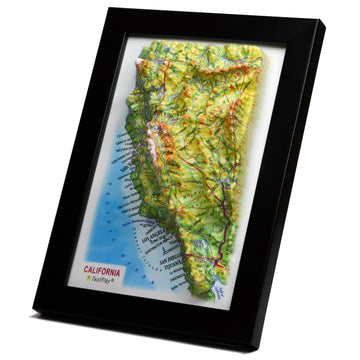
TESTPLAY maps are not just flat drawings of ski resorts; they are intricately detailed, artistically rendered three-dimensional representations of the mountain terrain.
They combine the reliability and tangibility of a physical map with an enhanced visual accuracy that provides a much deeper understanding of the ski area's topography than standard 2D maps or basic digital renderings.
One of the most significant limitations of traditional 2D maps, whether physical or digital, is their inability to accurately convey the steepness and undulation of the terrain. Everything is flattened out, making it hard to judge vertical drop or the true pitch of a slope from the map alone.
TESTPLAY's 3D perspective changes this entirely. By rendering the mountain in three dimensions, the maps provide a realistic sense of elevation changes, bowls, ridges, and valleys. You can visually grasp the steepness of a black diamond run compared to a blue cruiser with unprecedented clarity.
This enhanced spatial understanding is crucial for route planning, especially in unfamiliar or challenging terrain. You can see how runs flow, identify potential hazards or escape routes based on the actual shape of the mountain, and better anticipate the physical demands of a particular trail.
It's the closest you can get to seeing the mountain's structure without actually being on it, and it offers navigational insights that are simply not possible with flat maps.
TESTPLAY maps are known for their meticulous attention to detail and accuracy. They are created using precise topographical data to ensure that the representation is faithful to the actual mountain.
Every lift tower, every prominent rock formation, every trail junction is often rendered with painstaking accuracy. This level of detail makes the map not just a navigational tool, but also a work of art and a true representation of the specific resort.
This precision is invaluable on the slopes. When you are looking for a specific point of reference or trying to confirm your location, the detailed and accurate rendering on a TESTPLAY map makes identification much easier than on a generalized or less precise map.
While standard paper maps can disintegrate in wet or windy conditions, TESTPLAY maps are typically produced on high-quality, durable, and weather-resistant materials. They are designed to withstand the rigors of being used on the mountain – folded, unfolded, potentially exposed to snow or moisture.
Their construction ensures that they remain functional and legible throughout your ski day, regardless of the weather. This durability means you can rely on them as a consistent source of information, unlike a phone that might succumb to the elements.
A TESTPLAY 3D map is far more than just a wayfinding tool. It serves multiple functions that enhance the entire ski experience.
Before your trip, it is an incredible planning tool. Spreading out the 3D map allows you to visualize your day, plan routes based on terrain and difficulty, and identify areas you want to explore. It makes trip preparation more engaging and informative.
On the mountain, it enhances your awareness and appreciation of the environment. Understanding the topography via the 3D rendering adds a layer of depth to your skiing experience, helping you appreciate the natural features of the mountain.
After the trip, the TESTPLAY map becomes a cherished piece of memorabilia. It’s something you can hang on your wall, a beautiful reminder of your adventure, far more significant than a digital file or a tracking app screenshot.
It allows you to relive your runs, point out the challenging sections you conquered, and share your mountain stories with others, using the map as a visual aid.
Despite the clear advantages, some people might still hesitate to invest in a physical map in the digital age. Let's address some common counter-arguments.
A high-quality physical map like a TESTPLAY 3D map typically costs more than a free digital app. Some might see this as an unnecessary expense when a "free" option is available on their phone.
However, this perspective overlooks the value proposition. The cost of a physical map is minimal compared to the cost of a ski trip itself (lift tickets, travel, lodging, gear). Considering it as an investment in safety, reliability, and an enhanced experience makes the cost seem trivial.
Furthermore, a TESTPLAY map is a durable product that lasts for years and serves as a keepsake, unlike a transient digital display. Its value extends far beyond a single day of skiing, offering planning utility and lasting memories.
Some might argue that a physical map is bulky or inconvenient to carry compared to a phone that's already in your pocket. While a folded map does occupy pocket space, modern physical maps are designed to be compact and easily storable in a ski jacket pocket or backpack.
Compare this to the awkwardness of constantly pulling out a phone, dealing with frozen screens or gloves, or risking damage. Having a map readily accessible, perhaps in a dedicated map pocket, can actually be more practical and less cumbersome than fumbling with electronics in cold conditions.
In the debate between physical and digital ski maps, it is not necessarily an either/or situation. Digital maps offer convenience and real-time data that can be useful. However, relying *solely* on digital solutions leaves you vulnerable to technological failures that are particularly likely in the harsh mountain environment.
A high-quality physical map serves as an essential, reliable backup system. It functions when your phone battery dies, when there is no service, or when the cold makes your touch screen unusable. This inherent reliability is a critical safety feature that no digital app can truly replace.
Beyond basic functionality and safety, a TESTPLAY 3D Ski Map offers significant advantages that enhance the entire mountain experience. Its three-dimensional rendering provides unparalleled terrain understanding, aiding in better route planning and increased mountain awareness.
Its durable construction ensures it can withstand the elements and remain a constant source of information throughout your day. Furthermore, it acts as a powerful planning tool before your trip and a beautiful, tangible reminder of your adventure long after you have left the slopes.
Investing in a TESTPLAY 3D map is an investment in a more reliable, safer, and richer skiing or snowboarding experience. It combines the timeless practicality of a physical map with advanced visual information and durable construction, making it a superior navigational tool and a treasured piece of memorabilia.
While the digital age has brought undeniable convenience to many aspects of our lives, the unique challenges of the mountain environment demand reliable, robust tools. Relying exclusively on a phone for navigation on the ski slopes is a gamble that can leave you stranded and disoriented if technology fails.
A physical ski map remains an essential piece of gear for any responsible skier or snowboarder. It provides reliable access to critical information regardless of battery life or cellular signal.
Elevating that essential tool to the level of a TESTPLAY 3D Ski Map brings a host of additional benefits, including superior terrain visualization, enhanced detail, and unmatched durability.
It is not just a map; it is a comprehensive planning tool, a safety device, an educational resource, and a beautiful, lasting connection to the mountains you love to explore. Don't hit the slopes without the reliability and insight that only a high-quality physical map can provide.

TestPlayNA: Your Memories, Elevated: National Park & Ski Maps.