



Mapping Ski Terrain: Beginner to Expert Guide Using the TESTPLAY Framework
Navigate the slopes with confidence. Understand ski terrain difficulty, the factors that truly make a run challenging, and use our TESTPLAY framework to assess your skills and choose the right runs for safe, enjoyable progression.
Hitting the slopes is an exhilarating experience, a perfect blend of physical activity, stunning natural beauty, and the thrill of carving down the mountain. However, navigating a ski resort map can sometimes feel like deciphering a secret code, especially when confronted with the varied colors and symbols used to denote terrain difficulty.
Many skiers, particularly those looking to improve, find themselves wondering if they are ready for that next level run, or why a blue run at one resort feels drastically different from a blue run at another. This confusion can lead to attempting terrain that is beyond one's current ability, potentially resulting in falls, frustration, or even injury.
This post aims to demystify the language of ski resorts and provide you with a clear understanding of what makes terrain challenging. More importantly, we introduce TESTPLAY, a practical framework you can use to assess any run and your own capabilities, ensuring safer and more effective progression from beginner slopes to advanced expert terrain. By the end of this guide, you'll not only understand the map better but also possess a tool for continuous self-assessment and improvement on the mountain.
The Universal Language of Ski Resorts: Terrain Difficulty Labels
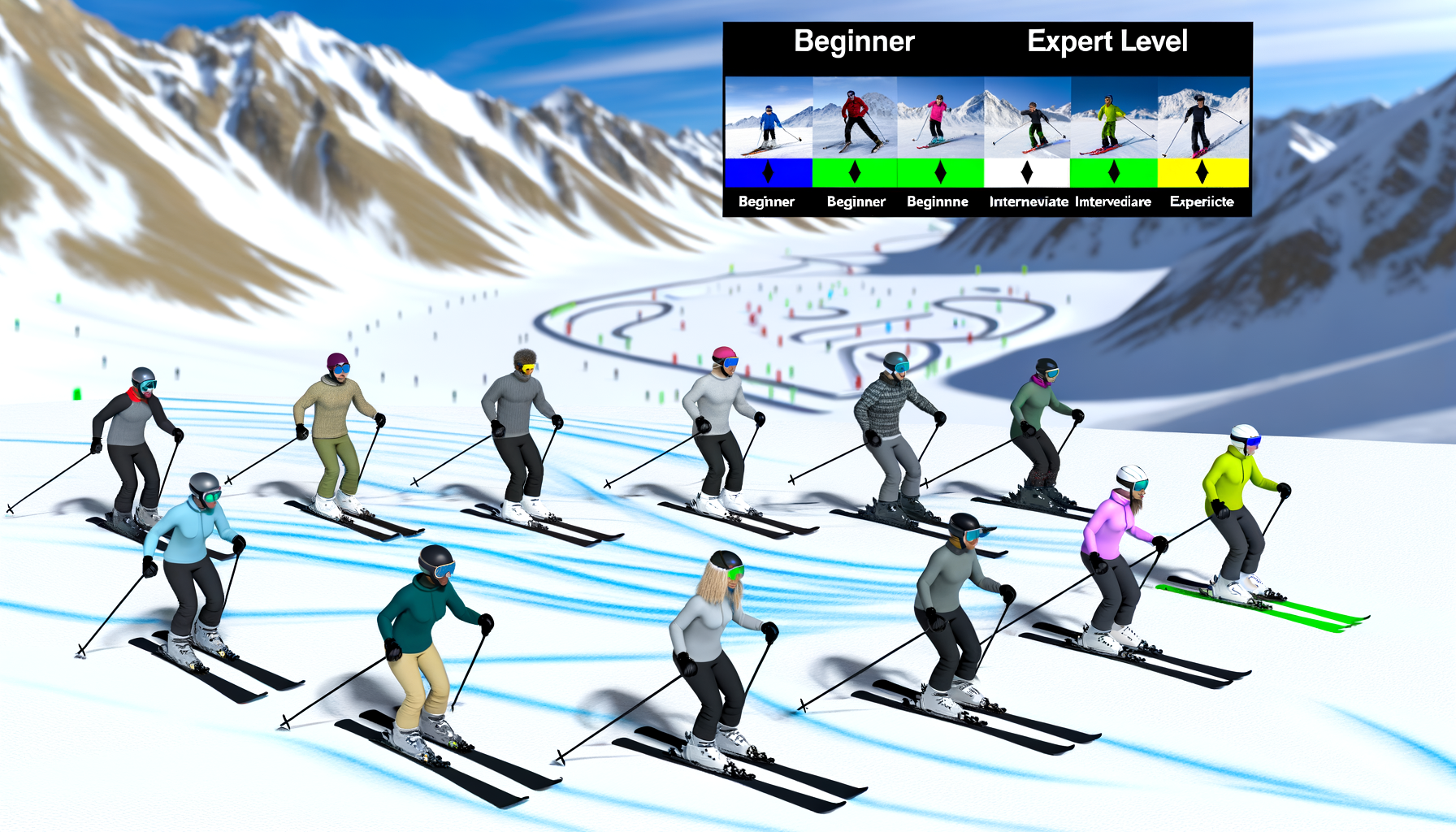
Ski resorts around the world use a surprisingly standardized system to classify the difficulty of their trails, often referred to as pistes or runs. This system relies primarily on colors and shapes displayed prominently on trail maps and at the top of each run.
Understanding these basic symbols is the first step in navigating a mountain confidently. While there can be slight variations between countries and even individual resorts, the core principles remain consistent and widely recognized. These labels provide a crucial initial guide, helping skiers make informed decisions about where to ski.
Why Terrain Mapping Matters
Properly assessing terrain is fundamental to safe and enjoyable skiing. Attempting runs that are too difficult can be dangerous, leading to loss of control and potential accidents involving yourself or others.
Conversely, sticking exclusively to terrain that is too easy can hinder your progression and limit your enjoyment of the mountain's full offerings. Terrain mapping helps you challenge yourself appropriately, pushing your limits safely as your skills develop.
It allows you to plan your day, selecting runs that match your current ability, energy levels, and desired experience. Ultimately, understanding terrain contributes significantly to building confidence and maximizing your time on the snow.
The Standard System: Green, Blue, Black, and Double Black
The most common system, used predominantly in North America, employs circles, squares, and diamonds with specific colors.
Here is a breakdown of what each symbol typically signifies, ranging from the easiest to the most difficult terrain available at a resort.
Green Circle: Beginner Terrain
Green circle runs are the easiest slopes on the mountain and are ideal for beginners and those building confidence. These trails typically have the gentlest gradients, are wide, and are frequently groomed to maintain a smooth surface.
They are designed for learning basic control, stopping, and turning. You'll often find these near the base area or accessible via slower, dedicated beginner lifts.
Blue Square: Intermediate Terrain
Blue square runs represent intermediate difficulty and make up a significant portion of most ski resorts. They feature steeper pitches than green runs but are generally still groomed and manageable for skiers who have mastered the basics.
These runs allow skiers to develop more dynamic turns and increase their speed and control. Blue terrain is where many recreational skiers spend most of their time, offering a good balance of challenge and manageability.
Black Diamond: Advanced Terrain
Black diamond runs are designated for advanced skiers and present a significant challenge. These trails typically have steeper gradients than blue runs and may not always be groomed, often featuring moguls (bumps) or variable snow conditions.
They require strong technical skills, confidence, and the ability to control speed on steeper slopes and in challenging conditions. Skiing black diamond terrain signifies a solid level of skiing proficiency.
Double Black Diamond: Expert Terrain
Double black diamond runs are the most difficult marked trails on the mountain, intended only for expert skiers. This terrain is characterized by extreme steepness, hazards like trees, rocks, or cliffs, and is rarely, if ever, groomed.
These runs often feature large moguls, narrow chutes, or require specific expert techniques like jumping or skiing through tight trees. Attempting double black diamond terrain requires not only advanced technical skill but also excellent physical conditioning and sound judgment.
Beyond the Basics: Other Terrain Designations
While the green, blue, black, double black system is standard, resorts may use other designations to provide more specific information about terrain.
Examples include orange circles or rectangles for terrain parks (areas with jumps, rails, and features), yellow symbols for specific hazard warnings, or local names for unmaintained expert areas. Always check the specific resort map legend for any unique symbols or designations they might use.
Factors Influencing Difficulty Beyond the Label
Crucially, the color label on a map is only one piece of information. The *actual* difficulty of a run on any given day is influenced by a variety of dynamic factors.
Understanding these factors is essential for making accurate, real-time assessments of terrain suitability, regardless of the printed map. Ignoring these can lead to unexpected challenges even on familiar runs.
Pitch or Gradient
This is the most obvious factor influencing difficulty and the primary basis for the color coding system. A steeper pitch means gravity has a stronger pull, requiring more effort and technique to control speed.
While labels give a general idea, the pitch can vary significantly even within a single run or between runs of the same color at different resorts. A consistent steep pitch is generally more challenging than a run with varied steepness.
Grooming and Surface Condition
Whether a run is groomed or not dramatically impacts its difficulty. A freshly groomed run is smooth and predictable, making it easier to turn and control speed.
Ungroomed terrain can develop moguls, become bumpy, or feature variable snow surfaces, requiring different techniques and more physical effort. The frequency and time of grooming (e.g., overnight vs. mid-day) also play a role.
Obstacles and Hazards
Terrain can become more difficult if it includes natural or artificial obstacles. This can include trees, rocks, cliff bands, narrow sections, or features like jumps and rails in a terrain park.
Expert terrain often intentionally incorporates natural hazards as part of the challenge. Awareness of potential obstacles is critical for safety and line choice.
Snow Conditions
The type and condition of the snow are perhaps the most significant dynamic factors influencing difficulty. Fresh powder can make even steep runs feel easier due to flotation, but it also requires specific techniques.
Icy conditions, slush, heavy wet snow, or chop (churned-up snow) each present unique challenges and can increase the difficulty of any run significantly. Being able to adapt to varying snow conditions is a hallmark of a skilled skier.
Traffic and Crowding
The number of other skiers and snowboarders on a run impacts how you ski it. Crowded slopes limit your space, restrict line choices, and increase the risk of collisions.
Navigating heavy traffic requires constant awareness, predictive judgment, and often slower speeds, adding a layer of complexity to even moderate terrain. Busy times or bottleneck areas can significantly increase the perceived difficulty.
Beyond Labels: What Truly Makes Terrain Difficult?
While labels provide a framework, they are static representations of terrain under ideal conditions. As we've seen, real-world factors constantly change the equation.
Understanding these dynamic elements is key to moving beyond simply reading the map to truly reading the mountain. It's about recognizing that difficulty isn't inherent in the run itself, but a combination of the run's features, the current conditions, and your own abilities on that specific day.
The Subjectivity of Terrain
Difficulty is inherently subjective and relative to the individual skier's skill level and experience. A black diamond run might be a significant challenge for an advanced beginner skier but a comfortable cruise for an expert.
Your personal fitness level, confidence, and mental state on any given day also play a huge role. What felt easy yesterday might feel hard today if you are tired or feeling apprehensive.
Snow Conditions: The Game Changer
Snow conditions are arguably the single biggest factor that can alter the difficulty of a run, sometimes hour by hour. Fresh powder is exhilarating but requires specific techniques to float and turn effectively.
Icy conditions demand sharp edges, strong technique, and absolute control to prevent slipping. Heavy, wet snow or slush can be physically exhausting to push through.
Large, irregular moguls on a black run can be significantly harder than the same run when freshly groomed. Being able to assess and adapt to varying snow is crucial.
Traffic and Crowding
Navigating a crowded slope adds a layer of cognitive load and requires constant defensive skiing. Your planned line might be blocked, forcing quick adjustments.
Avoiding collisions becomes a primary focus, sometimes overriding optimal technique or speed. Even simple, wide runs can feel challenging when packed with people, especially at intersections or lift entrances.
Visibility and Weather
Poor visibility due to fog, snow, or flat light (where the sky blends with the snow, making it hard to see bumps and contours) drastically increases difficulty. You lose visual cues for pitch and undulations.
Wind can affect balance, especially on lifts or exposed ridges, and extreme cold can impact equipment performance and skier comfort and focus. Always check the weather forecast and be prepared for changing conditions on the mountain.
Introducing TESTPLAY: Your Framework for Progression
Given the dynamic nature of terrain and the subjectivity of difficulty, relying solely on trail map colors is insufficient for consistent, safe progression. Skiers need a more comprehensive tool for assessment.
This is where the TESTPLAY framework comes in. TESTPLAY is an acronym representing key factors to consider *before and during* a ski run, helping you make informed decisions about whether a particular piece of terrain is right for you *at that moment*.
It moves beyond the static map label to a dynamic, personal evaluation tool. Applying TESTPLAY helps you develop crucial judgment skills, improve self-awareness, and ensure your progression is challenging but safe and enjoyable.
What is TESTPLAY?
TESTPLAY is a mnemonic designed to prompt you to consider multiple aspects of the skiing experience simultaneously. It encourages a holistic view that incorporates external factors (like terrain and conditions) with internal factors (like your technique, effort, and mental state).
By running through these points, you gain a clearer picture of the demands of the run and your ability to meet them. Let's break down each letter of the acronym and its relevance to skiing.
T - Terrain
This is about assessing the physical characteristics of the run. Look at the pitch, width, and presence of obstacles like trees, rocks, or cliffs.
Consider the surface: Is it groomed, bumpy, icy, or soft? Mentally or visually map out the path ahead, identifying any potential challenges or hazards.
E - Effort
Evaluate the physical and mental energy required for the run. How long is it? Is it consistently steep (requiring more physical effort) or does it vary?
Are you already tired from previous runs? Are you mentally prepared for a challenging descent, or are you feeling fatigued or apprehensive?
S - Speed
Assess the speed that will be appropriate for the terrain and conditions, and your ability to control it. Can you maintain a safe speed throughout the run?
Are you likely to pick up speed uncontrollably, especially on steeper sections or icy patches? Speed management is critical for safety and control.
T - Technique
Consider the specific skiing techniques required for the terrain. Does it demand strong edging, absorption of bumps, quick turns, or navigating tight spaces?
Do you possess the necessary skills for the expected conditions and features of the run? Be honest about your technical capabilities.
P - Patience
This element involves your mental approach. Are you willing to take your time, assess conditions as you go, and wait for clear lines if the run is crowded?
Avoid rushing or feeling pressured by others; skiing safely and effectively sometimes requires patience and a controlled pace. Patience also applies to allowing yourself time to learn and progress.
L - Line Choice
Plan your path down the mountain. On complex terrain, identifying the optimal line can significantly reduce difficulty and manage risk.
Look for smoother sections, plan how to navigate around obstacles or bumps, and consider where other skiers are or are likely to be. Good line choice minimizes surprises.
A - Assessment
TESTPLAY itself is an ongoing assessment process, but this step emphasizes the continuous nature of evaluation. Assess the terrain and conditions *before* you drop in, but also *while* you are skiing.
How are you feeling? Are the conditions changing? Are you handling the run comfortably or struggling? Be prepared to adjust your plan or even stop if conditions or your state changes.
Y - Your Enjoyment
Ultimately, skiing should be enjoyable. Is this run contributing to your enjoyment, or is it causing stress, fear, or exhaustion?
While challenging yourself is part of progression, consistently skiing terrain that you don't enjoy is counterproductive. Use enjoyment as a final gauge of whether the run is appropriate for you at this time.
Applying TESTPLAY Across Terrain Levels
The beauty of the TESTPLAY framework is that it is applicable to every level of skiing, from your very first turns on the bunny slope to tackling the most challenging expert terrain. The *questions* you ask yourself using TESTPLAY remain the same, but the *answers* and the *emphasis* on each element will change depending on the difficulty of the terrain and your own skill level.
Let's explore how you might consciously or subconsciously apply TESTPLAY as you progress through the standard terrain levels. This shows how the framework adapts and supports your development as a skier.
TESTPLAY on Green Runs
Even on the easiest terrain, TESTPLAY provides valuable structure for beginners.
Here, the focus is heavily on fundamental technique and building confidence in a controlled environment.
Your application might look like this:
- T - Terrain: Is the slope gentle and wide? Are there other beginners I need to be aware of? Is the snow smooth and easy to turn on?
- E - Effort: Am I getting tired? Can I maintain the basic stance and movements?
- S - Speed: Am I maintaining a slow, controlled speed? Can I stop reliably whenever I need to?
- T - Technique: Am I focusing on the basics my instructor taught me (e.g., snowplow, basic turns)? Can I link turns comfortably?
- P - Patience: Am I taking my time? Am I getting frustrated if I fall?
- L - Line Choice: Am I looking ahead? Am I avoiding others? Am I staying within the designated safe area?
- A - Assessment: How am I feeling? Am I comfortable with my speed and turns?
- Y - Your Enjoyment: Am I having fun learning and sliding on the snow?
For beginners, TESTPLAY emphasizes safety, control, and building a foundation before moving on.
TESTPLAY on Blue Runs
Moving onto blue terrain means encountering steeper pitches and potentially more varied conditions. TESTPLAY helps you manage this increased complexity.
The focus shifts to refining technique, managing slightly higher speeds, and more deliberate line choice.
Your TESTPLAY application evolves:
- T - Terrain: How steep is this section? Are there bumps forming? Is the snow consistent or changing?
- E - Effort: Is the steeper pitch tiring my legs more? Do I have enough energy for the length of the run?
- S - Speed: Can I maintain a comfortable, controlled speed despite the steeper angle? Can I slow down effectively if needed?
- T - Technique: Can I make parallel turns? Can I handle small variations in snow surface? Am I using my edges effectively?
- P - Patience: Am I taking turns at the top to assess? Am I waiting for space if it's crowded?
- L - Line Choice: What is the smoothest path? Where are other skiers? Can I see around that corner?
- A - Assessment: How is my technique holding up on this pitch? Am I feeling in control or slightly rushed?
- Y - Your Enjoyment: Am I enjoying the feeling of cruising and making better turns? Does this challenge feel exciting rather than scary?
Blue runs are where TESTPLAY helps you transition from basic survival skiing to more dynamic and confident skiing.
TESTPLAY on Black Diamond Runs
Black diamond terrain demands a higher level of skill, physical readiness, and constant awareness. TESTPLAY becomes a critical tool for managing risk and executing advanced skiing.
The emphasis is on advanced technique, precise speed control, strategic line choice, and efficient effort management.
Applying TESTPLAY here looks like:
- T - Terrain: How steep is the steepest part? Are the moguls regular or irregular? Are there unavoidable hazards? What are the potential fall-line issues?
- E - Effort: Am I fit enough for this steepness or these bumps? Is my energy level high enough to maintain focus and technique?
- S - Speed: Can I maintain controlled speed even if I hit ice or a large bump unexpectedly? Can I make quick checks or stops if necessary?
- T - Technique: Can I absorb bumps effectively? Can I make quick, strong turns on steep pitches? Are my edges sharp enough for the snow condition?
- P - Patience: Can I wait for a clear path through moguls? Am I able to pause on the side of the run if I need a break?
- L - Line Choice: What is the best line through the bumps or trees? Where are the escape routes if things go wrong? How can I use the terrain features to my advantage?
- A - Assessment: How am I handling the pitch and conditions? Is my technique breaking down? Do I need to slow down or stop?
- Y - Your Enjoyment: Am I enjoying the challenge of this difficult run? Does it feel like a fun test of skill or a terrifying struggle?
On black runs, TESTPLAY helps you evaluate if you have the right tools (technique, fitness) and the right mindset (patience, assessment) for the challenge.
TESTPLAY on Double Black Diamond and Expert Terrain
This is terrain for highly skilled and experienced skiers only. TESTPLAY is used for micro-assessment and execution in a high-consequence environment.
All elements are critical, with extreme focus on Terrain assessment, precise Technique, managing Effort, absolute Speed control, and meticulous Line Choice.
Your TESTPLAY process is constant and refined:
- T - Terrain: What are the specific hazards (cliffs, rocks, narrow chutes)? How steep is it really? What is the texture and stability of the snow? Is there avalanche risk?
- E - Effort: Do I have the peak fitness and mental focus required for sustained high-level performance and quick reactions?
- S - Speed: Can I maintain precise speed control in extremely challenging conditions (steep, variable snow, tight spaces)? Can I stop instantly if needed?
- T - Technique: Do I have specialized skills (e.g., jump turns, side-slipping in steep chutes, tree skiing techniques, skiing variable snow)? Can I execute these techniques flawlessly under pressure?
- P - Patience: Am I willing to wait for perfect conditions? Can I patiently work my way down sections rather than rushing?
- L - Line Choice: This is paramount – is there a safe, viable line? Can I see far enough ahead? Have I noted potential escape routes or hazards?
- A - Assessment: Constant, split-second assessment of changing conditions, snow feel, and my own state. Am I confident in my ability to handle the *next* few turns?
- Y - Your Enjoyment: Does the thrill of mastering extreme terrain outweigh the inherent risks and intense effort?
For expert terrain, TESTPLAY isn't just about progression; it's about executing challenging lines safely by meticulously evaluating every factor.
Progressive Mastery: Using TESTPLAY for Safe Advancement
The ultimate goal of understanding terrain and using a framework like TESTPLAY is not just to label runs correctly, but to facilitate safe, confident, and continuous improvement. Progression in skiing is a journey, not a race, and using a systematic approach helps you enjoy every step.
By integrating TESTPLAY into your skiing mindset, you develop the judgment needed to tackle increasingly difficult terrain without getting in over your head. It empowers you to be your own best guide on the mountain.
Starting Smart: Mastering the Current Level
Before you even think about stepping up a level, ensure you are truly comfortable and proficient on your current terrain. Can you consistently ski runs of your current level in varied conditions (within reason)?
Use TESTPLAY on familiar runs to refine each element: work on maintaining consistent Speed, practicing specific Techniques, optimizing Line Choice, and ensuring minimal Effort is required. When your core level feels easy and enjoyable (Y - Your Enjoyment is high), you are building a solid base for progression.
Stepping Up: Choosing Appropriate Challenge
When you feel ready to try a more difficult run, use TESTPLAY for a pre-run assessment. Look at the Terrain: is it just slightly steeper than what you are used to, or does it have added complexity like bumps or narrower sections?
Consider the Technique required: are you confident you have the skills, or will this run demand something new you might need to learn? Choose runs that are incremental challenges, perhaps a blue run with a short steep section, or a black run that is freshly groomed.
Use TESTPLAY's Assessment element critically: if multiple factors (Terrain, Effort, Speed control, Technique) feel borderline, maybe save that run for another day or when conditions are better. The goal is a manageable challenge, not an overwhelming one.
Handling Setbacks and Bad Days
Every skier has days when things just don't click, or conditions turn unexpectedly difficult. This is where TESTPLAY's Patience and Assessment are crucial.
If you start a run and quickly realize (through Assessment of your Technique, Effort, and Speed) that it's too much, use Patience to carefully make your way to the side and consider options – side-slipping, taking a break, or even reverting to easier terrain. There is no shame in choosing safety and regaining Your Enjoyment by moving to a more appropriate run.
Recognizing your limits on a given day is a sign of maturity and good judgment developed through consistent self-assessment using frameworks like TESTPLAY.
Continuous Improvement: A Lifelong Journey
TESTPLAY isn't just for beginners or intermediate skiers; it's a tool that advanced and expert skiers use constantly, even if subconsciously. They are continuously Assessing Terrain and conditions, optimizing Line Choice in complex areas, managing Effort on demanding runs, and refining Technique.
As you improve, the bar for each TESTPLAY element rises. What felt like maximum Effort on a blue run becomes moderate Effort on a black. Techniques that were challenging become automatic. The framework scales with your ability, remaining a relevant tool for evaluating new challenges and maintaining performance.
Conclusion
Navigating a ski resort is about more than just following color-coded signs. While terrain labels provide a valuable starting point, the true difficulty of a run is a dynamic interplay of pitch, surface condition, obstacles, weather, traffic, and your own capabilities on that particular day.
By adopting the TESTPLAY framework – considering Terrain, Effort, Speed, Technique, Patience, Line Choice, Assessment, and Your Enjoyment – you equip yourself with a powerful tool for real-time decision-making. TESTPLAY helps you move beyond static labels to a dynamic understanding of the mountain and your place on it.
Using TESTPLAY consistently will build your confidence, refine your judgment, and ensure your progression as a skier is not only effective but also safe and consistently enjoyable. So, on your next ski trip, take a moment at the top of the run, run through the TESTPLAY points, and make an informed decision that sets you up for success and fun on the slopes.
Enjoy the ride, challenge yourself wisely, and make TESTPLAY your trusted companion for mapping your journey from beginner slopes to expert terrain.