New customers save 10% with code WELCOME10
Translation missing: en.sections.cart.taxes_at_checkout_shipping_at_checkout_without_policy
Toll Free: 800-321-6277

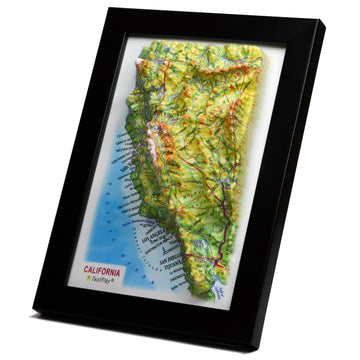

Welcome, fellow explorers of geography and cartography! If you own a TESTPLAY Raised Relief Map, you possess more than just a decorative item or a simple visual aid.
You hold a three-dimensional portal to a specific corner of the world, packed with intricate details that standard flat maps simply cannot convey with the same impact or nuance. Many owners appreciate the tactile representation of elevation but might not realize the layers of information, the "hidden spots," meticulously embedded within the physical form and cartographic design.
This post is your guide to moving beyond the obvious mountains and valleys to discover the fascinating micro-features, subtle topographical shifts, and deliberate cartographic markers that tell a richer story of the landscape. We will delve into what these hidden details are, why the raised relief format makes them uniquely discoverable, and, most importantly, provide you with practical techniques to become a cartographic detective and unlock the full potential of your TESTPLAY map. Get ready to see (and feel) your map in a whole new dimension.
TESTPLAY Raised Relief Maps stand apart from their two-dimensional counterparts precisely because of their third dimension: the physical representation of elevation. Unlike flat maps where elevation is indicated solely by contour lines or color gradients, a raised relief map allows you to see and feel the actual undulations of the terrain. This tangible quality is not just aesthetically pleasing; it fundamentally changes how you interact with and understand the represented landscape.
The process of creating these maps involves complex photogrammetry, molding, and printing techniques to translate flat data into a three-dimensional object, ensuring accuracy in both horizontal placement and vertical scale (though vertical scale is often exaggerated to make relief more apparent, a detail sometimes noted in the legend – another potential "hidden" piece of information). This physical fidelity to the landscape's form is what makes the discovery of subtle details possible in ways a flat map cannot replicate. The way light falls across the surface, the shadow cast by a ridge, or the gentle slope of a plain are all physically present, waiting to be observed.
When we talk about "hidden spots" or details on a raised relief map, we do not mean secret codes or invisible ink. Instead, we are referring to the wealth of information and geographical features that are present but may not be immediately obvious upon a casual glance. These are the subtle nuances of the terrain, the fine points of cartographic representation, or even small pieces of data that blend into the overall design.
Why are they "hidden"? Several factors contribute. Firstly, scale plays a significant role; features that are small on the ground become even smaller on the map, requiring close inspection. Secondly, the primary visual impact of a raised relief map is often the major topographical features, drawing the eye away from smaller details. Thirdly, cartographers, while striving for accuracy, must make choices about what information to prioritize and how to represent it, sometimes leading to smaller symbols or faint lines that are easily overlooked. Finally, the very nature of the raised surface can, paradoxively, obscure details if not viewed or lit correctly, as shadows and angles can either reveal or conceal features. Unlocking these hidden spots is about learning to look differently and engage more deeply with the map as a geographical text.
Your TESTPLAY Raised Relief Map is a treasure trove of geographical and cartographic information, extending far beyond the easily identifiable mountains, rivers, and lakes. By engaging in deliberate exploration, you can uncover a fascinating array of details that reveal the complexity and history of the landscape depicted. These hidden spots fall into several categories, each offering unique insights.
The most intuitive place to look for hidden details on a raised relief map is within the topography itself, beyond the major peaks and valleys. Raised relief makes subtle changes in elevation tangible. Look closely at seemingly flat areas; are they truly flat, or is there a gentle slope leading to a drainage? Trace the path of a small creek; can you discern the subtle valley it has carved over time, perhaps just a few millimeters deep on the map? Pay attention to the shoulders of larger mountains or the areas between hills; you might find small, distinct knolls, saddles, or minor drainages that are critical to understanding local water flow or travel routes.
Features like alluvial fans at the base of steep slopes, small glacial moraines indicated by subtle ridges, or even tiny sinkholes in karst landscapes can be physically present in the relief, but so small or understated that they require careful scrutiny and proper lighting to become apparent. The way contour lines, if printed on the map, interact with these subtle relief changes can also highlight these features, showing tight spacing around a tiny bump or wide spacing across a barely perceptible slope.
Cartographers pack an incredible amount of information into map symbols, and raised relief maps are no exception. Many symbols are small and can be obscured by the relief itself or simply overlooked in favor of larger features. Look for tiny symbols indicating specific points of interest: a small cross for a church, a tent shape for a campground, a tiny tree cluster for a specific type of forest, or a small structure outline for a ranger station or historical building. These symbols are the mapmaker's shorthand, linking the topography to human activity and specific landmarks.
Furthermore, examine the lines printed on the map. Beyond major roads and rivers, look for faint dashed lines indicating trails, old boundaries, power lines, or fence lines. Sometimes, political boundaries or park borders are marked with subtle patterns or lines that are easy to miss unless you are specifically looking for them. The legend is your essential companion here, but even with the legend, finding the tiny symbol on the vast landscape of the map is the challenge and the reward.
While major cities and highways are prominent, raised relief maps can also show smaller man-made features that are significant locally but might be missed on a less detailed map or overlooked on the relief. Look for the subtle lines representing smaller roads or tracks winding through valleys or over ridges. Can you find the outline of a small reservoir or pond, often indicated by a blue area conforming to the terrain?
Bridges, tunnels (sometimes marked with symbols or specific line work), dams, quarries, or even clusters of very small building symbols representing a hamlet or scattered dwellings can be found upon careful inspection. The way a road cuts through a ridge, shown by a slight notch in the relief, or the flat area indicating a small airport or landing strip are examples of how human intervention is integrated into the natural relief and represented on the map.
Sometimes, the "hidden spots" are not just physical features but pieces of information that relate to the history or specific geography of the area. This can include small, historical place names that are no longer in common use but are preserved on the map, indicating former settlements, trading posts, or significant events. Look for labels that seem unusual or out of place in the modern context.
Geological features might have specific labels that provide insight into the area's formation, like naming a specific type of rock formation, a lava flow, or a unique geological structure. Old trails or routes that predated modern infrastructure might still be faintly marked, hinting at past patterns of movement through the landscape. These details often require combining your observation of the map with external knowledge or research about the area to fully appreciate their significance.
Beyond place names and major labels, maps contain a surprising amount of textual information in small print. This includes contour line values (often placed sparingly along the lines), elevation markers for specific points (summits, passes, trailheads), names of small streams or peaks, and notes about the map's projection, datum, or sources. The legend itself, while crucial, is often dense with information that needs careful reading.
Sometimes, notes about restricted areas, boundaries, or specific regulations are printed in small text. Even the fine print around the map border concerning the publisher, date of survey, or scale can contain valuable historical or cartographic context. Using a magnifying glass is particularly helpful for uncovering these often-overlooked textual details.
Finding these hidden spots requires a shift from passive viewing to active exploration. It is about employing specific techniques that leverage the unique properties of the raised relief map. Think of yourself as a detective, using tools and methods to uncover clues about the landscape.
Perhaps the most effective technique for revealing subtle relief details is manipulating the lighting. Standard overhead room lighting tends to flatten the appearance of the relief. Oblique lighting – light coming from a low angle from the side – is your best friend.
Consider these points regarding lighting:
1. Experimenting with Angle and Source: Position a lamp or flashlight low to the side of the map. As you move the light source around the map's perimeter, watch how shadows change and reveal subtle bumps, depressions, and slopes that were invisible before. Low-angle light catches the edges of even minor elevation changes, making them stand out dramatically.
2. Using Natural Light: Place your map near a window and observe it at different times of day. The low angle of the sun in the morning and late afternoon creates natural oblique lighting that can highlight relief beautifully. Different window positions will offer varying angles of light.
3. Using Artificial Light: A directional light source like a desk lamp with an adjustable arm or even a powerful flashlight is ideal for controlled exploration. You can focus the light on specific areas and move it precisely to see how features respond to different angles. Multiple light sources from different directions can also offer interesting perspectives.
One of the primary advantages of a raised relief map is its tactile nature. Do not just look at your map; feel it. Close your eyes and run your fingertips gently over the surface. You will feel the steepness of slopes, the narrowness of valleys, and the roundness of peaks in a way that purely visual inspection cannot replicate.
Use your fingertips to trace contour lines if they are printed, feeling how they correspond to changes in slope. Explore areas that look flat; can you feel a very gentle grade? Follow a printed stream course with your finger; can you feel the slight depression of the streambed? This tactile exploration engages a different part of your brain and can make subtle relief features much more apparent than visual inspection alone. It grounds your understanding of the topography in a physical sensation.
Do not just look at the map straight down from above. Get down to eye level with the map. Look across the landscape at a low angle, almost as if you were standing on the terrain itself. This perspective dramatically exaggerates the apparent height and depth of features, making it easier to spot subtle changes in elevation and the relationships between different landforms.
View the map from all four sides, and even from oblique angles. What looks like an insignificant bump from one angle might appear as a distinct ridge or hill when viewed from the side. Move closer to the map to focus on small areas, and then step back to see how those small areas fit into the larger landscape. Changing your visual perspective can reveal details obscured by a standard overhead view.
Sometimes, your eyes alone are not enough to catch the smallest details. A magnifying glass is an invaluable tool for examining the fine print, small symbols, and minute relief features. A geologist's hand lens or a strong jeweler's loupe can reveal surprising levels of detail in the map's surface texture and printing.
A fine-tipped pointer (like a non-scratching stylus or the end of a pen cap) can be useful for tracing features, identifying specific points, or keeping your place as you examine the legend. Just be careful not to damage the map surface. These simple tools extend your ability to scrutinize the map up close.
Your TESTPLAY map does not exist in a vacuum. Compare the details you find with other sources of information. Look up the area on a digital mapping service like Google Maps or a dedicated topographic map website. See how features are represented there. Does the digital map show a trail or building that is only subtly hinted at on your relief map?
Research the history and geography of the area online or in books. Understanding the geological forces that shaped the landscape or the historical events that occurred there can provide context for the features you are seeing on the map. Knowing that a specific area was historically important for mining, for example, might prompt you to look for small symbols indicating old mines or trails used for transport. This cross-referencing validates your findings and deepens your understanding.
Why invest the time and effort in finding these hidden spots and intricate details? The benefits extend far beyond mere curiosity; they enrich your understanding and appreciation of both the map and the landscape it represents.
Finding subtle topographical details allows you to build a much more nuanced mental model of the landscape. You begin to understand drainage patterns not just as blue lines, but as depressions shaped by water flow. You see how even minor ridges can form watersheds or influence local climate. You gain a deeper intuition for how difficult or easy it would be to traverse different parts of the area, based on the subtle variations in slope and terrain. It transforms the map from a static representation into a dynamic model of the physical world.
Identifying small historical markers, old routes, or place names connects you to the human story of the landscape. You can trace the paths of pioneers, understand why settlements were located in specific valleys or near certain water sources, or appreciate the challenges faced by those who built early roads and infrastructure through difficult terrain. The map becomes a historical document, prompting questions and further research about the people and events that shaped the area.
Discovering how cartographers choose to represent small features, the precision of their symbols, and the sheer amount of data compressed onto the map fosters a deep appreciation for the skill and artistry involved in mapmaking. You begin to see the map not just as data, but as a deliberate creation, a synthesis of surveying, design, and geographic knowledge. Understanding the choices made in creating the map enhances your ability to read and interpret *any* map.
Ultimately, the process of finding hidden details is a personal journey of discovery. Each new feature you find, each subtle slope you identify, is a small victory that makes the map uniquely yours. It transforms the map from a passive object into an interactive experience, encouraging return visits and continuous learning. This active engagement makes the information more memorable and the connection to the represented place more profound.
Finding hidden spots on your TESTPLAY map is not a one-time activity but an ongoing process. Keep the map accessible and return to it often. Focus on exploring small sections at a time, perhaps an area you are familiar with, or a place you plan to visit.
Use the map in conjunction with guidebooks, historical accounts, or online resources to add layers of information to what you are seeing and feeling. You might even keep a small journal or use sticky notes (carefully placed) to mark features you find and want to remember or research further. Share your discoveries with others who are interested in geography or the specific area. The more you explore, the more you will find, and the deeper your appreciation for your TESTPLAY Raised Relief Map and the landscape it depicts will become.
Your TESTPLAY Raised Relief Map is far more than a simple representation of mountains and valleys; it is a complex, layered document of the landscape, filled with intricate details and "hidden spots" waiting to be discovered. By employing techniques like strategic lighting, tactile exploration, changing your perspective, and using simple tools, you can move beyond the obvious features and uncover the rich tapestry of geographical and cartographic information embedded within its three-dimensional form.
The journey of exploring these hidden details is deeply rewarding, enhancing your understanding of geography, connecting you to the history of the place, deepening your appreciation for cartography, and providing a uniquely engaging personal experience. So, set up your light, prepare to feel the terrain, and embark on an exciting adventure of discovery. Your TESTPLAY Raised Relief Map is ready to reveal its secrets; all you need to do is start looking – and feeling.